
126 projects taught us
exactly how to build yours.
It started with a second unit on my own lot.
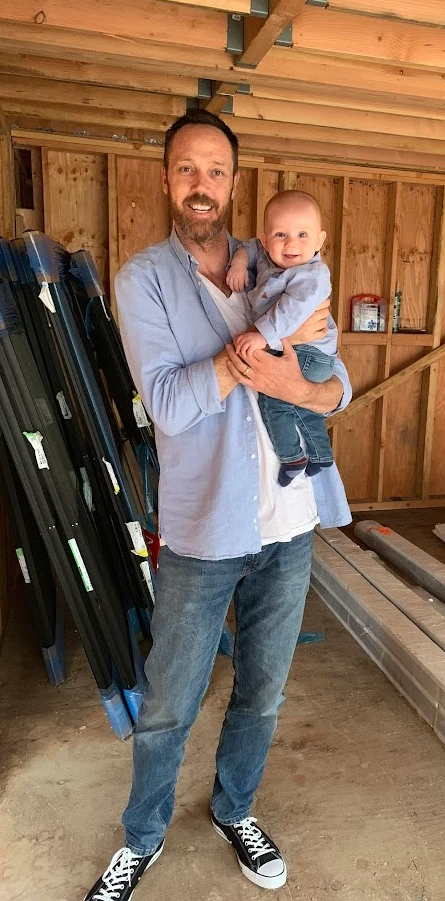
In 2007, I bought my first Los Angeles home — a property zoned for two units. There was no ADU industry yet. No streamlined permitting process. No one to call. I figured it out myself: design, permits, construction, tenants. That second unit paid the mortgage.
Over the next decade, I built a career in Los Angeles real estate — flipping homes, managing new construction, and learning the city's planning and permitting system from the inside. When California passed statewide ADU legislation in 2017, I saw what most homeowners were about to walk into: a process that sounds simple on paper and falls apart the moment you try to navigate it alone.
I started CALI ADU to be the company I wished existed when I built that first second unit. One point of contact. Clear pricing. No surprises.
What 126 projects taught us.
The first few years were custom work — every project designed from scratch, every set of plans a one-off. We designed and permitted 126 ADU projects across Los Angeles County. Twenty-eight of those went on to build with our vetted construction partners.
We learned two things that changed the business:
First, the same problems repeat. Setback calculations. City building department correction cycles. Structural engineering for hillside lots. Title 24 compliance. The problems are not unique — but the first time a homeowner encounters them, they feel impossible. By the fiftieth time, they are a checklist.
Second, custom design is where budgets die. Custom plans mean custom pricing, custom timelines, and custom surprises. Every custom project is a prototype. Prototypes are expensive. We watched homeowners spend $40,000 on design and permitting alone — before a single shovel hit dirt — because nobody told them there was a better way. (We still design custom ADUs for the projects that truly need them — but selectively, and with a clear-eyed conversation about why a Signature Home would not.)
So we built one.
The Signature Home approach.
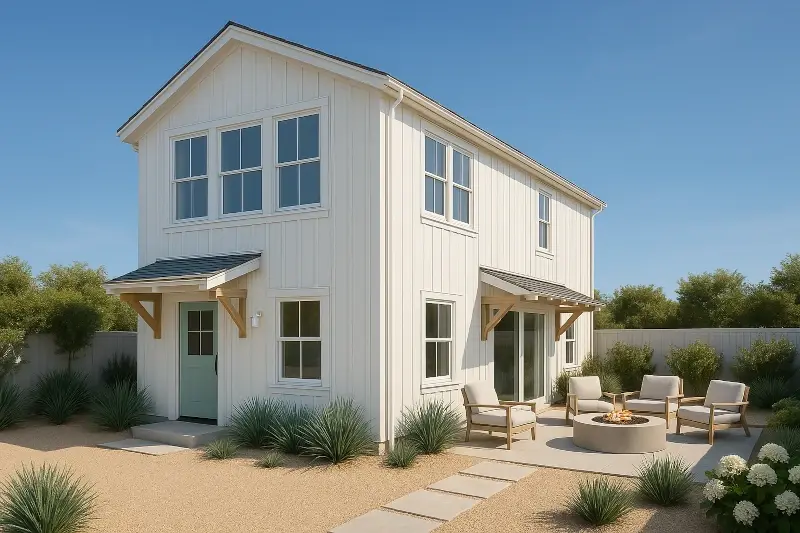
We took everything we learned from 126 projects and distilled it into architect-designed ADU plans — the Signature Home lineup. Studios to three-bedrooms. Single-story and two-story. Every plan pre-engineered, pre-priced, and refined through dozens of LA County permit submittals. The full four-step build path is laid out on our Signature Process page.
The result: a fixed plan price that does not change after you sign. A clear, independent-GC estimate of what the build will cost, so there are no budget surprises when you hand the plans to your builder. Fewer permit corrections because city building departments have seen our plans before. And a design that is fully resolved before anyone breaks ground.
Our two-story collection is the competitive advantage we are most proud of. No prefab company in Los Angeles offers two-story ADU models. We designed ours from the ground up — the Fairfax, the Venice, and the Culver — because two stories is the only way to build a real family home on a narrow LA lot without surrendering the backyard to do it.
The track record.
*CALI ADU sells fixed-price, permit-ready plans (design + permit). Construction is arranged separately by the homeowner — build it yourself, with your own licensed contractor, or with one of our vetted construction partners. Build figures are an independent licensed general contractor's estimate, not a CALI ADU price.
What we promise.
Fixed-price plans. Your plan fee — design plus full permit processing — is detailed and agreed before you commit. The only thing that changes it is a change you ask for. For the build, we hand you an independent-GC cost estimate up front so you can budget with the same clarity, then you contract construction directly with your chosen builder.
Build it your way. Once your plans are permitted, they're yours. Build it yourself, bring your own licensed contractor, or build with one of our vetted construction partners — whose schedules and delay terms are set in the construction contract you sign directly with them.
One point of contact. One person manages your project from first sketch through permitted plans. You do not get handed off between departments while we get your design approved. You call one number and that person knows every detail of your plan set.
See your ADU. In your backyard.
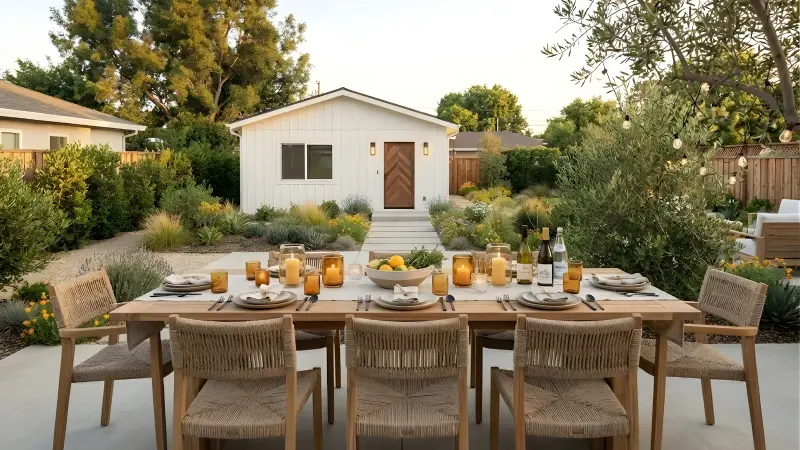
Book a free 15-minute Backyard Review and see any Signature Home placed on your actual lot — before you commit to anything.
Designed in-house · Transparent pricing · Your choice of builder