
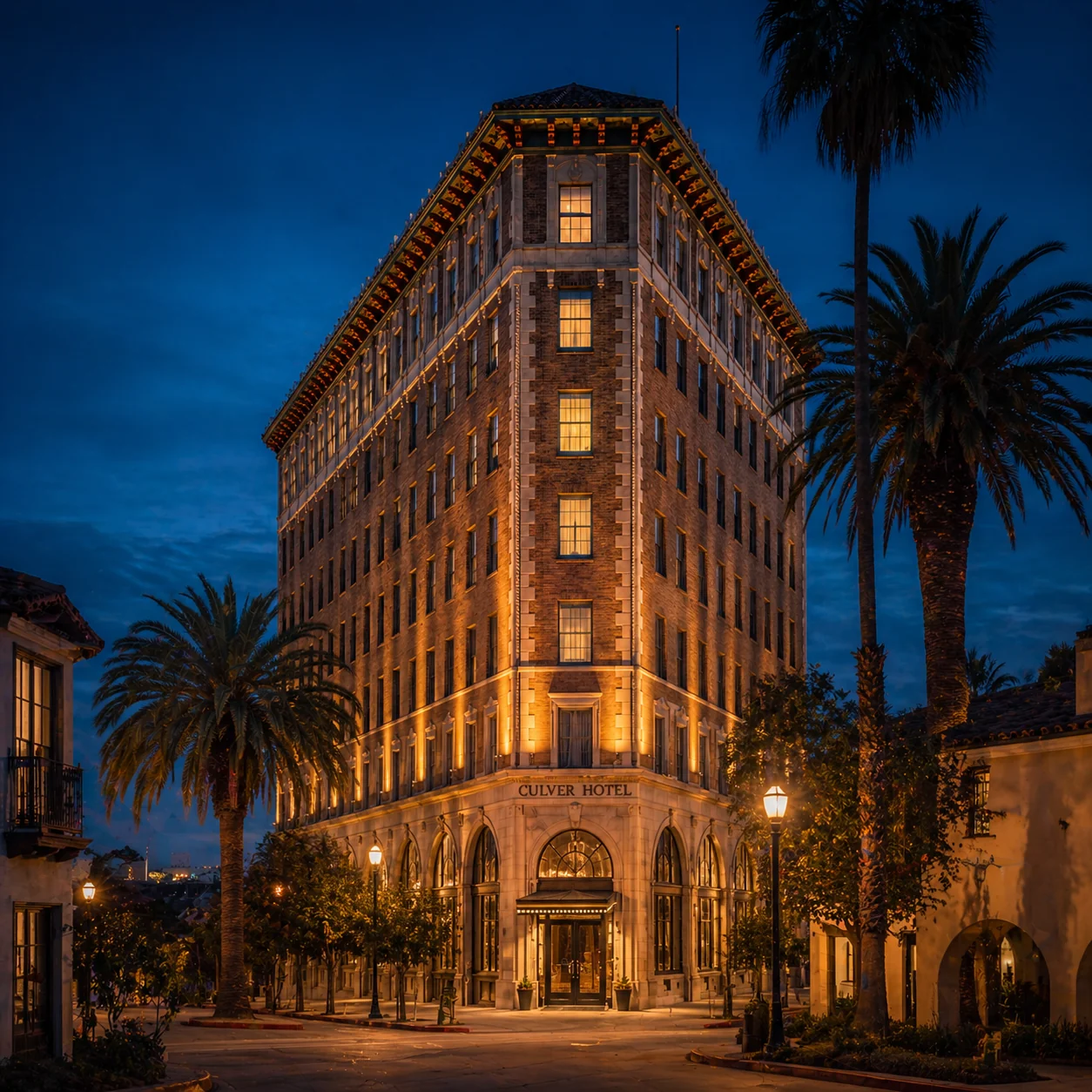
Building an ADU in Culver City. Rules, costs, timeline.
No parking required at all, a genuine two-story envelope, and one of the few places nearby where an ADU can be sold separately from the house.
What you can build — at a glance
Reviewed by CALI ADU’s ADU specialists · August 2026
- Max ADU size
- 850–1,200 sqft 850 sqft for a studio or one-bedroom, 1,200 sqft detached with two or more bedrooms. Converting space inside your existing house has no cap at all.
- Detached height
- 27–30 ft In R1, 27 ft with a flat roof or 30 ft with a pitched one. In R2, 30 ft either way. Two stories maximum in both zones.
- Attached height
- Matches your house An attached ADU gets the primary-residence limit for your zone. State law guarantees at least 25 ft, or your zone limit if that is lower.
- Side & rear setbacks
- 2–4 ft Four feet where you abut another residential lot. Two feet where you abut a mixed-use zone, a street, or an alley.
- Units per SFR lot
- 3, likely 4 A conversion ADU, a detached ADU and a Junior ADU — Culver City writes all three into its own code. HCD’s position is that a city must allow at least one more on top of those three.
- Units on apartment lots
- Up to 8 Up to eight detached units on a lot that already has an apartment building, plus interior conversions of up to 25 percent of the existing units.
- Parking required
- None A flat waiver for both ADUs and Junior ADUs, and you never have to replace parking you remove.
- AB 1033 separate sale
- Yes — allowed Culver City opted in on February 9, 2026, so an ADU can be sold separately as a condominium. Very few California cities have done this.
- Detached Up to 1,200 sqft (2BR+) · 27–30 ft, two stories
- Attached 850/1,200 sqft or 50% of the primary, whichever is less
- Garage conversion No size cap · no setback beyond fire safety · no replacement parking
- Interior conversion Carved out of the existing house · no size cap
- Junior ADU Up to 500 sqft inside the primary dwelling (CCMC § 17.400.095.M.1)
Per Culver City Municipal Code § 17.400.095 and § 17.400.096, current through Ord. 2026-004 (2026 S-25), and Gov. Code §§ 66310–66342. Cross-checked against the HCD ADU Handbook (March 2026). Full citations in the sections below.
On this page
Can I build an ADU in Culver City?
Five things to know before you start
If you read nothing else here, read these five. They are the points that change the most Culver City projects.
| What to know | Why it matters for your project |
|---|---|
| 1. No parking. At all. | Most cities remove parking only if you qualify for an exemption — near transit, in a historic district, and so on. Culver City simply does not require it, for ADUs or Junior ADUs, and does not require replacement parking when you convert a garage. |
| 2. You can sell the ADU separately | Culver City opted into AB 1033 on February 9, 2026 (CCMC § 17.400.096). An ADU can be sold as a condominium. It is an opt-in that most California cities have not taken, and it changes the financial case entirely. |
| 3. Apartment owners can add a lot of units | Up to eight detached ADUs on a lot with an existing multifamily building, capped at the number of units already there — plus interior conversions of up to 25% of the existing count, on top. |
| 4. Two stories is normal here, not an exception | 27 ft flat or 30 ft pitched in R1, and 30 ft in R2, with a two-story cap in both. That is well above the 16-to-20 ft floor state law guarantees, and it lets you put a full program on half the ground footprint. |
| 5. The ordinance is genuinely current | Culver City rewrote its ADU rules through Ordinance 2026-004 and already reflects SB 1211, AB 1154 and AB 1033. Unlike most cities, you are unlikely to hit a gap between the local code and state law. |
How many units your lot allows
On a lot with a single-family home, CCMC § 17.400.095.E.1 permits all three of these together, which matches the combination guaranteed by Gov. Code § 66323. That is more than most cities grant without an argument.
One nuance worth knowing. The HCD ADU Handbook reads the state floor as slightly higher still: a city must allow at least one ADU under Gov. Code § 66314 in addition to the § 66323 combination. If your project needs that fourth unit, the ordinance’s own supremacy clause is the starting point — and it is a conversation to have with Planning before you design around it.
| Unit | How many | What it is |
|---|---|---|
| Conversion ADU | 1 | Carved out of existing space — a garage, a basement, an accessory structure. No size cap, no setback beyond fire safety, and you may expand up to 150 sqft beyond the existing footprint for ingress and egress (Gov. Code § 66323(a)(1)). |
| Detached ADU | 1 | Newly built in the garden. Up to 1,200 sqft with two or more bedrooms, and up to 27–30 ft tall. |
| Junior ADU | 1 | Up to 500 sqft inside the walls of the house. Needs its own exterior entrance and an efficiency kitchen, plus a deed restriction recorded against the property barring separate sale (Gov. Code § 66333(c); CCMC § 17.400.095.M.7). |
Owner-occupancy
Culver City cannot require you to live on the property to build an ADU, and its ordinance does not try to (CCMC § 17.400.095.K). That matches Gov. Code § 66315.
Junior ADUs are the one exception, and only in one situation. Owner-occupancy may be required where the Junior ADU shares sanitation facilities with the main house, under Gov. Code § 66333 as narrowed by AB 1154 in January 2026. Give the Junior ADU its own bathroom and the requirement does not apply.
What can you build?
Which ADU type fits your property?
Five types are permitted. This is the fastest way to work out which one your lot is pointing you toward.
| If this sounds like you | Start with | What that means |
|---|---|---|
| You have garden space and want the most rentable unit. | Detached, two stories | Up to 1,200 sqft over two floors, on roughly half the ground footprint of a single-story unit. The strongest rent and the strongest resale. |
| Your lot backs onto an alley. | Detached, alley-facing | Setbacks drop to two feet against an alley rather than four. On a narrow Culver City parcel that is often the difference between a viable design and an impossible one. |
| You have a garage you no longer need. | Garage conversion | No size cap, no setback beyond fire safety, no replacement parking, and no separate utility connection may be required for a conversion under Gov. Code § 66311.5(d). |
| You want to stay on one footprint and keep costs down. | Junior ADU | Up to 500 sqft inside the house, with its own entrance and an efficiency kitchen. Give it its own bathroom to avoid the owner-occupancy condition. |
| You own an apartment building. | Multifamily — conversions plus detached | Two allowances that stack: interior conversions of up to 25% of your existing units, and up to eight detached ADUs. See the section below. |
Size limits
| Unit | Maximum size | Notes |
|---|---|---|
| Detached, new construction | 850 sqft studio/1BR · 1,200 sqft 2BR+ | CCMC § 17.400.095.C. Comfortably above the state floor at Gov. Code § 66321(b)(2). |
| Attached, new construction | Same caps, or 50% of the primary dwelling, whichever is less — but never below 850 sqft | Gov. Code § 66321(b)(2) bars any local maximum under 850 sqft, or 1,000 sqft with two or more bedrooms. The 50% rule cannot cut you below that floor. |
| Within the existing house | No cap | An ADU created entirely inside the existing dwelling has no square-foot limit. |
| Junior ADU | 500 sqft | CCMC § 17.400.095.M.1; state cap at Gov. Code § 66313(d). |
| Any ADU | Minimum 150 sqft | CCMC § 17.400.095.C. Separately, a city may not set a minimum that bars an efficiency unit (Gov. Code § 66321(b)(1)). |
Height — the reason two stories work here
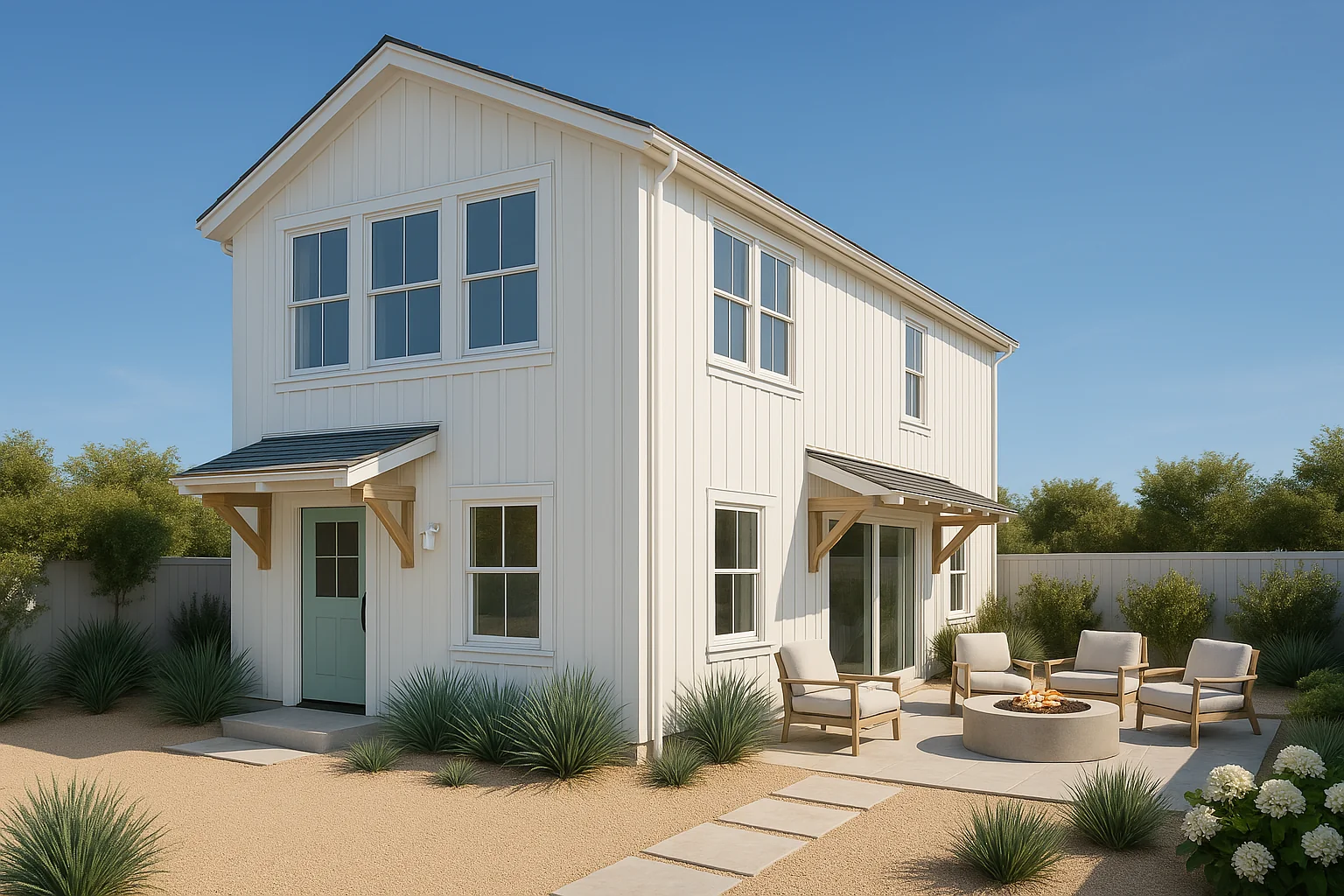
In R1 and R2, a detached ADU takes the height limit that applies to the primary residence — and the two zones differ. In R1 it is 27 feet to a flat roof, or 30 feet where the roof slopes at 3:12 or steeper. In R2 it is a flat 30 feet regardless of roof form. Other zones allow 30 feet.
Both zones also cap the unit at two stories, and that limit binds independently of the height figure. Thirty feet does not buy you a third floor.
That is well above the 16-to-20-foot detached envelope state law sets as the floor, and it changes what is worth designing. A 1,200 square foot program over two floors occupies about half the ground area of the same program on one level — which on a typical Culver City parcel is the difference between keeping a usable garden and paving it.
Setbacks
Side and rear setbacks are four feet where the ADU abuts a residential zone. Where it abuts a mixed-use or special-purpose zone, a street, or an alley, the requirement drops to two feet (CCMC § 17.400.095.L). A conversion within an existing structure needs no setback at all beyond fire safety. Front setbacks follow the underlying zone — subject to Gov. Code § 66321(b)(3), which bars any front-setback rule that would prevent an 800 sqft ADU with four-foot side and rear setbacks from being built.
If you own an apartment building
This is where Culver City gets genuinely interesting, and it is the part most ADU guides skip. Two separate allowances apply to a lot with a multifamily building, and they stack.
First, interior conversions. You may convert space that is not currently livable — storage rooms, boiler rooms, passageways, attics, basements, garages — into at least one ADU, and up to 25 percent of the units already in the building (Gov. Code § 66323(a)(3)(B)).
Second, detached units. You may build up to eight detached ADUs on a lot with an existing multifamily building, capped at the number of units already there (§ 66323(a)(4)). A proposed rather than existing building allows two. Detached units on these lots may go up to 30 feet — but only where the multifamily building is multistory (CCMC § 17.400.095.E.2.b.i). On a single-story garden-apartment lot, which Culver City has plenty of, that allowance does not apply.
| Existing building | Interior conversions | Detached ADUs | Total added |
|---|---|---|---|
| 4 units | 1 | Up to 4 | 5 |
| 8 units | 2 | Up to 8 | 10 |
| 12 units | 3 | Up to 8 (capped) | 11 |
| 24 units | 6 | Up to 8 (capped) | 14 |
The Signature ADU in Culver City
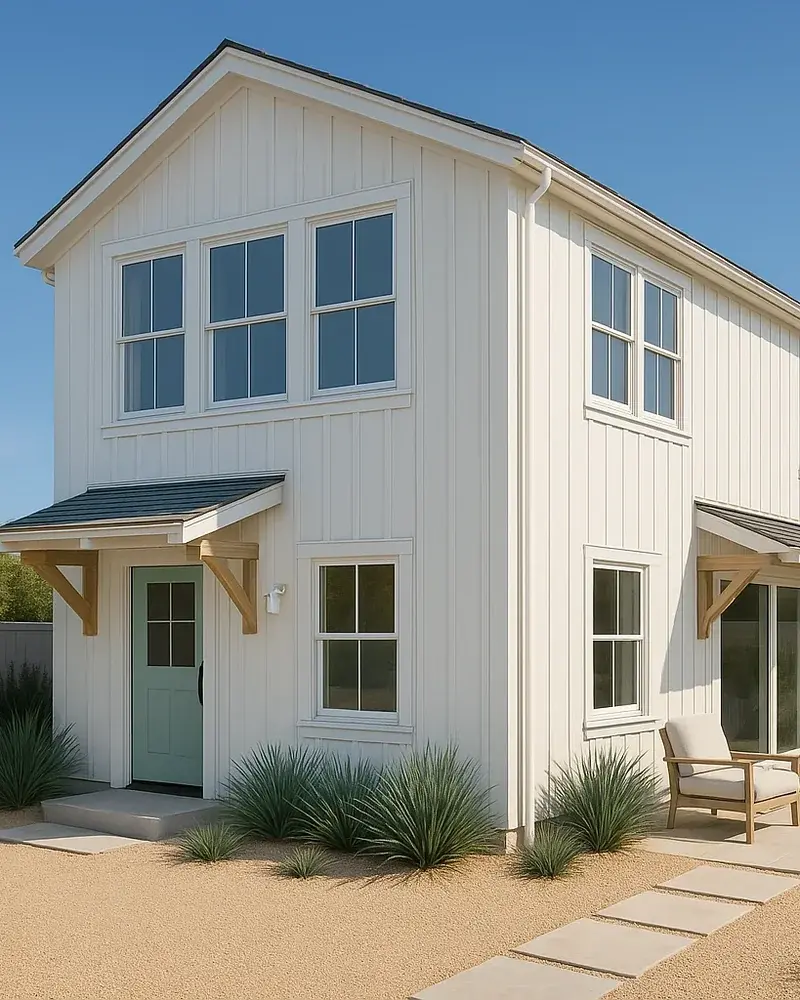
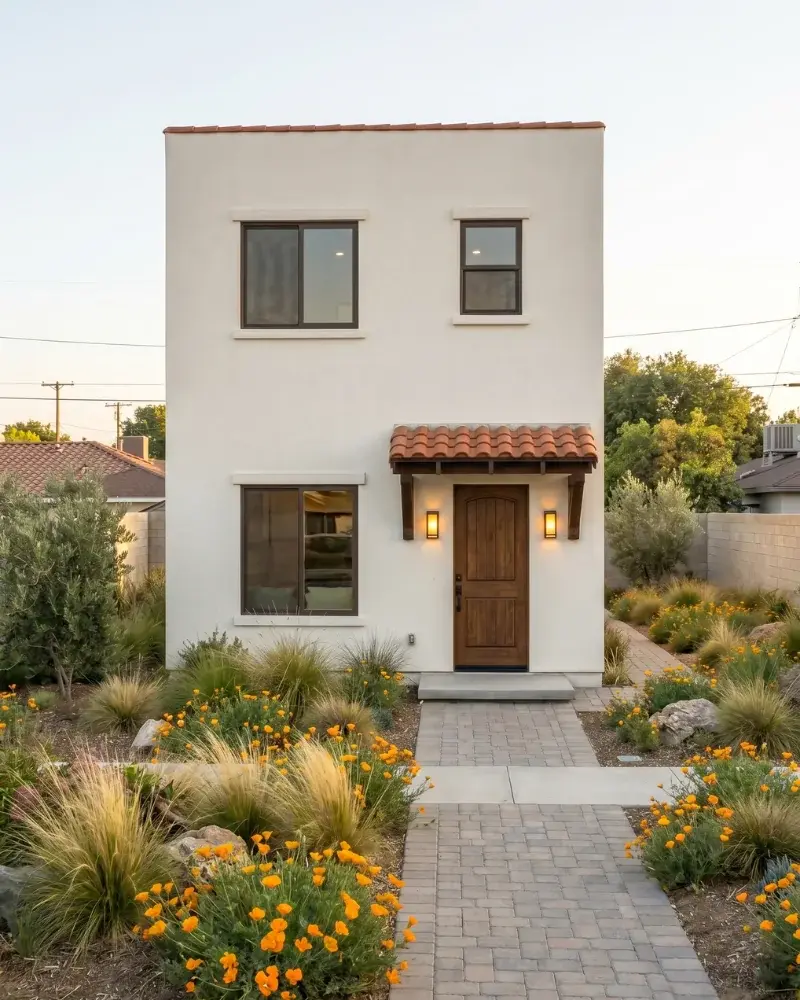
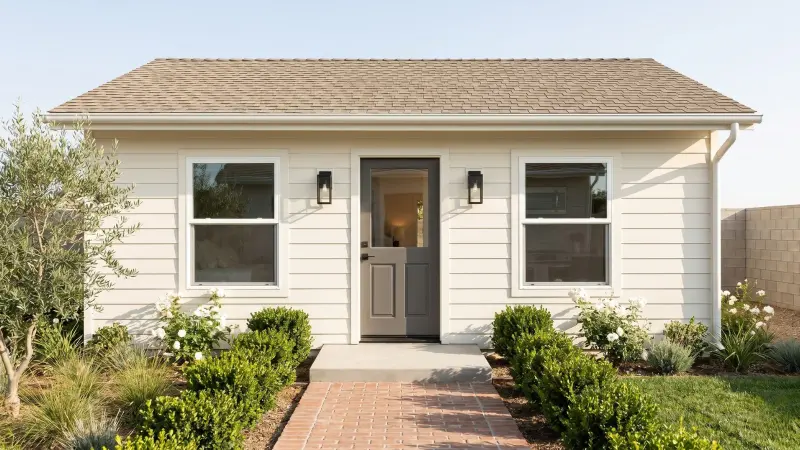
Culver City’s height envelope supports the full two-story lineup, so these are the plans that use the site best. Fixed design and permit pricing, the same number on any lot.
What an ADU costs in Culver City (2026)
Our plan fees are the same number on any lot, in Culver City or anywhere else we work. Construction is separate. Once your plans are permitted you can build with our construction partner or your own licensed contractor.
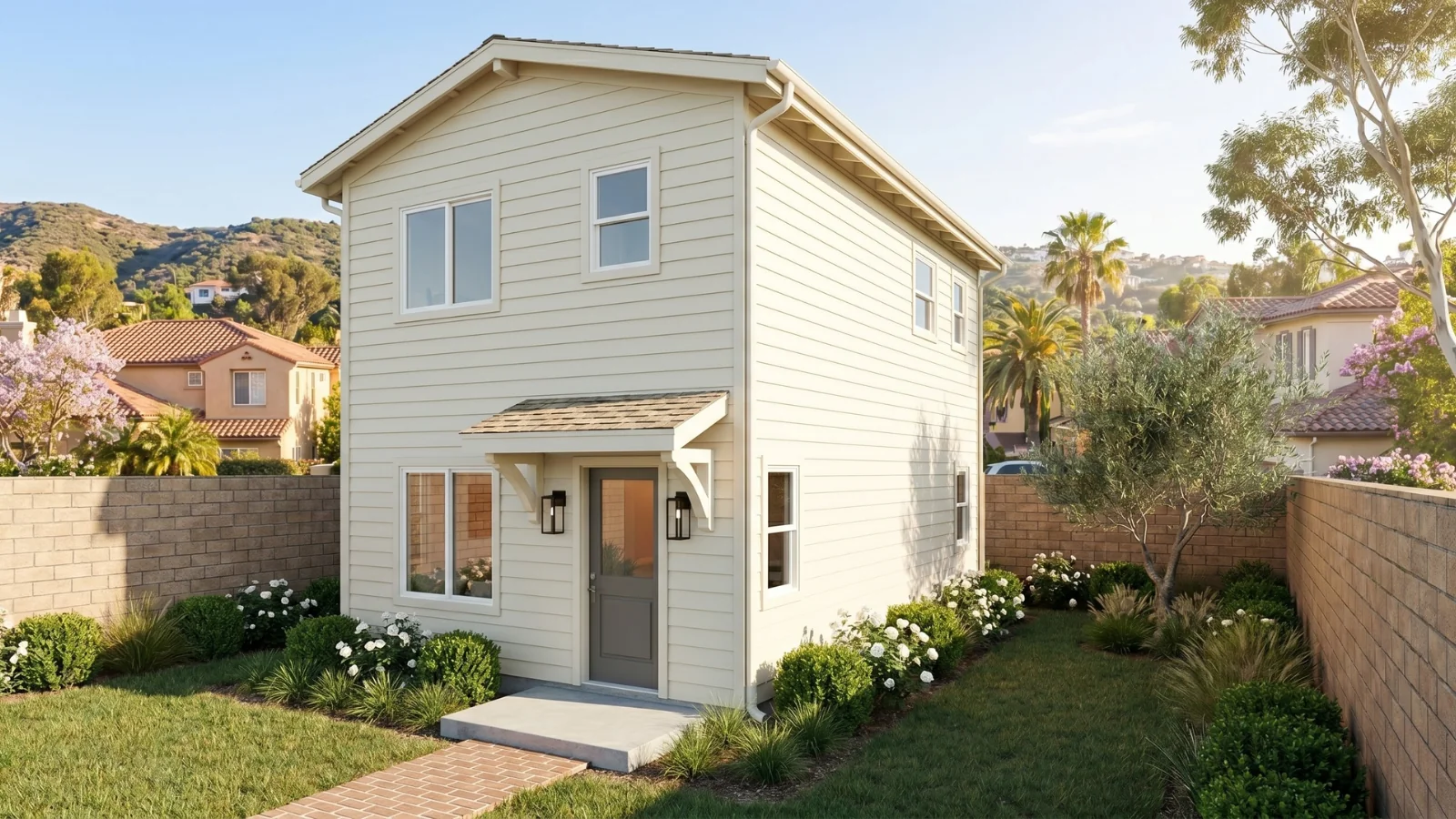
| Model | Configuration | Size | Stories | Est. cost to build |
|---|---|---|---|---|
| The Wilshire | Studio | 400 sqft | 1 | $180K–$200K |
| The Sunset | 1BR/1BA | 480 sqft | 1 | $200K–$215K |
| The Westwood | 1BR/1BA | 550 sqft | 1 | $215K–$235K |
| The Laurel Canyon | 2BR/1BA | 660 sqft | 1 | $240K–$265K |
| The Melrose | 2BR/2BA | 800 sqft | 1 | $275K–$295K |
| The Lincoln | 3BR/2BA | 1,000 sqft | 1 | $325K–$350K |
| The Fairfax | 2BR/1.5BA | 840 sqft | 2 | $280K–$310K |
| The Venice | 2BR/2.5BA | 1,080 sqft | 2 | $335K–$365K |
| The Culver | 3BR/2.5BA | 1,200 sqft | 2 | $385K–$420K |
If no stock plan fits your lot
A two-story plan can be modified, or we design a custom ADU from scratch — which runs $9,990–$19,990 for design and permit processing, bid per project. Multifamily projects are almost always custom, because the site drives the layout more than the unit does.
City fees
Permit and impact fees go to Culver City and are separate from both numbers above. State law caps what the City can charge: an ADU of 750 square feet of interior livable space or less is exempt from impact fees entirely under Gov. Code § 66311.5(c)(1), and a Junior ADU of 500 square feet or less is exempt as well.
Above 750 square feet, impact fees must be proportional to the size of your main house rather than charged as a flat per-unit amount (CCMC § 17.400.095.O.3). An ADU is also not treated as a new residential use for connection or capacity charges unless it is built alongside a new house (§ 66311.5(b)).
What it returns
Culver City ADUs are long-term rentals. For current rents, use the HUD Fair Market Rent schedule for the Los Angeles–Long Beach–Glendale area, which is published annually and is a defensible baseline, then check local listings for what comparable units in your own neighborhood are asking.
The separate-sale option changes the arithmetic in a way it does not anywhere else nearby. An ADU you can sell as a condominium is an asset you can realize without selling the main house — which is a different proposition from a unit that only ever contributes rent. Section 7 covers what that actually involves.
When an ADU isn’t the right move
We would rather you decide this before you spend anything. Four situations where the answer is often no, or not yet.
| Situation | What we would say |
|---|---|
| Your plan depends on short-term rental income. | It will not work. Plan on tenancies longer than 30 days. If the numbers only clear at nightly rates, the project does not pencil here. |
| You are counting on selling the ADU quickly. | The condominium route is real but it is not fast. It needs a recorded condo map, Davis-Stirling compliance, and written lienholder consent. Treat it as a medium-term option, not an exit. |
| You want an attached unit and have been told the 50% rule limits you. | Check the floor before you accept it. Gov. Code § 66321(b)(2) means the 50% rule can never cut an attached ADU below 850 sqft, or 1,000 sqft with two or more bedrooms — so on a 1,200 sqft house your cap is 850, not 600. A detached unit avoids the percentage rule entirely, but you may not need it to. |
| You have an unused garage and a modest budget. | Convert it rather than building new. No size cap, no setback beyond fire safety, no replacement parking, and no separate utility connection may be required. It is usually the cheapest permit in the city. |
How long an ADU takes
Both clocks have teeth. If the City misses the 15 business days, your application is deemed complete, and it cannot later demand an item it left off its own list. If it misses the 60 days, the application is deemed approved (Gov. Code § 66317).
The 60-day window covers the whole permitting agency — planning, building, and utilities alike. Building plan check happens inside it, not after. A denial must arrive with a full set of comments listing every deficiency.
| Stage | Typical duration | What happens |
|---|---|---|
| Design and construction documents | 6–10 weeks | Site plan, floor plans, elevations, structural, Title 24 energy compliance. |
| Completeness determination | 15 business days | Statutory. Written notice of what is missing and how to cure it, or the application is deemed complete. |
| Agency review and plan check | Within 60 days | Ministerial review against objective standards. No hearing, no discretionary design review. |
| Your response to comments | 2–6 weeks | Your team’s time rather than the City’s, and usually what drives the total. |
| Permit issuance | 1–2 weeks | Fees paid, permit issued, construction can begin. |
Selling an ADU, and other local rules
Selling the ADU separately
Gov. Code § 66342, added by AB 1033, lets a city choose to allow ADUs to be sold as condominiums. It is an opt-in: the default across California is that you cannot. Culver City opted in through CCMC § 17.400.096, added by Ordinance 2026-004.
What it means in practice is that the ADU becomes a separately titled unit. You can sell it, finance it against, or leave it to someone independently of the main house. For a homeowner who wants to release equity without moving, that is a materially different proposition from a rental unit.
Four requirements apply, and none of them is a formality.
| Requirement | What it involves |
|---|---|
| A recorded map | A parcel map or final map must establish the condominium parcels. Four or fewer parcels skip the tentative map; five or more need a tentative map and a final one. |
| Subdivision compliance | The project must meet the Davis-Stirling Common Interest Development Act and the Subdivision Map Act, plus CCMC Chapter 15.10. |
| A safety inspection | Required before the condominium plan is recorded, evidenced by a certificate of occupancy or a housing quality standards report from a HUD-certified inspector. |
| Lienholder consent | Written consent from every lienholder, provided to the county recorder with a signed statement, before any map or condominium plan can be recorded. |
The February 2026 amendments
Ordinance 2026-004 did more than add the condominium option. It brought CCMC § 17.400.095 current with the Junior ADU owner-occupancy narrowing under AB 1154 and confirmed the multifamily counts from SB 1211.
The practical effect is that Culver City is one of the few cities on this side of the county where you are unlikely to hit a gap between the local ordinance and state law. Where a gap did appear, the ordinance resolves it itself.
Short-term rental
Rentals of 30 days or less are prohibited. This is not a discretionary local choice: Gov. Code § 66323(e) says a local agency shall require a term longer than 30 days for these units, and Culver City states the same prohibition directly at CCMC § 17.400.095.K, with § 17.400.095.M.7 covering Junior ADUs. If your numbers depend on nightly or weekly income, they will not work here.
What Culver City does not have
Culver City is not a coastal jurisdiction, so no Coastal Development Permit is in play. And § 17.400.095 contains no historic-district visibility standard of the kind that shapes ADU design in Pasadena or Santa Monica — though the City does run a historic preservation program under CCMC Chapter 15.05, so check whether your property is a designated landmark.
Fire hazard zones
Culver City does contain Very High Fire Hazard Severity Zone area. Following the State Fire Marshal’s March 2025 map release, the Fire Department has recommended retaining the previous Very High boundaries, which principally affect Blair Hills and Culver Crest.
If your lot is in one, expect wildland-urban-interface construction standards under Chapter 7A of the Building Code, defensible-space requirements, and natural-hazard disclosure. Those change both the detailing and the cost. Confirm your parcel’s status with the Fire Department before you budget.
How the permit process works
Ministerial means a reviewer applies the numbers in the ordinance to your drawings. Design taste, neighborhood opinion, and discretion are not part of it. That is a state requirement under Gov. Code § 66317, and Culver City’s ordinance implements it directly.
What you submit
A complete application is the single biggest factor in how long this takes. Expect a site plan, floor plans, elevations, structural drawings, and Title 24 energy documentation.
The completeness step is bounded. Gov. Code § 66317(a)(2) gives the City 15 business days to decide in writing, with a list of what is missing and how to fix it, and it cannot later demand something it left off that list.
If you are adding units to an apartment building
The ADU approvals themselves are still ministerial, but a multifamily project carries work a single-family one does not: fire separation between units, utility capacity across the whole site, and often a parking reconfiguration — even though no parking is required for the new ADUs themselves.
Build the survey and utility investigation into your program early. On multifamily sites those are what determine how many of the eight detached units your lot can actually take.
Unpermitted work already on the property
Old work does not automatically block a new ADU. Under Gov. Code § 66322(b) the City may not deny your application over nonconforming zoning conditions, code violations, or unpermitted structures that do not threaten health and safety and are not affected by the ADU you are building.
If the unpermitted structure is itself an ADU or Junior ADU built before January 1, 2020, Gov. Code § 66311.7 is stronger still: no denial over most violations, no penalties, and generally no impact fees or connection charges on the legalized unit. The protections narrow where the building is deemed substandard, or where utility work is needed to satisfy Health and Safety Code § 17920.3.
Culver City ADU questions, answered
The questions Culver City homeowners and property owners actually ask — answered against CCMC § 17.400.095 and current state law.
How many ADUs can I build on a Culver City lot?
On a single-family lot, three: one conversion ADU carved out of existing space, one newly built detached ADU, and one Junior ADU (CCMC § 17.400.095.E.1). That matches the full state stack at Gov. Code § 66323. On a lot with an apartment building the numbers are much larger — see the multifamily answer below.
How many ADUs can I add to a Culver City apartment building?
Two separate allowances stack. You may convert non-livable space inside the existing building — storage, boiler rooms, passageways, attics, basements, garages — into at least one ADU and up to 25 percent of the existing unit count (Gov. Code § 66323(a)(3)(B)). On top of that you may build up to eight detached ADUs, capped at the number of units already on the lot (§ 66323(a)(4)). A proposed rather than existing building allows two detached. A 12-unit Culver City building could therefore add three conversion units plus eight detached ones.
Can I sell my Culver City ADU separately from the main house?
Yes — and that is genuinely rare. Culver City opted into AB 1033 through CCMC § 17.400.096, added by Ordinance 2026-004 and effective February 9, 2026. An ADU may be sold as a condominium under Gov. Code § 66342. The requirements are substantial: a parcel map or final map to establish the condominium parcels (four or fewer parcels skip the tentative map; five or more need a tentative map and a final one), compliance with the Davis-Stirling Common Interest Development Act and the Subdivision Map Act, a safety inspection before the condominium plan is recorded — evidenced by a certificate of occupancy or a HUD-certified housing quality standards report — and written lienholder consent. The default across California is that separate sale is not permitted unless a city opts in, so this is a meaningful local advantage.
Does Culver City require parking for an ADU?
No. CCMC § 17.400.095.I imposes no parking requirement for an ADU, and § 17.400.095.M.4 imposes none for a Junior ADU. Replacement parking is not required either, so you can convert a garage without rebuilding the spaces. This is a flat waiver, not a list of exemptions you have to qualify for — Culver City goes further than the state floor at Gov. Code § 66322, which only removes parking in specific situations.
How tall can a detached ADU be in Culver City?
The limit is the one that applies to the primary residence in your zone, and R1 and R2 differ. In R1 it is 27 feet to a flat roof, or 30 feet where the roof slopes at 3:12 or steeper. In R2 it is a flat 30 feet regardless of roof form. Other zones allow 30 feet. Both R1 and R2 also cap the unit at two stories, and that limit binds independently of the height figure (CCMC § 17.400.095.F, applying § 17.210.020 Table 2-3). This is an unusually generous envelope — well above the 16-to-20 foot detached floor state law guarantees — and it is why a full two-story ADU is a normal design here rather than an exception.
How big can a Culver City ADU be?
A detached ADU may be up to 850 square feet for a studio or one-bedroom, and 1,200 square feet with two or more bedrooms. An attached ADU takes the same caps or 50 percent of the primary dwelling, whichever is less. An ADU created entirely within the existing house has no size cap at all. The minimum for any ADU is 150 square feet, and a Junior ADU is capped at 500 (CCMC § 17.400.095.B–C, M.1). On height, an attached ADU takes the primary-residence limit for your zone, but Gov. Code § 66321(b)(4)(D) sets a floor underneath that: 25 feet, or the height limit that applies to your primary dwelling if that is lower. A zone limit below 25 feet cannot be used to push an attached ADU below the primary dwelling’s own allowance.
What are the setback rules in Culver City?
Four feet from side and rear lot lines where the ADU abuts a residential zone, and only two feet where it abuts a mixed-use or special-purpose zone, a street, or an alley (CCMC § 17.400.095.L). An ADU created within an existing structure needs no setback at all beyond what fire safety requires. The two-foot allowance on alley-facing lots is more generous than the state floor and is worth designing around on Culver City’s many alley-served parcels.
Do I have to live on the property to build an ADU in Culver City?
No. CCMC § 17.400.095.K imposes no owner-occupancy requirement on an ADU, matching the state prohibition at Gov. Code § 66315. For a Junior ADU, owner-occupancy applies only where the unit shares sanitation facilities with the main house, per Gov. Code § 66333 as narrowed by AB 1154 on January 1, 2026. Culver City’s ordinance was already written that way, so there is no gap between the local rule and the state rule.
Is Culver City’s ADU ordinance up to date with state law?
Yes — it is the most current ordinance among the cities we cover. CCMC § 17.400.095 runs through Ordinance 2026-004, incorporates the Gov. Code § 66323 statewide exemption ADU directly, already reflects the SB 1211 multifamily counts and the AB 1154 Junior ADU narrowing, and adds the AB 1033 condominium option. The ordinance also carries its own supremacy clause stating that Gov. Code §§ 66310–66342 override any conflicting portion of it.
What does an ADU cost in Culver City?
Our Signature plan fees are fixed, and cover architectural design and full permit processing. Construction is separate and depends on the model, the site, and your contractor. City permit and impact fees are paid to Culver City on top of both. An ADU of 750 square feet of interior livable space or less is exempt from impact fees entirely under Gov. Code § 66311.5(c)(1); above that, fees must be proportional to the size of your main house rather than a flat per-unit charge.
Can I build a two-story ADU in Culver City?
Yes, and it is one of the better markets in Los Angeles County for it. The 27-foot flat and 30-foot pitched envelope in R1 and R2 comfortably accommodates a two-story detached unit, which lets you put a 1,200 square foot program on roughly half the ground footprint. On a typical Culver City lot that difference is the difference between keeping a usable back garden and losing it.
How long does an ADU permit take in Culver City?
State law gives the City 15 business days to determine whether your application is complete, in writing, and 60 days from completeness to approve or deny it (Gov. Code § 66317). Review is ministerial — no hearing, no discretionary design review. Plan for the overall project to run longer than the statutory clocks: design and construction documents come first, and your turnaround on any plan-check comments is usually what drives the total. Budget six to twelve months from first drawing to permit in hand.
Can I rent a Culver City ADU short-term?
No. Rentals of 30 days or less are prohibited. Gov. Code § 66323(e) requires a local agency to impose a term longer than 30 days on these units — it is mandatory, not optional — and Culver City states the prohibition directly at CCMC § 17.400.095.K, with § 17.400.095.M.7 covering Junior ADUs. Plan for a tenancy of at least 31 days.
Can Culver City make me fix unpermitted work before approving my ADU?
Generally no. Under Gov. Code § 66322(b) a city may not deny an ADU application because of nonconforming zoning conditions, code violations, or unpermitted structures that do not threaten health and safety and are not affected by the ADU you are building. If the unpermitted structure is itself an ADU or Junior ADU built before January 1, 2020, Gov. Code § 66311.7 goes further — the City may not deny the permit over most violations, may not penalize you, and may not charge impact fees or connection charges on it.
Official sources
Culver City
- CCMC § 17.400.095 — Accessory Dwelling Units. Current through Ordinance 2026-004. View on American Legal
- CCMC § 17.400.096 — ADU Condominiums. Added by Ordinance 2026-004; this is the AB 1033 opt-in, effective February 9, 2026. View on American Legal
- City of Culver City ADU page — program information, handbook, and the PRADU pre-approved plans. culvercity.gov
California
- Gov. Code §§ 66310–66342 — state ADU law, renumbered by SB 477 effective March 25, 2024. leginfo.legislature.ca.gov
- Gov. Code § 66342 — AB 1033, the statute behind the condominium option. leginfo.legislature.ca.gov
- HCD ADU Handbook — the state’s official interpretive guidance. hcd.ca.gov
Rules change. Culver City amended its ordinance in February 2026 and state ADU law is amended most Januaries. If you are reading this long after publication, confirm the current version before you commit to a design — or call us and we will confirm it for you.
Not sure what your lot
can actually support?
Get clarity before you spend anything on plans. In 15 minutes we will pull up your property, run the CCMC § 17.400.095 numbers against your lot, work out whether two stories or a conversion serves you better, and give you an honest read on your options and a realistic budget — including whether an ADU is the right move at all.
15-minute video call · No obligation