

Building an ADU in unincorporated LA County. Rules, costs, timeline.
Altadena, East Los Angeles, Topanga and Hacienda Heights are not cities. A different rulebook applies to them, and on several points it is more generous than the City of Los Angeles.
What you can build — at a glance
Reviewed by CALI ADU’s ADU specialists · August 2026
- Governing law
- County Title 22 Unincorporated county land runs on County Code Title 22, adopted July 2025. This is not the City of Los Angeles code, and the two differ substantially.
- Max ADU size
- Up to 1,200 sqft 1,200 sqft for new construction. A unit built entirely inside an existing home, or converted from an existing accessory structure, has no maximum at all.
- Height
- Up to 25 ft 25 ft whether attached or detached, which is far above the state minimum. A conversion has no height limit. Near a designated scenic route the cap drops to 18 ft.
- Side & rear setbacks
- 4 ft Four feet, and none at all for a conversion or a same-footprint rebuild. An ADU of 800 sqft or less may encroach into the front setback — the County attaches an “only if there is nowhere else” condition that the State has told it to delete.
- Parking required
- None, mostly No parking at all outside a fire severity zone. Inside one, seven exceptions apply and tandem spaces count.
- Units per SFR lot
- 3, likely 4 The conversion ADU or the Junior ADU — or both — plus a detached unit. The State told the County in December 2025 that its table must also reflect at least one more unit on top.
- Apartment lots
- Code 2 · State 8 The code says two detached units. State law requires up to eight on a lot that already has an apartment building, and the State told the County to amend in December 2025.
- Fire severity zones
- Two-access rule A two-access-route rule applies in fire severity zones — but the state-mandated units are expressly carved out of it.
- Detached Up to 1,200 sqft · up to 25 ft, so two stories is viable
- Attached Same 1,200 sqft and 25 ft envelope
- Conversion No size cap, no height cap, no setback added
- Junior ADU Up to 500 sqft inside the house · owner-occupancy rules are in flux
- Coastal Zone A separate, harsher rulebook — § 22.44.1370: one unit, 750 sqft, and a development credit to retire
Per Los Angeles County Code Title 22 § 22.140.640 (Ordinance 2025-0029, adopted July 29, 2025), as codified through Ordinance 2026-0013 passed May 19, 2026. Coastal Zone parcels are governed instead by § 22.44.1370. Read together with Gov. Code §§ 66310–66342 and cross-checked against HCD's findings letter to the County dated December 1, 2025 and the HCD ADU Handbook (March 2026). Full citations in the sections below.
On this page
Am I in unincorporated county, and can I build?
About a million people live in unincorporated Los Angeles County, and a great many of them do not know it. These places have their own names, their own ZIP codes and strong local identities. None of that makes them cities.
The check that settles it
Use Z-NET, the County Planning zoning application, and enter your address or parcel number. The County publishes it with a refreshingly direct instruction: use it to find your zoning and verify that we are your planning department.
Z-NET carries zoning only for unincorporated territory, and shows a city mask by default. If your parcel comes back masked in white with no zoning data, you are inside one of the 88 incorporated cities. This page does not apply to you. If a zone code renders on the parcel, Title 22 is your rulebook.
Five things to know before you start
These five decide most unincorporated county projects. Everything further down the page is detail underneath them.
| What to know | Why it matters for your project |
|---|---|
| 25 feet, not 16 | The County allows an attached or detached ADU up to 25 feet, so a genuine two-story unit is on the table here. |
| No parking outside fire zones | Section 22.140.640 G.1.d.i requires no parking at all for an ADU outside a Very High Fire Hazard Severity Zone. |
| Fire zones are not a ban | The two-access rule expressly excludes the state-mandated units, and the State has questioned the rule anyway. |
| The apartment cap is preempted | Title 22 says two detached units on a multifamily lot. State law says up to eight where the building already exists, and HCD told the County to amend. |
| Septic changes everything | Large parts of the county are on septic. Health Department review and percolation testing add real time and cost. |
What you can build in unincorporated Los Angeles County
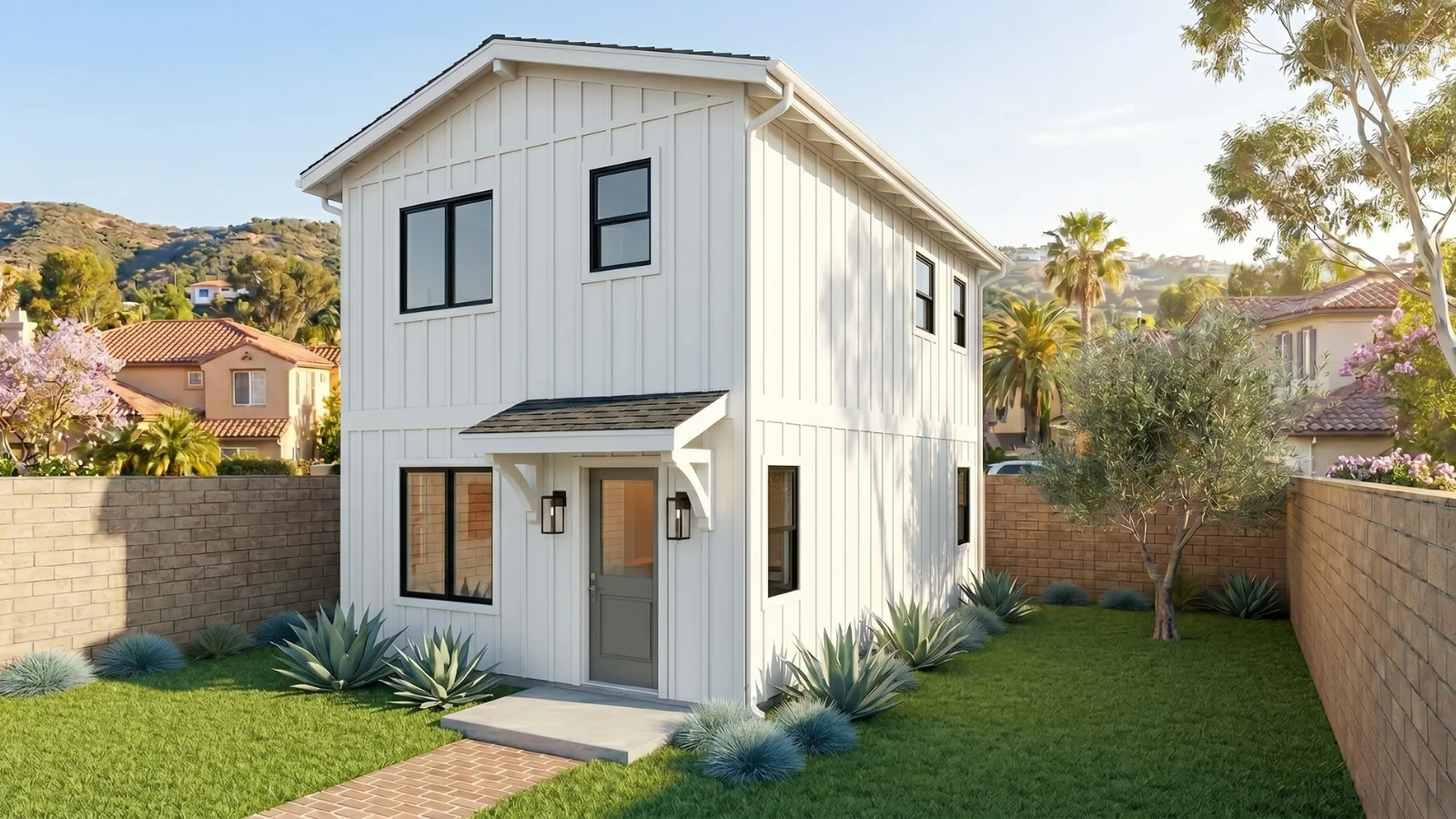
The height number is the surprising one. Most cities in the county cap a detached ADU at 16 feet, which forces every unit onto one level. Section 22.140.640 G.1.b.i sets 25 feet for an attached or detached ADU, which is enough for a real second story.
Two things can pull that down. A Community Standards District or Specific Plan may set a lower figure, though never below the state floors of 16 and 18 feet. And within 200 feet of an adopted scenic route, the ADU may not exceed the height of the main house or 18 feet, whichever is less — but the subsection carries its own floor, “provided at least the heights in Subsection G.1.b.iii.1 to G.1.b.iii.3, above, are allowed.” So a low main house does not drag you below the 16 and 18 foot state minimums.
Which ADU type fits your property?
Start from what your lot already has rather than from a floor plan. In unincorporated county the conversions are unusually attractive, because they escape the size and height caps entirely.
| If your lot has… | The type that usually fits | Why |
|---|---|---|
| A large house with unused space | Interior conversion | No maximum floor area and no maximum height apply to a unit entirely within an existing residence. |
| A barn, workshop or detached garage | Accessory structure conversion | Also uncapped on size and height, and you may add 150 sqft for ingress and egress. |
| Open rear yard | Detached new build | 1,200 sqft at up to 25 ft, which is a two-story envelope on a normal lot. |
| A lot in a fire severity zone | The state 800 sqft unit | Subsection H units are expressly carved out of the two-access prohibition in Subsection C. |
| An apartment building | Conversion plus detached | Conversions of non-livable space — at least one, or 25 percent of existing units, whichever is more (§ 66323(a)(3)(B)) — plus up to eight detached (§ 66323(a)(4)(A)(ii)). The County’s own table is broader on what may be converted. |
| A Coastal Zone parcel | A different conversation entirely | Section 22.44.1370 applies instead: one unit, 750 sqft, and a development credit you have to buy and retire. |
Fire severity zones, and the carve-out that matters
Large parts of unincorporated county sit in a Very High Fire Hazard Severity Zone, and the rule that applies there has denied people ADUs they were entitled to build.
Section 22.140.640.C prohibits an ADU on a lot in a fire severity zone unless it has two distinct means of vehicular access to a highway. Each must be at least 24 feet wide and built to Public Works standards. On a canyon lot or a rural parcel that is often impossible.
Read the opening words of the subsection, though. The prohibition applies to accessory dwelling units “except for those described in Subsection H.” Subsection H is where the state-mandated units live, including the detached unit of up to 800 square feet. Those are carved out of the prohibition by the County’s own text.
There is a second escape as well, and it is easy to miss. Subsection C.2 permits an ADU on a lot with a single means of vehicular access where the lot fronts a highway and vehicles enter directly from it. If that describes your parcel, the two-access rule does not apply even to the larger ordinance-route unit.
Fire sprinklers in a fire severity zone
One more thing worth knowing on a fire-zone parcel. Gov. Code § 66314(d)(12) provides that an ADU need not have fire sprinklers if they are not required for the primary residence, and that building an ADU cannot trigger a sprinkler requirement in the main house. Gov. Code § 66323(d) says the same for the state-mandated units. Being in a fire severity zone does not by itself change that.
If you own an apartment building
This is where Title 22 and state law part company, and the gap is worth real money on a multifamily parcel.
Section 22.140.640 H.1.b.ii allows “a maximum of two detached accessory dwelling” units on a multifamily lot. State law is far more generous. Gov. Code § 66323(a)(4)(A)(ii) requires ministerial approval of “not more than eight detached accessory dwelling units” on a lot with an existing multifamily dwelling. The number may not exceed the units already there.
HCD put this to the County directly in its findings letter of December 1, 2025: the County “must amend the Ordinance to provide for up to eight ADUs on a lot with an existing multifamily dwelling.” The County had not amended when this page was last verified.
| Existing units | Interior conversions | Detached under state law | Total new units |
|---|---|---|---|
| 4 units | 1 | 4 | 5 |
| 8 units | 2 | 8 | 10 |
| 12 units | 3 | 8 | 11 |
| 24 units | 6 | 8 | 14 |
If you are in Topanga or the coastal mountains
Stop and read a different section. Section 22.140.640 hands off Coastal Zone parcels to the applicable Local Coastal Program, and for the Santa Monica Mountains that is section 22.44.1370, part of the Santa Monica Mountains Local Implementation Program. The section’s own history line still reads “(Ord. 2019-0004 § 1, 2019.)”, while the LIP document the County publishes is labelled “Amended November 2025”; we could not establish which provisions that amendment touched, so treat the section text as operative and check its currency before you rely on it. It is far more restrictive than anything above.
It allows only one accessory dwelling unit or habitable accessory structure on a property, and caps it at 750 square feet. It requires the retirement of a transfer of development credit. It requires its own onsite wastewater system, separate from the main house. And it prohibits the unit in H1 habitat, H1 buffer and the Quiet Zone.
Check the stricter second-unit category first, because most coastal Topanga parcels fall into it. Three things trigger it: being in a fire severity zone, having no public sewer, or having no public water. It then adds a one-acre minimum lot size, 35-foot yards and a major coastal development permit. It also bars a second unit on land more than 2,500 feet from Pacific Coast Highway, or on natural slopes of 25 percent or more.
What a transfer of development credit actually is
This is the requirement that surprises people most, so it is worth setting out plainly. It is not a fee. It is a no-net-new- development ledger for the Santa Monica Mountains, and it means you have to permanently kill a buildable lot somewhere else before you can add a unit on yours.
Section 22.44.1230 explains the reasoning. The mountains contain thousands of undeveloped private parcels. Roads and water lines are limited and not expected to expand. Full build-out of every legal lot would overwhelm both. So for each new accessory dwelling unit created, an existing qualifying lot must be retired.
In practice you buy either a qualifying lot, or just the right to extinguish its development potential. Then you retire it permanently — either by dedicating an open-space easement and merging the lot, or by recording an open-space deed restriction and conveying it to a public entity. County Counsel reviews the paperwork. The credit must be in hand before your permit issues, not before you move in.
Donor lots come from named rural villages, and three of them — Fernwood, Topanga Oaks and Topanga Woods — are in Topanga itself. They are mostly small paper lots from nineteen-twenties subdivisions.
What a credit costs
Does the state’s 800 square foot floor apply out here?
This is the right question to ask, and the honest answer is that it is arguable rather than settled. Anyone who tells you it is clear in either direction is overstating.
Gov. Code § 66321(b)(3) bars a local agency from imposing any size cap that fails to permit an ADU of at least 800 square feet, and the Local Implementation Program is a County ordinance. Gov. Code § 66329 by its own words preserves the Coastal Act — it does not say “local coastal program.” HCD reads the savings clause as protecting Coastal Act resource protection policies. A flat 750 square foot cap protects no identified coastal resource, and this LCP already has separate provisions doing that work.
The other side is stronger than you would hope. The Coastal Commission told coastal jurisdictions in January 2022 that ADU provisions in certified programs “are not superseded” and keep applying to coastal permits until the program is modified. Its July 2026 guidance does concede the category: standards that conflict with state ADU law, and are not necessary to protect coastal resources, should be modified. But it directs that through the local variance and amendment process rather than treating state law as self-executing. And here the variance authority reaches only yard standards, not floor area.
None of the 1,200 square foot and 25-foot figures on this page carry over to a coastal parcel. If that is you, call us before you spend anything — the feasibility question comes first.
The Signature ADU lineup
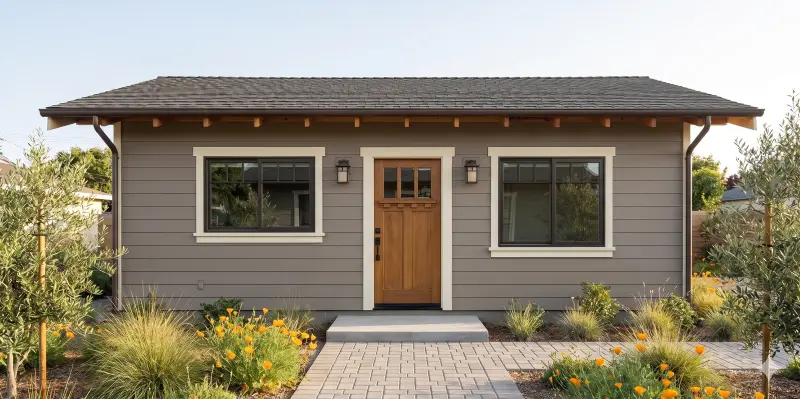
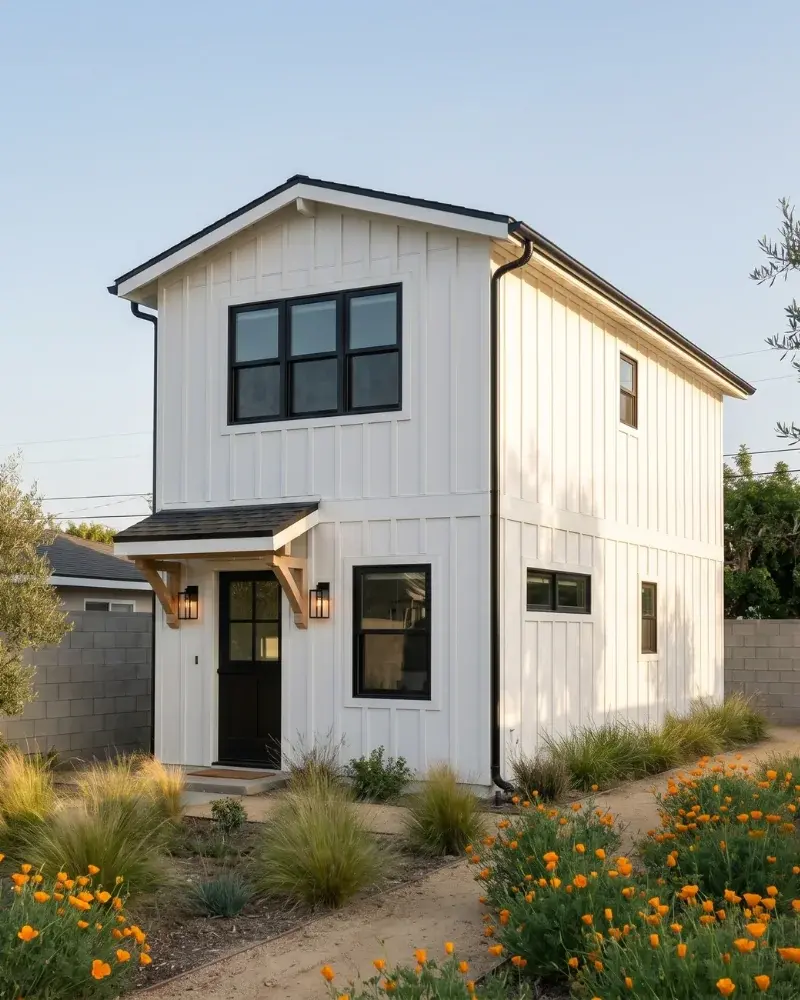
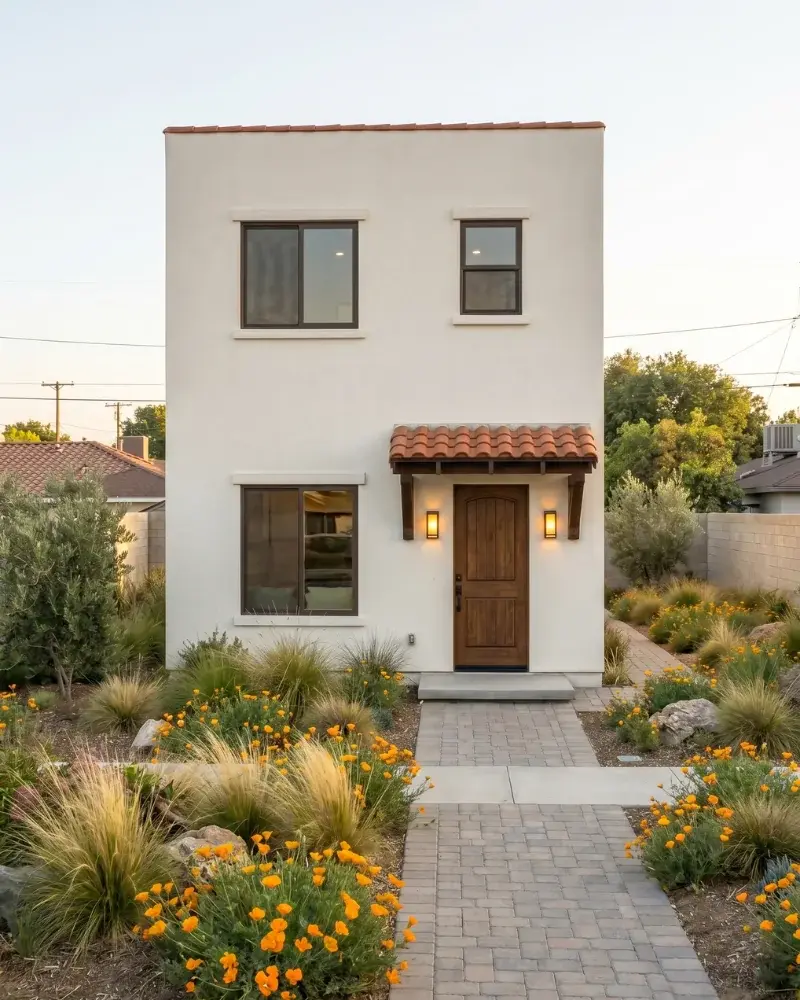
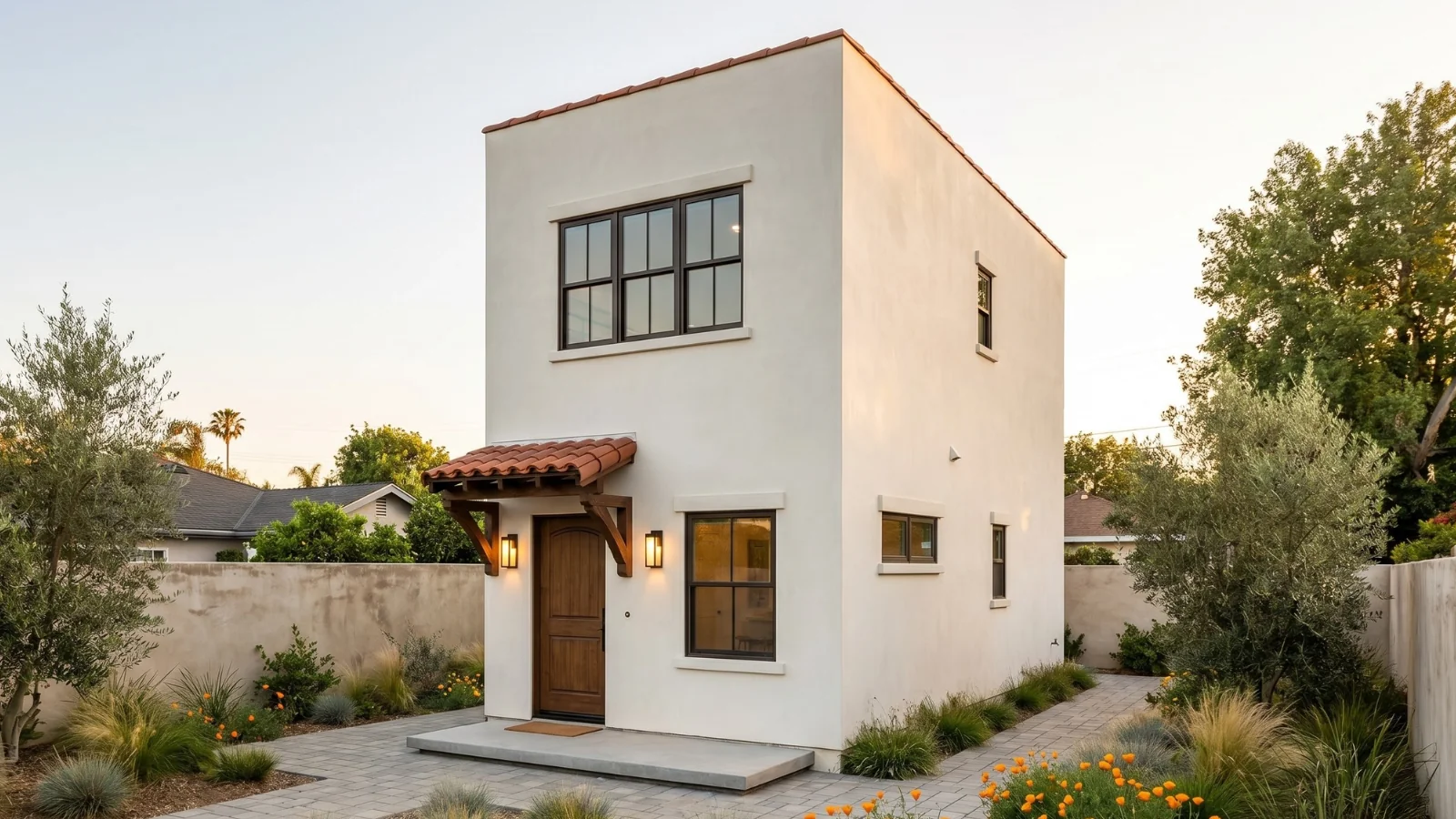
Architect-designed plans at fixed design and permit pricing, all inside the County’s 1,200 square foot limit. The two-story plans permit as drawn under the 25-foot allowance, which is not true in most of the cities nearby.
What an ADU costs in unincorporated county (2026)
Our plan fees are the same number on any lot, in unincorporated county or anywhere else we work. Construction is separate. Once your plans are permitted you can build with our construction partner or your own licensed contractor.
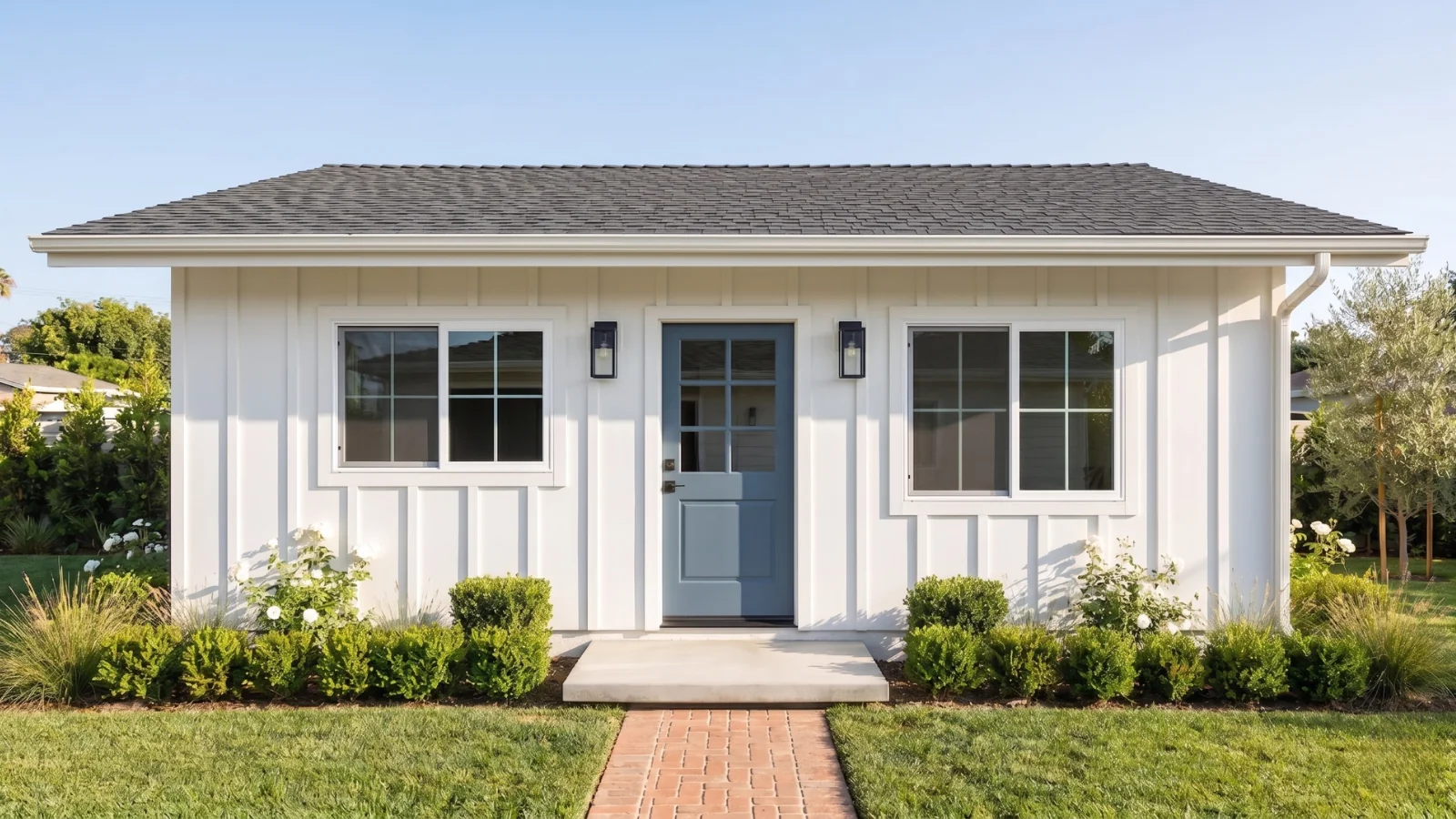
What the lineup costs to build
Plan fees are fixed. Construction is estimated, and varies with your site, access, and the finish level you choose.
| Plan | Size | Bed / bath | Est. build cost |
|---|---|---|---|
| The Wilshire | 400 sqft | Studio | $180K–$200K |
| The Sunset | 480 sqft | 1 BR / 1 BA | $200K–$215K |
| The Westwood | 550 sqft | 1 BR / 1 BA | $215K–$235K |
| The Laurel Canyon | 660 sqft | 2 BR / 1 BA | $240K–$265K |
| The Melrose | 800 sqft | 2 BR / 2 BA | $275K–$295K |
| The Fairfax | 840 sqft | 2 BR / 1.5 BA | $280K–$310K |
| The Lincoln | 1,000 sqft | 3 BR / 2 BA | $325K–$350K |
| The Venice | 1,080 sqft | 2 BR / 2.5 BA | $335K–$365K |
If none of the plans suits your lot, we also design custom ADUs from scratch — which runs $9,990–$19,990 for design and permit processing, bid per project.
County fees
Two departments charge you. Regional Planning takes a filing fee for the zoning review. Public Works takes valuation-based building permit and plan check fees. There is no ADU-specific line item in the Planning schedule, so the entry that applies depends on your parcel.
| Fee | Rate, effective March 1 2026 |
|---|---|
| Ministerial site plan review, residential | $1,496 where no other site-plan-review fee applies. |
| Ministerial site plan review, special districts | $1,995 for Community Standards Districts, hillside and similar areas. |
| Significant Ecological Area review, ministerial | $1,448 where the parcel is inside a mapped SEA. |
| Ministerial site plan review, coastal | $1,765 for an approval in concept in the Coastal Zone. |
| Permit issuance | $41.35 added to all building permit fees. |
| Building permit and plan check | Valuation-based. At $250,000 of valuation, roughly $3,352 plan check and $3,977 permit. |
A note on older figures. The County’s own step-by-step ADU guide still quotes a ministerial site plan review at $977 to $1,193, which comes from a superseded schedule. Use the March 2026 numbers.
Impact fees are barred entirely on an ADU of 750 square feet or less, and on any Junior ADU of 500 square feet or less, under Gov. Code § 66311.5(c)(1). Park fees fall inside that bar too, because § 66311.5(c)(2) brings § 66477 fees within the definition. Above 750 square feet, fees must be charged proportionately to the size of your main house.
School fees depend on which district serves your parcel. Unincorporated county is served by dozens: Pasadena Unified for Altadena, Hacienda La Puente, Rowland, Lennox, the Antelope Valley districts and many more. An ADU under 500 square feet is not subject to school fees at all under Gov. Code § 66311.5(c)(3). Above that, ask the district directly.
Septic parcels
If your property is on an onsite wastewater treatment system rather than a sewer, budget for it early. The County Department of Public Health, Environmental Health reviews the system. Adding a dwelling unit generally means percolation testing and a soils evaluation.
This is the single most common reason an unincorporated project takes longer and costs more than a comparable city one, and it is worth resolving before you commission drawings rather than after.
What it returns
Unincorporated county ADUs are long-term rentals. For current rents, use the HUD Fair Market Rent schedule for the Los Angeles–Long Beach–Glendale area, published annually and a defensible baseline, then check local listings for what comparable units in your own community are asking.
How long an ADU takes in unincorporated Los Angeles County
Section 22.140.640.D.1 sets the 60-day clock. It is tolled only if you ask for a delay in writing. And if an application is denied, the County must return a full set of comments listing every item that is defective or deficient. It cannot raise objections one at a time.
Watch one trap. The stale 2019 version of the ordinance still circulating online recites a 120-day decision period. It does not apply, and neither does anything else in that document.
| Stage | Typical duration | What governs it |
|---|---|---|
| Septic or sewer determination | 2–8 weeks if on septic | Public Health review, percolation testing and soils work. Start here on a rural parcel. |
| Design and construction documents | 6–10 weeks | Your decisions, mostly. This is the stage you control. |
| Completeness determination | 15 business days | Statutory. Written notice of what is missing and how to cure it, or the application is deemed complete. |
| Zoning decision | Within 60 days | Section 22.140.640.D.1 and Gov. Code § 66317(a)(3), tolled only by a written request from you. Miss it and the application is deemed approved. |
| Agency clearances | Highly variable | Fire, Public Health, the sanitation district, the school district and Parks. You contact each one yourself. |
| Construction | 4–8 months | Site access, weather, and your contractor’s schedule. |
The agency clearance row is where unincorporated schedules genuinely differ from city ones. Public Works issues an Agency Referral Sheet listing every agency your project touches, and the County’s own guide states that the applicant is responsible for contacting each agency identified on it. Nobody chases them for you.
The pre-approved plan program can compress the design stage. The County publishes no building plan-check turnaround time, so treat any specific day count you are quoted as an estimate.
Where Title 22 is out of date
Section 22.140.640 was most recently amended by Ordinance 2025-0029, adopted on July 29, 2025. The code as published is current through Ordinance 2026-0013, passed May 19, 2026 — and the ADU section’s own history line stops at 2025-0029, which is how we know nothing has changed since.
On December 1, 2025 HCD wrote to the Director of Regional Planning under Gov. Code § 66326(a) with a plain conclusion: it “finds that the Ordinance fails to comply with State ADU Laws in the manner noted below.” The County was given until December 31, 2025 to respond.
| What HCD found | What it means for you |
|---|---|
| Multifamily cap of two detached units | State law requires up to eight. HCD: the County “must amend the Ordinance to provide for up to eight ADUs on a lot with an existing multifamily dwelling.” |
| The unit table omits ordinance units | Units created under Gov. Code § 66314 must also be reflected, so the true maximum count is higher than the table suggests. |
| Height rules omit the attached condition | The 25-foot-or-zone-limit rule for an attached ADU at § 66321(b)(4)(D) is not reflected in the ordinance. |
| Front setback siting language | Gov. Code § 66321(b)(3) protects a unit of at least 800 sqft and bars siting conditions that defeat it. HCD told the County to remove the limiting language. |
| “Character-defining features” is subjective | Gov. Code § 66314(b)(1) allows only objective standards, so this design test in the historic provisions is not enforceable as written. |
| Recent legislation to review | HCD asked the County to review AB 130, AB 462, AB 1154, SB 9 and SB 543. All but AB 130 took effect after the ordinance was adopted, and all of them apply to your project regardless. |
Junior ADU owner-occupancy
Here is one HCD did not call out specifically, and it is worth knowing if a Junior ADU is your plan.
Section 22.140.640 H.2.f requires owner-occupancy for any Junior ADU without exception. It also bars a Junior ADU on a lot owned by a corporate entity. State law is narrower. Gov. Code § 66333(b), as amended by AB 1154 effective January 1, 2026, requires owner-occupancy only where the Junior ADU shares sanitation facilities with the house. It says the requirement “shall not be required if the junior accessory dwelling unit has separate sanitation facilities.”
Give the Junior ADU its own bathroom and the statute removes the requirement. Section 22.140.640.L then does the rest: where Title 22 conflicts with the state chapter, state law controls.
How the permit process works
The application type at Planning is a Ministerial Site Plan Review under Title 22 Chapter 22.186. Ministerial means a reviewer applies the numbers to your drawings. No hearing, no discretionary design review, no neighbor’s objection to answer.
The Agency Referral Sheet
This is the part of the unincorporated process that surprises people who have built in a city, and the part worth planning around.
After application screening, Public Works issues an Agency Referral Sheet. It lists every agency your project touches — Fire, Public Health for septic, the sanitation district, the school district, Parks. The County’s own guide is blunt about what happens next: the applicant is responsible for contacting each agency on the sheet.
Nobody routes those for you, and each one has its own queue. On a rural parcel this is where the schedule actually goes, far more than in plan check.
Pre-approved plans
The County runs a Pre-Approved ADU Standard Plans Program, and unusually it owns three designs outright and publishes them free: Plan A at 1,200 square feet with three bedrooms, Plan B at 1,200 square feet with two bedrooms, and Plan C at 800 square feet with one bedroom. A separate private designer catalog lists third-party pre-approved designs you buy from the designer.
One honest caveat. The free plans do not waive plan check or permit fees. You still submit a site-specific plot plan, get invoiced, and pay.
If you are refused
You are not finished. Gov. Code § 66317(d) requires the County to give you a written appeal — on a denial or on an incompleteness determination — with a final written determination within 60 business days. If the refusal rests on the two-access fire rule or the multifamily cap, HCD’s letters are worth attaching.
Unincorporated county ADU questions, answered
The questions unincorporated Los Angeles County homeowners and property owners actually ask — answered against County Code Title 22 § 22.140.640 and current state law.
How do I know whether I am in unincorporated Los Angeles County?
Use Z-NET, the County Planning zoning app, and check your address or parcel number. The County publishes it with the instruction "use Z-NET to find your zoning and verify that we are your planning department." The app carries zoning only for unincorporated territory, and displays a city mask by default. If your parcel comes back masked in white with no zoning data, you are inside one of the County's 88 incorporated cities and this page does not apply to you. If a zone code renders on your parcel, Title 22 § 22.140.640 is your rulebook.
Which places are unincorporated Los Angeles County?
About a million people live in unincorporated county, and many of the places have strong identities, their own ZIP codes and names that sound like cities. Altadena, East Los Angeles, Hacienda Heights, Rowland Heights, West Whittier-Los Nietos, Lennox, Willowbrook, View Park-Windsor Hills, Ladera Heights, Topanga, Agua Dulce, Acton, Lake Los Angeles and Littlerock are all county jurisdiction. Mail addressed "Altadena, CA" is county. And an address that reads "Los Angeles, CA" may be City of Los Angeles or may be an unincorporated pocket. Only the parcel map settles it.
How many ADUs can I build on an unincorporated county single-family lot?
Three. Section 22.140.640 H.3.a is the combination rule, and it allows the conversion ADU or the Junior ADU "or both" to be combined with a newly built detached ADU of up to 800 square feet. That matches the combination Gov. Code § 66323(a) requires, so unlike its multifamily cap the County's single-family stack is not narrower than the statute. It is not the whole entitlement, though: HCD found on December 1, 2025 that the County's unit table must also reflect units created under Gov. Code § 66314, so the true maximum is higher than the table shows — at least four. Note that Table 22.140.640-A reads more narrowly than H.3 does — the table is a summary, and H.3 is the operative rule for the state-mandated units.
How many ADUs can I add to an apartment building in unincorporated county?
The code says two detached. State law says up to eight, and the State has told the County so. Section 22.140.640 H.1.b.ii allows "a maximum of two detached accessory dwelling" units on a lot with an existing or proposed multifamily residence. Gov. Code § 66323(a)(4)(A)(ii) requires ministerial approval of "not more than eight detached accessory dwelling units" on a lot with an existing multifamily dwelling, capped at the number of units already there. In its findings letter of December 1, 2025 HCD wrote that "the County must amend the Ordinance to provide for up to eight ADUs on a lot with an existing multifamily dwelling." The County had not amended when this page was last verified. Separately you may convert non-livable space — at least one unit, or 25 percent of your existing units, whichever is more (Gov. Code § 66323(a)(3)(B)).
Can I build an ADU in a Very High Fire Hazard Severity Zone?
Often yes, and this is the most important thing on this page for anyone in the foothills or the Antelope Valley. Section 22.140.640.C prohibits an ADU on a lot in a fire severity zone unless it has two distinct means of vehicular access to a highway, each at least 24 feet wide. But read the opening words: the prohibition applies to ADUs "except for those described in Subsection H." Subsection H is where the state-mandated units live, including the detached 800 square foot unit. Those are carved out of the prohibition. HCD separately told the County in June 2023 that it "may not deny ADU applications in VHFHSZ areas due to a lack of two vehicular means of egress without making the necessary findings to justify such a restriction."
How tall can an ADU be in unincorporated county?
Twenty-five feet, which is unusually generous. Section 22.140.640 G.1.b.i sets a maximum height of 25 feet for an attached or detached ADU on a lot with an existing or proposed single-family or multifamily residence — well above the 16-foot state floor most cities apply. A unit entirely within an existing residence, or converted from an accessory structure with no more than 150 square feet added, has no height maximum at all. One exception to keep in view: the state-mandated Subsection H units — including the detached 800 square foot unit that is carved out of the fire-zone rule — take the lower heights at G.1.b.iii instead, which are 16 feet, or 18 feet near transit with two more for roof pitch. If you are relying on the fire-zone carve-out, design to those, not to 25. Two exceptions bite: a Community Standards District or Specific Plan may set a lower figure, though never below the state floors, and within 200 feet of a designated scenic route the ADU may not exceed the height of the main house or 18 feet, whichever is less.
How big can an ADU be in unincorporated county?
Up to 1,200 square feet for new construction, with a minimum of 150 square feet. There is no maximum floor area at all for an ADU created entirely within an existing single-family or multifamily residence, or converted from an existing accessory structure with no more than 150 square feet added for ingress and egress. One provision is worth knowing on a constrained lot: section 22.140.640 G.1.a states that ADUs "shall not be subject to any Planning Area Standards District, Community Standards District, or Specific Plan provision pertaining to floor area, gross structural area, or lot coverage."
Does unincorporated county require parking for an ADU?
Outside a fire severity zone, no parking is required at all — section 22.140.640 G.1.d.i says so flatly. Inside a fire severity zone the standard parking chapter applies, but seven exceptions remove it: the ADU has no bedroom, it is within a half-mile of public transit, it is in a historic district, it is part of the existing residence or an accessory structure, on-street permits are required but not offered to the occupant, a car-share vehicle is within one block, or the ADU is submitted alongside a permit for a new residence. A Junior ADU never requires parking anywhere, in or out of a fire zone, under Gov. Code § 66334(a). And replacement parking is never required when a garage is converted or demolished. Where parking is required it may be tandem and may sit on the driveway.
What are the setback rules in unincorporated county?
Four feet from rear, interior side and corner side lot lines for new construction, and no setback at all for a unit entirely within an existing residence or built in the same location and dimensions as an existing structure. Two extras are worth knowing. An ADU of 800 square feet or less may encroach into the required front setback. The County's text adds a condition — only where there is no other place on the property to build at ground level — but HCD found that condition unlawful on December 1, 2025 and told the County to remove it, because Gov. Code § 66321(b)(3) bars siting conditions that would preclude an 800 square foot unit. And an ADU is not subject to any step-back requirement in Title 22.
Do I have to live on the property to build an ADU in unincorporated county?
Not for an ADU, and the bar is statutory: Gov. Code § 66315 provides that no standards beyond § 66314 may be imposed, "including an owner-occupant requirement." The County has also gone further than most and released its interest in the old owner-occupancy covenants — section 22.140.640.I releases the County's interest in any recorded covenant requiring owner-occupancy in perpetuity. Junior ADUs are where the County and the State currently disagree. Section 22.140.640 H.2.f requires owner-occupancy for any JADU without exception, and bars a JADU on a lot owned by a corporate entity. Gov. Code § 66333(b), as amended by AB 1154 effective January 1, 2026, requires owner-occupancy only where the Junior ADU shares sanitation facilities with the house. Where the two conflict, the statute controls — and the County's own section 22.140.640.L says so. On tenancy, separately: section 22.140.640.F.2 permits a rental only "for a period of more than 30 consecutive days," Gov. Code § 66323(e) requires the same and makes it mandatory, and section 22.140.640.F.3 bars any home-based occupation in an ADU or Junior ADU.
Is my property on septic, and does that matter for an ADU?
It matters a great deal, and large parts of unincorporated county are on septic rather than sewer — the Antelope Valley communities, the Santa Monica Mountains, Topanga, the Malibu-area canyons, Castaic and Green Valley among them. An onsite wastewater treatment system must be reviewed and approved by the County Department of Public Health, Environmental Health, and in the Coastal Zone the code requires the ADU to have its own system separate from the main house. Percolation testing and soils work add both time and cost, and they are the single most common reason an unincorporated project takes longer than a city one. Establish this before you design anything.
Does Los Angeles County have pre-approved ADU plans?
Yes, and unusually the County owns three of them outright and gives them away. The Pre-Approved ADU Standard Plans Program offers Plan A at 1,200 square feet with three bedrooms, Plan B at 1,200 square feet with two bedrooms, and Plan C at 800 square feet with one bedroom, all pre-approved by County Planning and Public Works Building & Safety. There is also a private designer catalog of third-party pre-approved designs bought from the designer. One honest caveat: the free plans do not waive plan check or permit fees. You still submit a site-specific plot plan, get invoiced and pay.
What are the rules if I am in Topanga or the Santa Monica Mountains coastal zone?
A completely different and much harder rulebook applies, and none of the figures elsewhere on this page carry over. Section 22.140.640 hands off to the Local Coastal Program, and for the Santa Monica Mountains that means section 22.44.1370. Its own history line still reads "(Ord. 2019-0004 § 1, 2019.)", while the LIP document the County publishes is labelled "Amended November 2025" — we could not establish which provisions that amendment touched, so check its currency before relying on it. It allows only one accessory dwelling unit or habitable accessory structure on a property, caps it at 750 square feet, requires the retirement of a transfer of development credit — meaning you must buy and permanently retire a buildable lot elsewhere in the mountains before you can build — requires its own separate onsite wastewater system, and prohibits it in H1 habitat, H1 buffer and the Quiet Zone. The state's 800 square foot floor is a real argument here but not a settled entitlement: the Coastal Commission has said certified coastal programs keep applying until they are formally amended, so design to 750 unless the County tells you otherwise. The stricter "second unit" category adds a one-acre minimum lot size, 35-foot yards, a major coastal development permit, and prohibitions on land more than 2,500 feet from Pacific Coast Highway or on natural slopes of 25 percent or more.
How long does an ADU permit take in unincorporated county?
Section 22.140.640.D.1 requires a decision within 60 days of a complete application, tolled only if you request a delay in writing, and a denial must return a full set of comments listing what is defective or deficient. That matches Gov. Code § 66317, which adds a 15 business day written completeness determination. Watch for one trap: the stale 2019 version of the ordinance still circulating online recites a 120-day clock. It does not apply. The County publishes no building plan-check turnaround time, so budget six to twelve months from first drawing to permit in hand.
Can I legalize an unpermitted unit in unincorporated county?
Often yes, and unincorporated county has one of the heaviest concentrations of unpermitted units in the state. Gov. Code § 66311.7 bars the County from denying a permit for an unpermitted ADU or Junior ADU built before January 1, 2020 on the grounds that it violates building standards or does not comply with ADU law, and § 66311.7(e) bars impact fees and connection or capacity charges on the legalized unit except where utility infrastructure has to be corrected for health and safety. The section also bars the County from penalizing you for having had the unit. Those protections fall away where correcting the violation is necessary to protect health and safety, or where the building is deemed substandard under Health and Safety Code § 17920.3.
Official sources
Los Angeles County
- Z-NET — the County zoning application. Enter your address to confirm whether you are in unincorporated territory and what your zoning is. planning.lacounty.gov
- County Code Title 22 § 22.140.640 — accessory dwelling units and junior accessory dwelling units. Amended by Ordinance 2025-0029, adopted July 29, 2025. View on Municode
- LA County Planning — ADUs, including the pre-approved plan catalog. planning.lacounty.gov
- Public Works Building & Safety — ADUs, with the step-by-step permit guide. pw.lacounty.gov
California
- HCD findings letter to Los Angeles County, dated December 1, 2025 — the six findings, issued under Gov. Code § 66326. Read the letter (PDF)
- HCD letter of technical assistance, dated June 22, 2023 — the fire-zone egress rule and why the County may not deny on it without findings. Read the letter (PDF)
- Gov. Code §§ 66310–66342 — state ADU law, renumbered by SB 477 effective March 25, 2024. leginfo.legislature.ca.gov
- HCD ADU Handbook — the state’s official interpretive guidance, March 2026. hcd.ca.gov
One warning about looking this up yourself. Municode serves an outdated 2019 version of the ADU section under an old job identifier, and that stale page is what most search results point to. It says one ADU per lot and a 120-day clock, and it is wrong. Check that the section title reads “Accessory Dwelling Units and Junior Accessory Dwelling Units” and that the history line ends with Ordinance 2025-0029.
Not sure what your lot
can actually support?
Get clarity before you spend anything on plans. In 15 minutes we will pull up your property and confirm whether the County is your planning department at all. We will check your fire zone, your coastal status and whether you are on septic. And you will get an honest read on your options and a realistic budget — including whether an ADU is the right move at all.
15 minutes · No obligation