
Building an ADU in Alhambra. Rules, costs, timeline.
What AMC § 23.22.040 actually allows — including a detached two-story ADU at 25 feet, which most of the San Gabriel Valley does not permit — and what a build costs on an Alhambra lot in 2026.
What you can build — at a glance
Reviewed by CALI ADU’s ADU specialists · August 2026
- Max ADU size
- 1,200 sqft detached Detached on a single-family lot up to 1,200 sqft. Attached up to half the main house, or 850 sqft (1BR or less) / 1,000 sqft (2BR or more), whichever is greater (AMC § 23.22.040(D)(1)). An 800-sqft unit is guaranteed regardless of lot coverage or floor-area limits (Gov. Code § 66321(b)(3)).
- Detached height
- 25 ft, 2 stories AMC § 23.22.040(F) sets one height rule for every ADU type: two stories and 25 feet. State law only obliges a city to allow 16 ft, or 18 ft near transit (Gov. Code § 66321(b)(4)). Alhambra is well above that floor.
- Attached height
- 25 ft, 2 stories The same rule covers attached units (AMC § 23.22.040(F)), which matches the 25-ft attached floor in Gov. Code § 66321(b)(4)(D).
- Side & rear setbacks
- 4 ft Four feet from the side and rear lines for new construction, and five feet of eave-to-eave separation from other buildings (AMC § 23.22.040(D)(2)(b)–(c); Gov. Code § 66314(d)(7)). Conversions and same-footprint rebuilds need no setback at all.
- Units per SFR lot
- Up to 3 accessory units The city’s own December 2025 ADU handout allows a detached or attached ADU, a conversion ADU, and a JADU in combination. That matches the state stack in Gov. Code § 66323(a)(1)–(2), so both paths land in the same place.
- Parking required
- 1 space — often waived One space per ADU, removed by any one of the seven exemptions in AMC § 23.22.040(G)(4), including a half-mile walk to transit. No parking may be required for a JADU (Gov. Code § 66334(a)), and no replacement parking when a garage goes (AMC § 23.22.040(G)(3)).
- Permit timeline
- 60 days Ministerial approve-or-deny on a complete application, with no hearing (AMC § 23.22.040(C)(1); Gov. Code § 66317). A detached ADU built from a city-preapproved plan is decided in 30 days.
- Two-story detached
- Allowed by right Two stories and 25 feet, as a free-standing building, with no variance and no hearing (AMC § 23.22.040(F)). Most San Gabriel Valley cities sit at the 16-ft state floor, which rules a detached two-story out.
- Detached Up to 1,200 sqft · 25 ft / 2 stories · 4-ft side and rear setbacks
- Attached 50% of the main house, or 850–1,000 sqft, whichever is greater · 25 ft
- Garage conversion Within the existing footprint, plus up to 150 sqft for entry · no replacement parking
- Interior conversion Carved out of existing permitted space · no setback required
- Junior ADU Up to 500 sqft inside the primary home (Gov. Code § 66313(d))
Per AMC § 23.22.040 (Ord. 4844, Apr. 28, 2025) and Gov. Code §§ 66310–66342, cross-checked against the City of Alhambra ADU Informational Handout (December 2025). Full citations in the sections below.
On this page
Can I build an ADU in Alhambra?
Five things to know before you start
If you read nothing else here, read these. They are the five points that change the most Alhambra projects.
| What to know | Why it matters for your project |
|---|---|
| 1. Two stories is by right here | AMC § 23.22.040(F) sets one height rule for every ADU type: two stories and 25 feet. That includes a free-standing detached unit. Most San Gabriel Valley cities sit at the 16-foot state floor, which rules a detached two-story out entirely. |
| 2. Your lot probably holds three accessory units | The city’s December 2025 ADU handout allows a detached or attached ADU, a conversion ADU and a JADU in combination. Gov. Code § 66323(a)(1)–(2) guarantees the same stack. Most owners assume the limit is one. |
| 3. Nobody has to live on site | AMC § 23.22.040(H)(1) states there is no owner-occupancy requirement for an ADU, matching Gov. Code § 66315. A junior ADU is the only exception, and after AB 1154 it applies only where the JADU shares a bathroom with the main house (Gov. Code § 66333(b)). |
| 4. Short-term rental is off the table | AMC § 23.22.040(L) prohibits ADUs and JADUs from being used as short-term rentals under AMC Chapter 5.92. If your numbers depend on nightly income, they will not work here. |
| 5. The city publishes its fee estimates | Roughly $11,677 in city fees on an 850 sqft ADU and $14,012 at 1,200 sqft, per the December 2025 handout, before mechanical, electrical and plumbing sub-permits. Impact fees are separate, and exempt under 750 sqft (Gov. Code § 66311.5(c)(1)). |
How many ADUs your lot allows
The City of Alhambra ADU Informational Handout, published by the Planning Division in December 2025, sets out what a single-family lot can carry. Three accessory units, in combination, on top of the existing house:
| Unit | How many | Conditions |
|---|---|---|
| Detached or attached ADU | 1 | New construction · up to 1,200 sqft detached · 25 ft / 2 stories |
| Conversion ADU | 1 | Carved from existing space in the house or an accessory structure · no size cap · no setback required |
| Junior ADU | 1 | Inside the single-unit dwelling · up to 500 sqft · deed restricted · may not be sold separately |
Owner-occupancy
You do not have to live on the property to build or rent an ADU in Alhambra. AMC § 23.22.040(H)(1) says so outright, and Gov. Code § 66315 bars every California city from requiring it. A junior ADU is the exception, and a narrow one since January 1, 2026.
What can you build?
Everything below is grounded in AMC § 23.22.040 and the city’s December 2025 ADU handout, with state-law citations called out where they add something the local rule does not. Assume the local section under each heading unless we say otherwise.
Which ADU type fits your property?
Alhambra permits five types, and the right one is usually settled by your lot rather than by preference. Start here, then read the standards below against the type you land on.
| If this sounds like you | Start with | What that means |
|---|---|---|
| You have usable backyard and want the most space, privacy and rental value | Detached ADU | Up to 1,200 sqft, 25 ft and two stories, 4-ft side and rear setbacks, 5 ft of eave-to-eave separation from the house |
| Your lot is tight and you want to keep as much yard as you can | Two-story detached ADU | The same 840 to 1,200 sqft on roughly half the footprint. This is the reason Alhambra’s 25-ft allowance matters. |
| You have a garage or accessory structure you rarely use | Conversion ADU | No size cap inside the existing footprint, plus up to 150 sqft added for entry. No setback required, and no replacement parking for the main house. |
| The yard cannot take a separate building, or you want the unit attached | Attached ADU | Half the size of the main house, or 850 to 1,000 sqft, whichever is greater. Same 25-ft height rule. Needs its own exterior entrance. |
| You are housing a family member and want the simplest, lowest-cost path | Junior ADU | Up to 500 sqft carved out of the existing house, deed restricted, never separately sellable. Owner-occupancy applies only if it shares a bathroom. |
| You want the shortest possible time at the counter | Preapproved-plan detached ADU | A 30-day decision instead of 60 under AMC § 23.22.040(C)(1)(b), and the design-match rule does not apply. The trade is that you build the plan as the city has it on file. |
Size limits
- Detached, single-family lot: up to 1,200 sqft, whatever the bedroom count (subdivision (D)(1)(a)).
- Detached, multifamily lot: up to 850 sqft with one bedroom or fewer, 1,000 sqft with two or more.
- Attached: up to 50% of the existing main dwelling, or 850 sqft (1BR or less) / 1,000 sqft (2BR or more), whichever is greater.
- Conversion: no square-foot cap inside existing permitted space, plus up to 150 sqft of expansion for getting in and out (subdivision (D)(2)(g)).
- Junior ADU: up to 500 sqft inside the primary dwelling (Gov. Code § 66313(d)).
Height — what 25 feet buys you
This is where Alhambra stands apart from its neighbors. AMC § 23.22.040(F) is a single sentence: ADUs are subject to a height limit of two stories and 25 feet. It draws no line between attached and detached, so a free-standing two-story ADU is a by-right building here.
State law would only oblige the city to allow 16 feet on a standard lot, 18 feet within half a mile of a major transit stop, plus two feet to match the main roof pitch, and 25 feet for an attached unit (Gov. Code § 66321(b)(4)). Most of the San Gabriel Valley stops at that floor, which forecloses a detached two-story. Alhambra is roughly ten feet more generous than the minimum, and it is the difference between a 1,200 sqft unit that swallows the yard and one that sits on half the footprint.
Setbacks and separation
Four feet from the side and rear property lines for a new attached or detached ADU, which is exactly the state floor in Gov. Code § 66314(d)(7). A detached unit also keeps five feet of clearance from other buildings, measured eave to eave (subdivision (D)(2)(c)) — a real constraint on a narrow lot, because it is measured from the overhang and not the wall. No setback is required for an ADU created inside existing living area, inside an existing accessory structure, or rebuilt in the same place and the same dimensions as an existing structure, provided the existing setbacks work for fire and life safety. An ADU placed in front of the main house takes the front-yard setback of the underlying zone.
Parking
AMC § 23.22.040(G)(1) asks for one open or enclosed space per ADU. Then subdivision (G)(4) takes it away again in seven separate situations. Any single one of them is enough:
- The ADU is within half a mile of a public transit stop or station.
- The parcel is on a local, state or national historic register.
- The ADU is part of the primary residence or an existing accessory structure.
- On-street permits are required, but not offered to the occupant.
- A car-share hub sits within one block.
- The unit is a JADU.
- The ADU is applied for alongside a new primary dwelling.
Where a space is required, it may be tandem on the existing driveway, or placed in a setback area.
Lot coverage, floor area and the design-match rule
An ADU generally has to meet the lot coverage, floor area ratio and open space standards of the underlying zone. The city handout is precise about where that bites: ADUs over 800 sqft must comply, and a § 66323 unit does not. Alhambra also requires an ADU to use the same exterior materials, roof covering, colors and architectural details as the main house (subdivision (C)(2)).
That design-match rule has two exits written into the same subdivision. It does not apply to a unit approved under Gov. Code § 66323, and it does not apply to a unit built from a city-preapproved plan. Subdivision (E) goes further, barring the city from imposing any objective development or design standard on a § 66323 unit that the statute does not authorize. For every other ADU the match applies, and our Signature Homes are drawn to sit naturally beside a Craftsman, Spanish or Mid-Century Alhambra house either way.
Signature Homes that fit an Alhambra lot
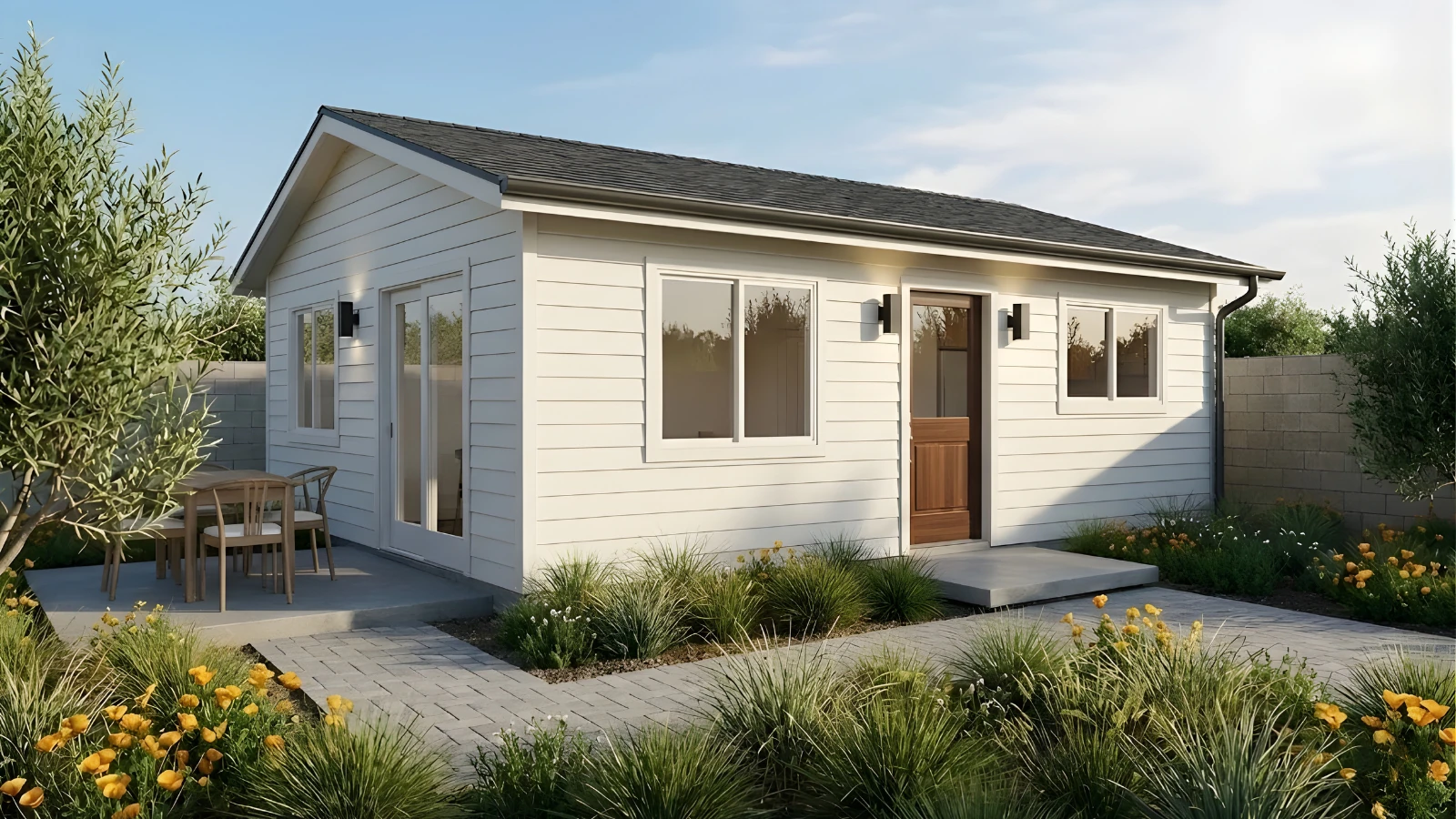
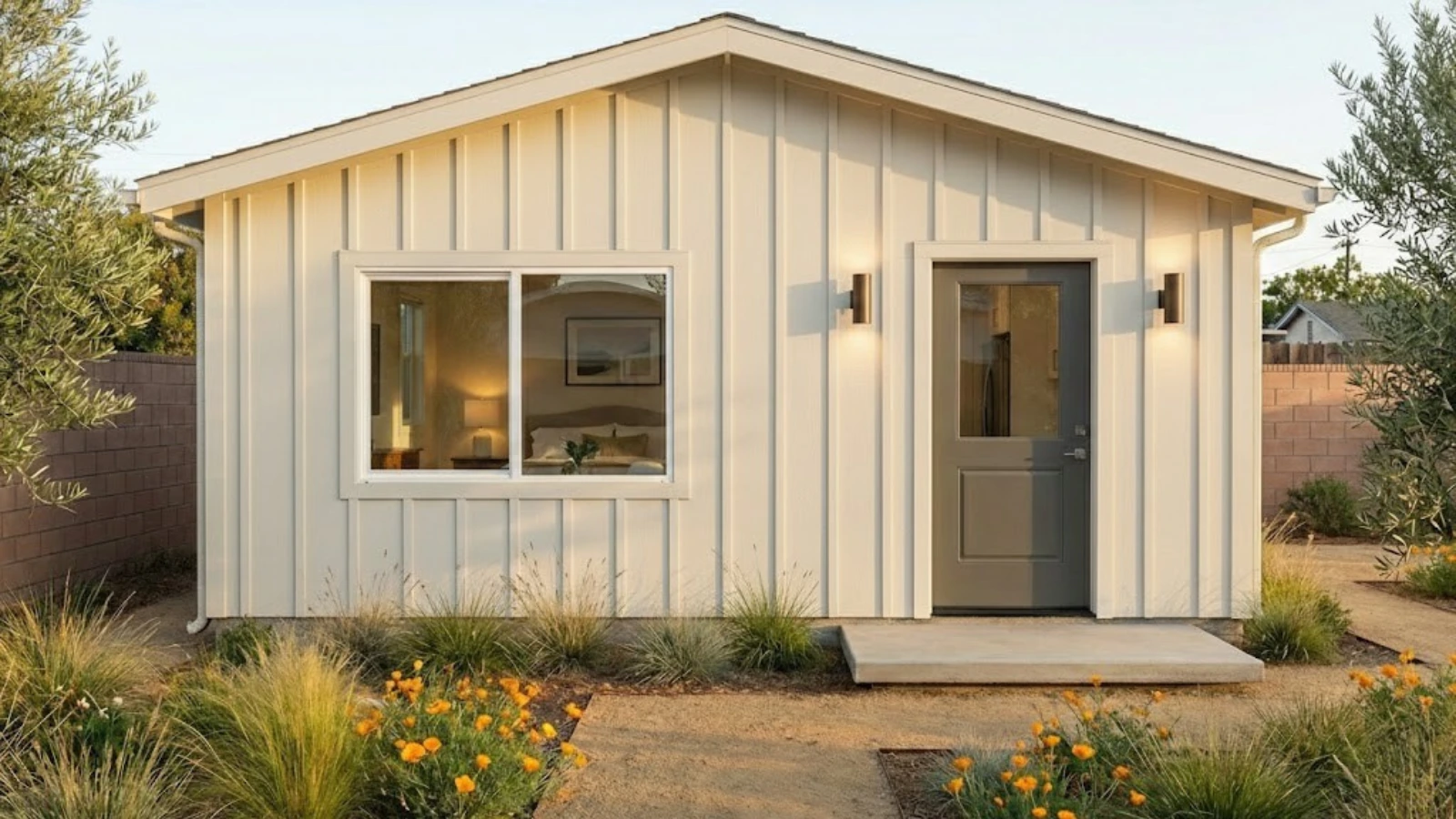
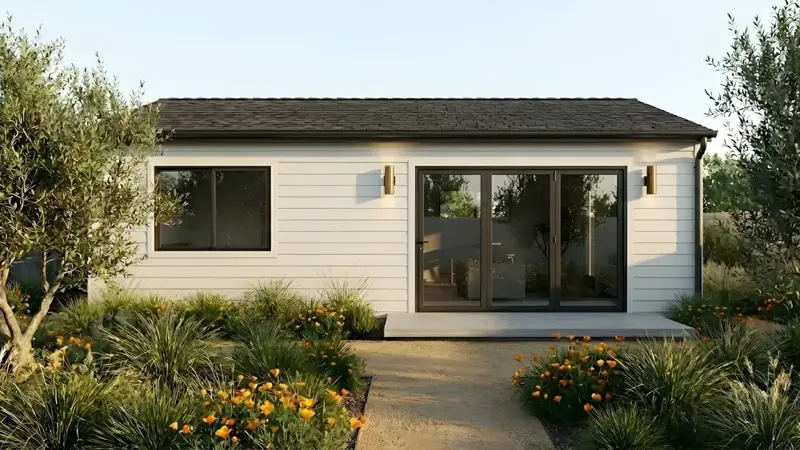
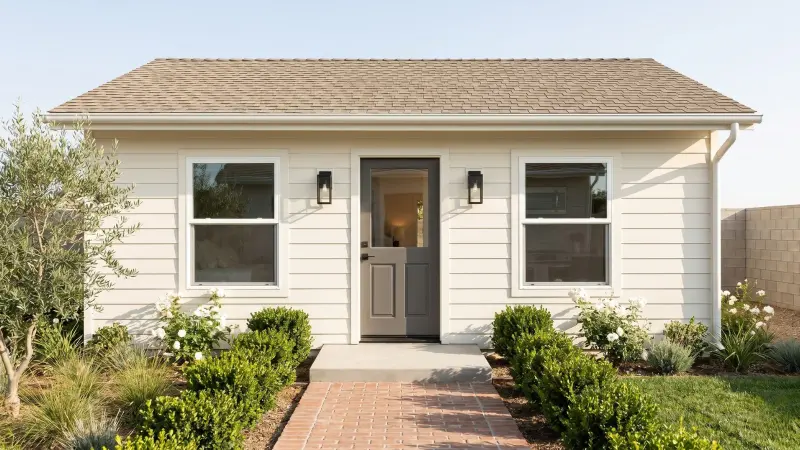
Two single-story plans and the compact two-story, all drawn to clear AMC § 23.22.040 on paper. Fixed plan pricing. Architect-designed.
The Sunset
The Melrose
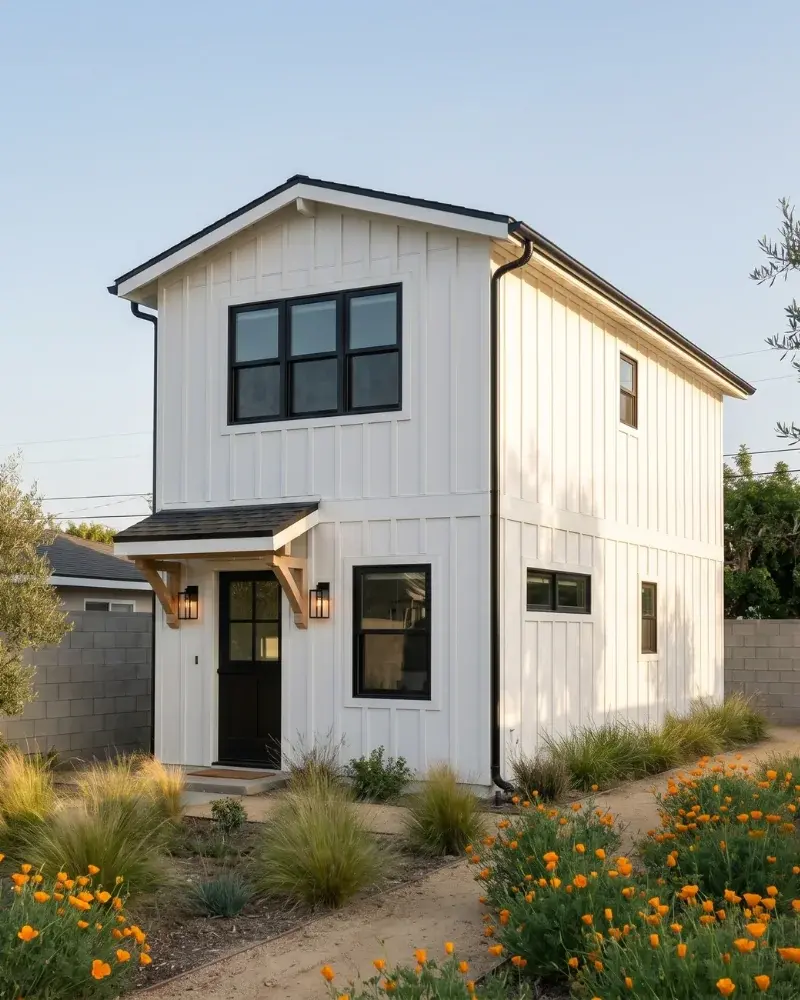
The Fairfax
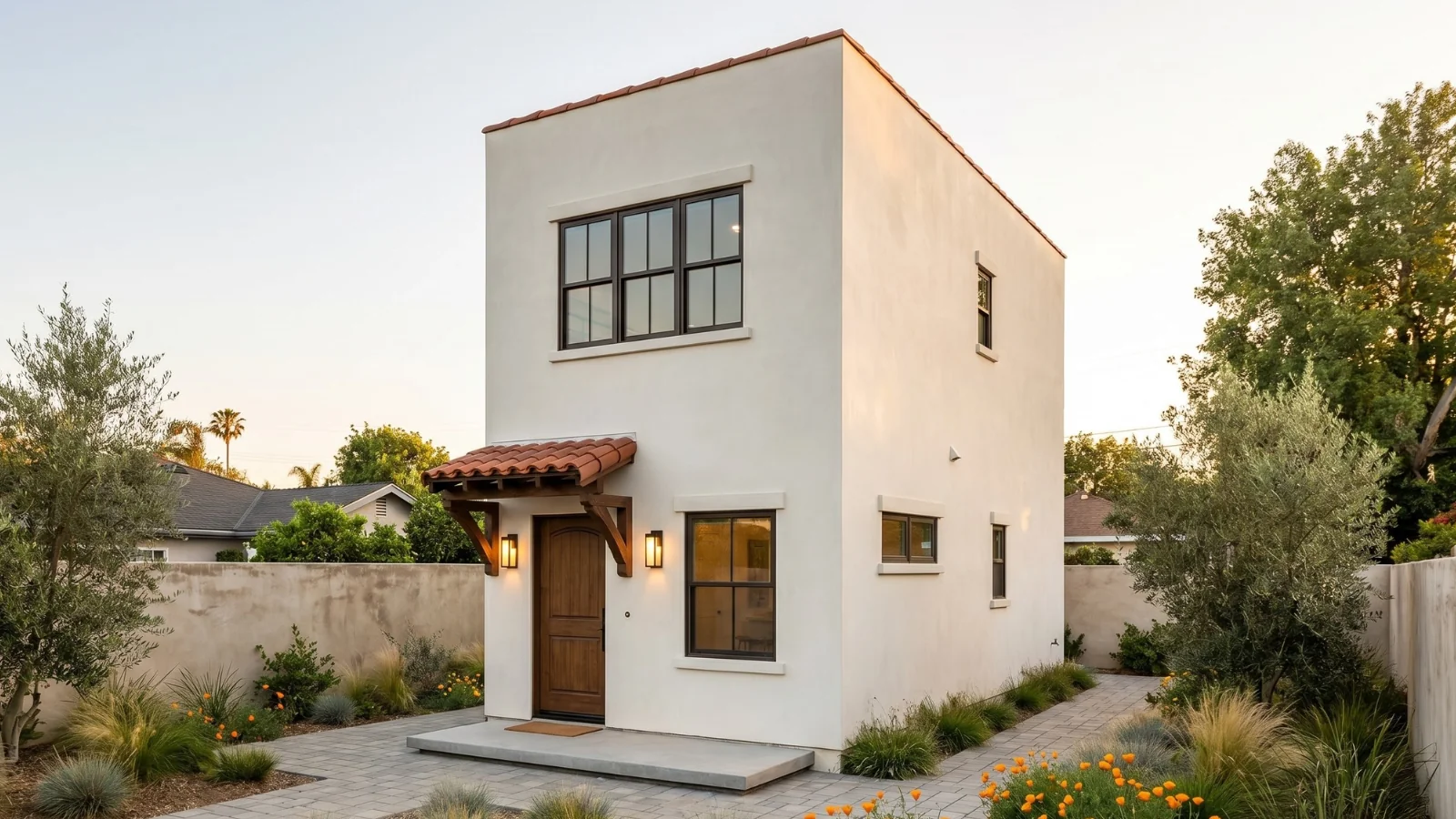
The 25-foot envelope means all three of our two-story plans — Fairfax, Venice and Culver — can be permitted in Alhambra as drawn, in either the flat or the gable roof variant. That is unusual in this part of the county and it is why the two-story collection is worth a look here. If none of the nine plans suits your lot, we also design from scratch: custom design and permit runs $9,990–$19,990, bid per project.
What an ADU costs in Alhambra (2026)
Our Signature plans are fixed-price — architectural design and full permit processing included, the same number whether the lot is in Alhambra, Pasadena or the Westside. Construction is separate: once your plans are permitted, you build with our construction partner or your own licensed contractor. The figures below are the estimated cost to build each model.
| Model | Configuration | Size | Collection | Est. cost to build |
|---|---|---|---|---|
| The Wilshire | Studio / 1BA | 400 sqft | Single-story | $180K–$200K |
| The Sunset | 1BR/1BA | 480 sqft | Single-story | $200K–$215K |
| The Westwood | 1BR/1BA | 550 sqft | Single-story | $215K–$235K |
| The Laurel Canyon | 2BR/1BA | 660 sqft | Single-story | $240K–$265K |
| The Melrose | 2BR/2BA | 800 sqft | Single-story | $275K–$295K |
| The Fairfax | 2BR/1.5BA | 840 sqft | Two-story | $280K–$310K |
| The Lincoln | 3BR/2BA | 1,000 sqft | Single-story | $325K–$350K |
| The Venice | 2BR/2BA | 1,080 sqft | Two-story | $335K–$365K |
| The Culver | 3BR/2.5BA | 1,200 sqft | Two-story | $385K–$420K |
City fees, and the ones you do not pay
Alhambra publishes its own estimates, which is more than most cities do. From the December 2025 ADU Informational Handout:
| ADU size | Estimated total city fees | What it covers |
|---|---|---|
| 850 sqft | $11,677 | Building permit and plan check, fire department ADU plan check, public works and utilities plan check, general plan fee, new construction tax, planning plan check, issuance, technology and SMIP charges |
| 1,200 sqft | $14,012 | Same schedule, scaled by valuation |
What it returns
Alhambra sits in the Los Angeles–Long Beach–Glendale HUD Metro Fair Market Rent area. HUD’s revised FY 2026 figures, published at 91 FR 21301 and effective May 21, 2026, are the honest public benchmark:
| Unit | Studio | 1 BR | 2 BR | 3 BR |
|---|---|---|---|---|
| HUD Fair Market Rent | $2,079 | $2,328 | $2,903 | $3,681 |
Read those as a floor, not a forecast. Fair Market Rents average every kind of housing in the metro, including stock built decades ago. A newly built detached unit with its own entrance and no shared walls typically leases above the number. What Alhambra adds is demand depth. Cal State LA and the Pasadena and Caltech employment base are both close. Downtown Los Angeles is a straight run down the I-10. And the San Gabriel Valley’s multigenerational housing culture keeps well-built detached units occupied. For payback math on your own lot, use the ROI calculator, or size the unit first with the ADU calculator.
Two rent rules worth knowing before you sign a lease. Newly constructed units first occupied after February 1, 1995 are generally outside California’s local rent-ceiling controls under the Costa-Hawkins Rental Housing Act (Civ. Code § 1954.50 et seq.). The statewide cap under AB 1482 (Civ. Code § 1947.12) may still reach an ADU depending on its structure and ownership. Confirm both for your situation.
When an ADU isn’t the right move
Not every Alhambra property is a good candidate, and it is cheaper to learn that now than after you have paid for plans. Four situations where we would tell you to wait, pick a different unit type, or not build:
- Your numbers depend on nightly rental income. They will not work. AMC § 23.22.040(L) prohibits ADUs and JADUs from being used as short-term rentals, with no carve-out. Run the math on a 30-day-or-longer tenancy or reconsider the project.
- You need to sell the unit separately. Alhambra has not opted in under AB 1033, so there is no condominium path for an ADU here, and a JADU may never be sold apart from the main house (AMC § 23.22.040(H)(3)(b)). As an exit strategy this is the wrong plan.
- Your rear yard is already mostly built out. After the 4-ft setbacks, the 5-ft eave-to-eave separation and the city’s rule that an ADU may not take more than 40% of the required rear-yard area, some parcels cannot hold a detached building worth building. On those lots a garage conversion or a JADU usually returns more than forcing a new structure — though the 800 sqft state pathway is worth testing first.
- You want a fully custom exterior on the standard track. AMC § 23.22.040(C)(2) requires the ADU to match the main house’s materials, roof, colors and details. If that is a deal-breaker, the § 66323 pathway or a city-preapproved plan are the two routes that escape it, and both come with their own limits.
How long an ADU takes
Here is what the calendar actually looks like on a pre-engineered Signature plan:
| Phase | Duration | Notes |
|---|---|---|
| Signature plan preparation | ~2 weeks | Pre-engineered plan customized to your lot |
| City completeness check | 15 business days | SB 543 (eff. Jan. 1, 2026); Gov. Code § 66317(a)(2). Written notice, before the 60-day clock starts. |
| Ministerial approval | 60 days to a decision · 30 days on a preapproved plan | Gov. Code § 66317 and AMC § 23.22.040(C)(1) require the city to approve or deny a complete application within 60 days, and the application is deemed approved if it misses that window. A pre-engineered plan clears review in weeks rather than months, because it is a conformance check and not a from-scratch evaluation. |
| Construction | 4–6 months | By model size — the schedule is guaranteed in writing, with a daily delay penalty if the contracted finish date is missed |
| Total, start to finish | 6–9 months | Signature plans only. A custom design adds bespoke design time and a longer plan check, because the city is reading the drawings for the first time. |
The rules that make Alhambra different
Two stories and 25 feet, as a free-standing building
Alhambra is roughly three square miles of dense, established single-family and small-multifamily neighborhoods. Lots are modest, and once you subtract the house footprint, the driveway, mature landscaping and the setbacks, a single-story 1,000 sqft unit can eat the entire usable yard.
A two-story unit solves the geometry by stacking the program: the same floor area on roughly half the footprint, so the yard, the sight lines and the circulation survive. AMC § 23.22.040(F) makes that legal here as a detached building — two stories, 25 feet, every ADU type, no variance and no hearing. Neighboring cities that sit at the 16-ft state floor can only reach two stories by attaching the unit to the house.
Short-term rental is prohibited
Subdivision (L) prohibits ADUs and JADUs from being used as short-term rentals under AMC Chapter 5.92. This is not a confirm-with-your-parcel question — the ordinance says it plainly, and there is no ADU exception.
Design match, and the two ways out of it
Subdivision (C)(2) requires an ADU to use the same exterior materials, roof covering, exterior colors and architectural details as the main dwelling. It is a real constraint on a city full of Craftsman, Spanish Revival and Mid-Century housing stock, and it is the standard most likely to surprise someone bringing a modern prefab-style design to the counter.
The same subdivision writes in both exits. The requirement does not apply to a unit approved under Gov. Code § 66323, and it does not apply to a unit built from a city-preapproved plan. Subdivision (E) backs the first one up by barring the city from imposing any objective development or design standard on a § 66323 unit that the statute does not authorize. The city’s December 2025 handout reflects this, describing the design match as recommended rather than required for those units.
The 40% rear-yard rule
One local standard that does not appear in most city ADU pages: per the December 2025 handout, an ADU may not occupy more than 40% of the required rear-yard setback area of the underlying zone. It sits alongside the lot-coverage and floor-area-ratio limits that apply to any ADU over 800 sqft. Like those, it does not reach a § 66323 unit — which is the practical reason the 800 sqft pathway is worth pricing on a tight parcel before you rule the project out.
Separate sale is not available here
AB 1033, codified at Gov. Code §§ 66340–66342, lets a city opt in to allowing an ADU to be sold separately as a condominium. Alhambra has not adopted that opt-in, so the path does not exist in this city. A junior ADU is barred outright regardless: subdivision (H)(3)(b) requires a recorded deed restriction stating the JADU may not be sold separately from the main dwelling and the underlying parcel.
Legalizing a unit built before 2020
Alhambra has written the state legalization pathway into its own code at subdivision (M). The city may not deny a permit for an unpermitted ADU or JADU built before January 1, 2020 on the grounds that it violates building standards or does not meet current ADU rules, unless correcting the violation is necessary to satisfy the health and safety standards in Health and Safety Code § 17920.3. An inspector may examine the unit and recommend what it needs, and the city may not penalize you for coming forward. Impact fees and connection or capacity charges are waived on those legalizations in almost all cases. The state authority is Gov. Code § 66311.7, which SB 543 renumbered effective January 1, 2026 — the ordinance still cites the predecessor section numbers, which is common and does not change the result.
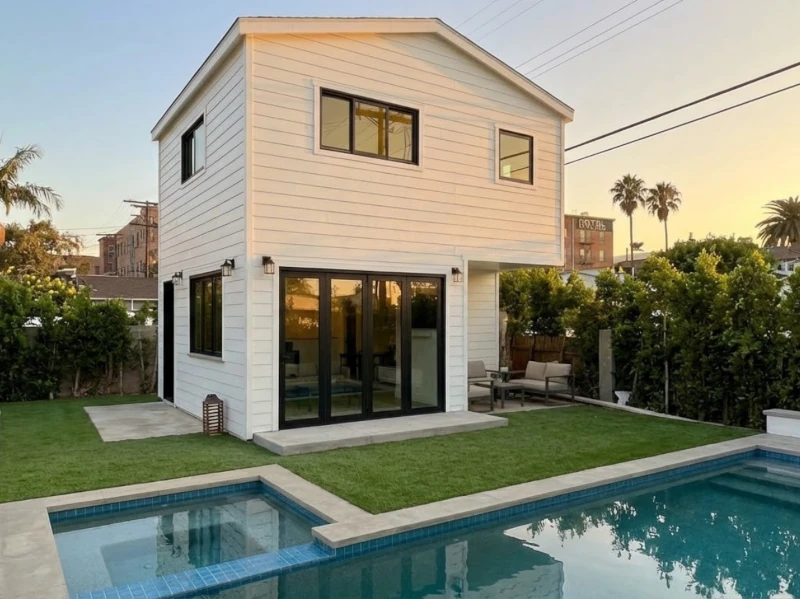
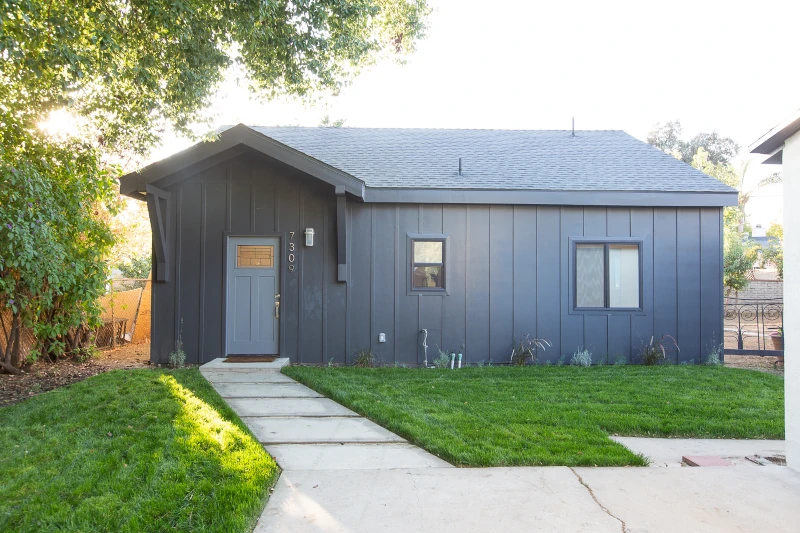
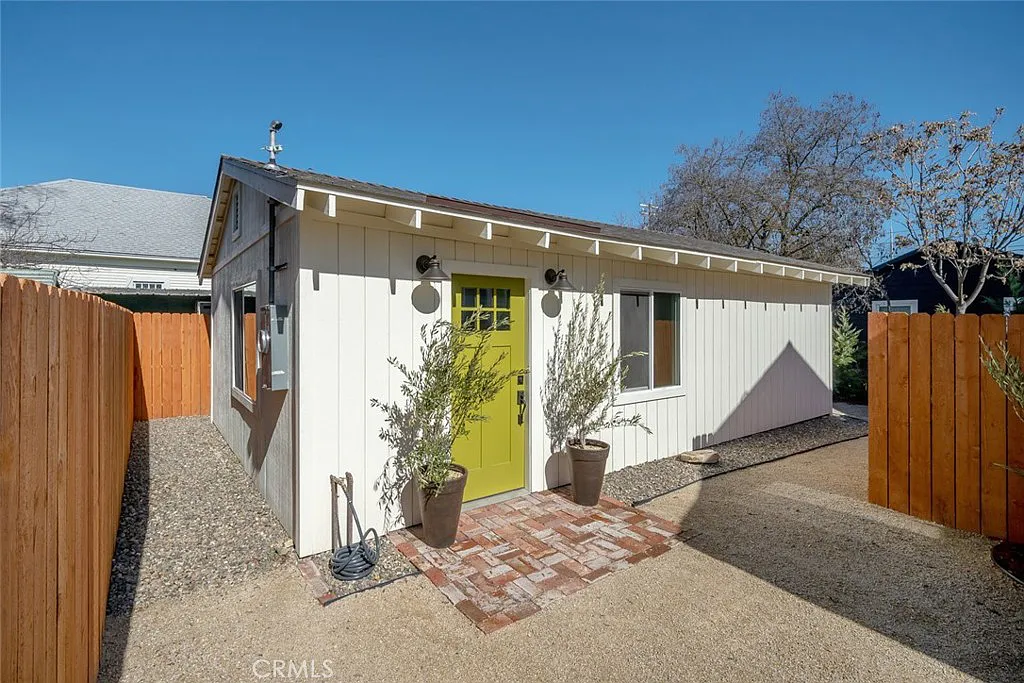
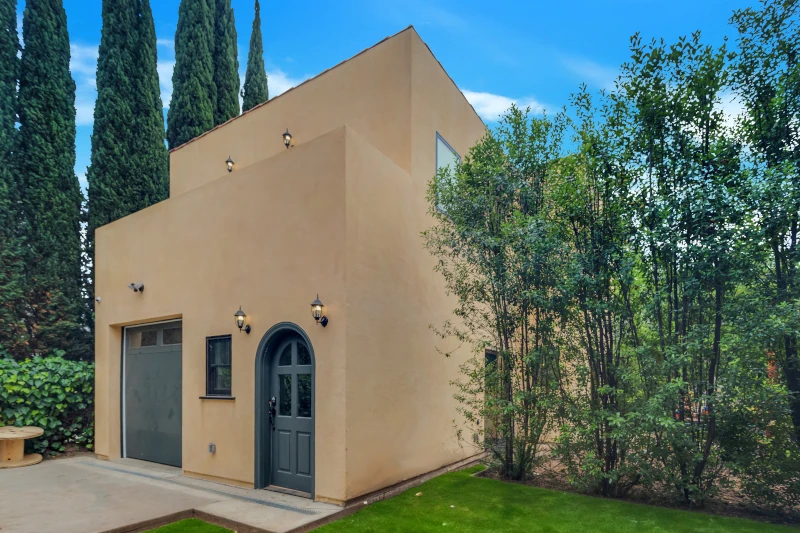
Recent CALI ADU work near Alhambra
Projects across the San Gabriel Valley and greater Los Angeles — including two-story detached builds that map directly onto what Alhambra's 25-foot envelope allows.
How the permit process works
Subdivision (C)(1) is explicit that no separate planning application is required for an ADU or JADU. The building permit is the entitlement. Tree removal permits, grading permits and other ordinary building requirements still apply where they are triggered. An application that does not meet the objective standards in the section cannot be approved — there is no discretionary override in either direction.
What actually happens at the counter
The mechanics come from the city’s December 2025 handout. You file an ADU building permit through the online Permit Portal. A permit technician checks it for completeness, then a planner reads the project against the zoning code and flags anything that would stop it.
Cleared plans go to the GoPost plan check portal. Building, fire and public works review them concurrently, with utilities review and outside agency referrals running alongside — LA County Sanitation, the school district if the ADU is over 500 sqft, and AQMD where demolition is in scope. Corrections cycle until cleared.
After that come plan check fees, permit fees, the mechanical, electrical and plumbing sub-permits, the permit holder declaration and the construction and demolition waste forms. Then the permit issues.
The preapproved-plan track (AB 1332)
AB 1332 required every California city to run a preapproved ADU plan program by January 1, 2025 (Gov. Code § 65852.27). Alhambra has written the incentive directly into its ordinance: a detached ADU based on a preapproved plan gets a 30-day decision rather than 60 (AMC § 23.22.040(C)(1)(b)), and subdivision (C)(2) exempts it from the design-match requirement.
Alhambra ADU questions, answered
The questions Alhambra homeowners actually ask before they start — each answered against AMC § 23.22.040, the city’s own ADU handout, and California Gov. Code §§ 66310–66342.
How big an ADU can I build in Alhambra?
A detached ADU on a single-family lot may be up to 1,200 square feet (AMC § 23.22.040(D)(1)(a)). An attached ADU may be up to half the size of the existing main house, or 850 square feet for a studio or one-bedroom and 1,000 square feet for a two-bedroom or larger, whichever of those is greater. A junior ADU is capped at 500 square feet inside the home (Gov. Code § 66313(d)). Separately, state law guarantees at least an 800-square-foot ADU with four-foot side and rear setbacks no matter what the local lot-coverage, floor-area or open-space rules say (Gov. Code § 66321(b)(3); AMC § 23.22.040(D)(2)(h)). A conversion ADU created inside existing permitted space has no square-foot cap.
Does Alhambra allow two-story ADUs?
Yes, and it is the most useful thing about building here. AMC § 23.22.040(F) sets a single height rule for every ADU type: two stories and 25 feet. That applies to a free-standing detached unit, not only to an attached one. State law would only oblige the city to allow 16 feet, or 18 feet within half a mile of major transit (Gov. Code § 66321(b)(4)), and most San Gabriel Valley cities stop at that floor. Alhambra does not, so a detached two-story ADU is approved over the counter with no variance and no hearing.
How many ADUs can I build on an Alhambra single-family lot?
Three accessory units, on top of the house you already have. The City of Alhambra ADU Informational Handout (December 2025) allows one detached or attached ADU, plus one conversion ADU created from existing space in the house or an accessory structure, plus one junior ADU. That is the same combination state law guarantees under Gov. Code § 66323(a)(1) and (a)(2), so the local and state paths agree. The ordinance text at AMC § 23.22.040(B)(3) and (B)(4) is written as two separate pairings rather than one combined list, which reads narrower on the page than the city applies it in practice.
Do I need parking for an ADU in Alhambra?
Usually not. AMC § 23.22.040(G)(1) asks for one open or enclosed space per ADU. Then § 23.22.040(G)(4) takes it away again in seven separate situations. Any one of them is enough. The seven: the unit is within half a mile of a public transit stop or station; the parcel is on a local, state or national historic register; the ADU is part of the primary residence or an existing accessory structure; on-street permits are required but not offered to the occupant; a car-share hub is within one block; the unit is a JADU; or the ADU is applied for alongside a new primary dwelling. Alhambra is a dense, bus-served grid, so the transit exemption reaches much of the city. Two more rules never change. Converting or demolishing a garage does not trigger replacement parking for the main house (AMC § 23.22.040(G)(3); Gov. Code § 66314(d)(11)). And no city may require parking for a JADU at all (Gov. Code § 66334(a)).
Does Alhambra require the owner to live on the property?
Not for an ADU. AMC § 23.22.040(H)(1) states there is no owner-occupancy requirement for accessory dwelling units, which is what Gov. Code § 66315 requires of every California city. A junior ADU is the one exception, and a narrow one. AB 1154 amended Gov. Code § 66333(b) effective January 1, 2026 so the requirement now reaches only a JADU that shares sanitation facilities with the main house. Give the JADU its own bathroom and owner-occupancy no longer applies. Alhambra has already adopted that reading in its December 2025 ADU handout, although the ordinance text at AMC § 23.22.040(H)(2) still carries the older, broader wording.
Does my Alhambra ADU have to match the main house?
On the standard track, yes. AMC § 23.22.040(C)(2) requires the ADU to use the same exterior materials, roof covering, exterior colors and architectural details as the main dwelling. The same subdivision writes in two exits: the requirement does not apply to a unit approved under Gov. Code § 66323, and it does not apply to a unit built from a city-preapproved plan. AMC § 23.22.040(E) reinforces the first exit by barring the city from imposing any objective design or development standard on a § 66323 unit that the statute does not authorize. The city handout describes the design match as recommended rather than required for those units.
Can I rent an Alhambra ADU on Airbnb?
No. AMC § 23.22.040(L) prohibits ADUs and JADUs from being used as short-term rentals, under AMC Chapter 5.92. There is no ADU carve-out, so a rental model built on nightly income does not work in Alhambra. State law points the same way: Gov. Code § 66323(e) requires a city to impose a rental term longer than 30 days on a § 66323 unit, and § 66333(g) does the same for junior ADUs. Plan on a 30-day-or-longer tenancy — a standard residential lease, or a furnished mid-term rental for corporate, traveling-medical or academic tenants.
Can an Alhambra ADU be sold separately from the main house?
No. Separate condominium sale of an ADU is available only where a city has opted in under AB 1033, codified at Gov. Code §§ 66340–66342, and Alhambra has not adopted that opt-in. A junior ADU is barred outright: AMC § 23.22.040(H)(3)(b) requires a recorded deed restriction stating the JADU may not be sold separately from the main dwelling and the underlying parcel. If separate sale is central to your plan, Santa Monica and Culver City are the LA-area cities that have opted in.
What does the City of Alhambra charge in permit fees for an ADU?
The city publishes its own estimates. In the December 2025 ADU Informational Handout, an 850-square-foot ADU carries roughly $11,677 in total city fees, and a 1,200-square-foot ADU roughly $14,012. Those totals bundle the building permit fee, building plan check, fire department ADU plan check, public works and utilities plan check, the general plan fee, a new construction tax, planning plan check, issuance, technology and SMIP charges. They exclude the separate mechanical, electrical and plumbing sub-permits, which are counted off units and fixtures. Actual fees move with your project valuation. None of that is an impact fee — impact fees are separate, and no city may charge them on an ADU under 750 square feet (Gov. Code § 66311.5(c)(1)).
How long does an Alhambra ADU permit take?
The city must approve or deny a complete ADU application within 60 days, ministerially, with no hearing (AMC § 23.22.040(C)(1); Gov. Code § 66317). If it misses that window the application is deemed approved. Before the clock starts, SB 543 requires the city to determine completeness and tell you in writing within 15 business days (Gov. Code § 66317(a)(2)). A detached ADU submitted on a city-preapproved plan gets a shorter clock still, 30 days, under AMC § 23.22.040(C)(1)(b). On a pre-engineered Signature plan, expect roughly six to nine months from start to move-in: about two weeks of plan preparation, the review above, then four to six months of construction.
How many ADUs are allowed on an Alhambra multifamily property?
More than most owners expect. AMC § 23.22.040(B)(5) allows up to eight detached ADUs on a lot with an existing multi-unit dwelling, capped at the number of existing units, and two detached ADUs on a lot with a proposed multi-unit dwelling. Separately, § 23.22.040(B)(6) requires the city to permit at least one attached ADU carved out of space in an existing multifamily building that is not livable area — storage rooms, boiler rooms, passageways, attics, basements, garages — up to 25% of the existing unit count. That tracks the state floor SB 1211 set in Gov. Code § 66323(a)(4)(A)(ii). Junior ADUs are a single-family unit type and are not available on a multifamily lot.
What are the setbacks for an ADU in Alhambra?
Four feet from the side and rear property lines for a new attached or detached ADU (AMC § 23.22.040(D)(2)(b)), which is the state floor in Gov. Code § 66314(d)(7). A detached ADU also keeps five feet of separation from other buildings, measured eave to eave (AMC § 23.22.040(D)(2)(c)). No setback at all is required for an ADU created inside existing living area, inside an existing accessory structure, or rebuilt in the same location and dimensions as an existing structure, as long as the existing setbacks are adequate for fire and life safety. An ADU placed in front of the main house follows the front-yard setback of the underlying zone (AMC § 23.22.040(D)(2)(f)).
Can I legalize an ADU that was built without a permit?
Often, yes, and Alhambra has written the state pathway into its own code. AMC § 23.22.040(M) says the city may not deny a permit for an unpermitted ADU or JADU built before January 1, 2020 on the grounds that it violates building standards or does not comply with current ADU rules, unless correcting the violation is necessary to meet the health and safety standards in Health and Safety Code § 17920.3. An inspector may look at the unit and recommend what it needs, and the city may not penalize you for having applied. Impact fees and connection or capacity charges are waived on those legalizations in almost all cases. The state authority is Gov. Code § 66311.7, which SB 543 renumbered effective January 1, 2026.
Official sources
Where the local rule and state law differ, state law sets a floor the city cannot drop below (Gov. Code § 66316). Alhambra mostly sits at or above that floor, and on height it sits well above it.
| Source | What it governs |
|---|---|
| AMC § 23.22.040 — Accessory Dwelling Units (opens in a new tab) American Legal Publishing, the city’s official code publisher · version 2026 S-25 · Ord. 4823 (1-22-24), Ord. 4831 (8-26-24), Ord. 4844 (4-28-25) | The binding local ordinance. Source for size caps, the 25-ft two-story height rule, setbacks, parking and its exemptions, owner-occupancy, the short-term-rental prohibition and pre-2020 legalization. |
| ADU Informational Handout — December 2025 (opens in a new tab) City of Alhambra Planning Division (PDF) | The city’s plain-language statement of what you may build: the unit-combination table, the 40% rear-yard-coverage standard, published permit-fee estimates, and the step-by-step application path. |
| City of Alhambra — Accessory Dwelling Units (opens in a new tab) alhambraca.gov program page · Planning Division, (626) 570-5034 | The city’s ADU landing page: current handouts, the online Permit Portal, and the staff contacts to confirm anything on this page directly. |
| AMC Chapter 5.92 — Short-Term Rentals (opens in a new tab) American Legal Publishing | The chapter AMC § 23.22.040(L) points to when it prohibits ADUs and JADUs from being used as short-term rentals. |
| California Government Code §§ 66310–66342 (opens in a new tab) California Legislative Information · renumbered from former § 65852.2 et seq. by SB 477, eff. March 25, 2024 | State ADU law — the floor every city must meet. Source for the 60-day ministerial clock, the owner-occupancy and parking preemptions, the 800 sqft entitlement, the unit stack and the impact-fee exemption. |
| HCD ADU Handbook (opens in a new tab) California Department of Housing and Community Development | The state’s official interpretation of that law, and the position that controls when a local rule reads more narrowly than the statute. |
Rent benchmarks are HUD Fair Market Rents for the Los Angeles–Long Beach–Glendale HUD Metro FMR Area, FY 2026 as revised, published at 91 FR 21301 and effective May 21, 2026.
Last verified against primary sources on August 24, 2026. State ADU law changes every January 1. If you are reading this six months from now, confirm the current version before you commit to a design — or call us and we will confirm it for you.
Not sure what your lot
can actually support?
Get clarity before you spend anything on plans. In 15 minutes we will pull up your property, run the AMC § 23.22.040 and Gov. Code §§ 66310–66342 numbers against your parcel, and give you an honest read on your options and a realistic budget — including whether an ADU is the right move at all.
15-minute video call · No obligation