
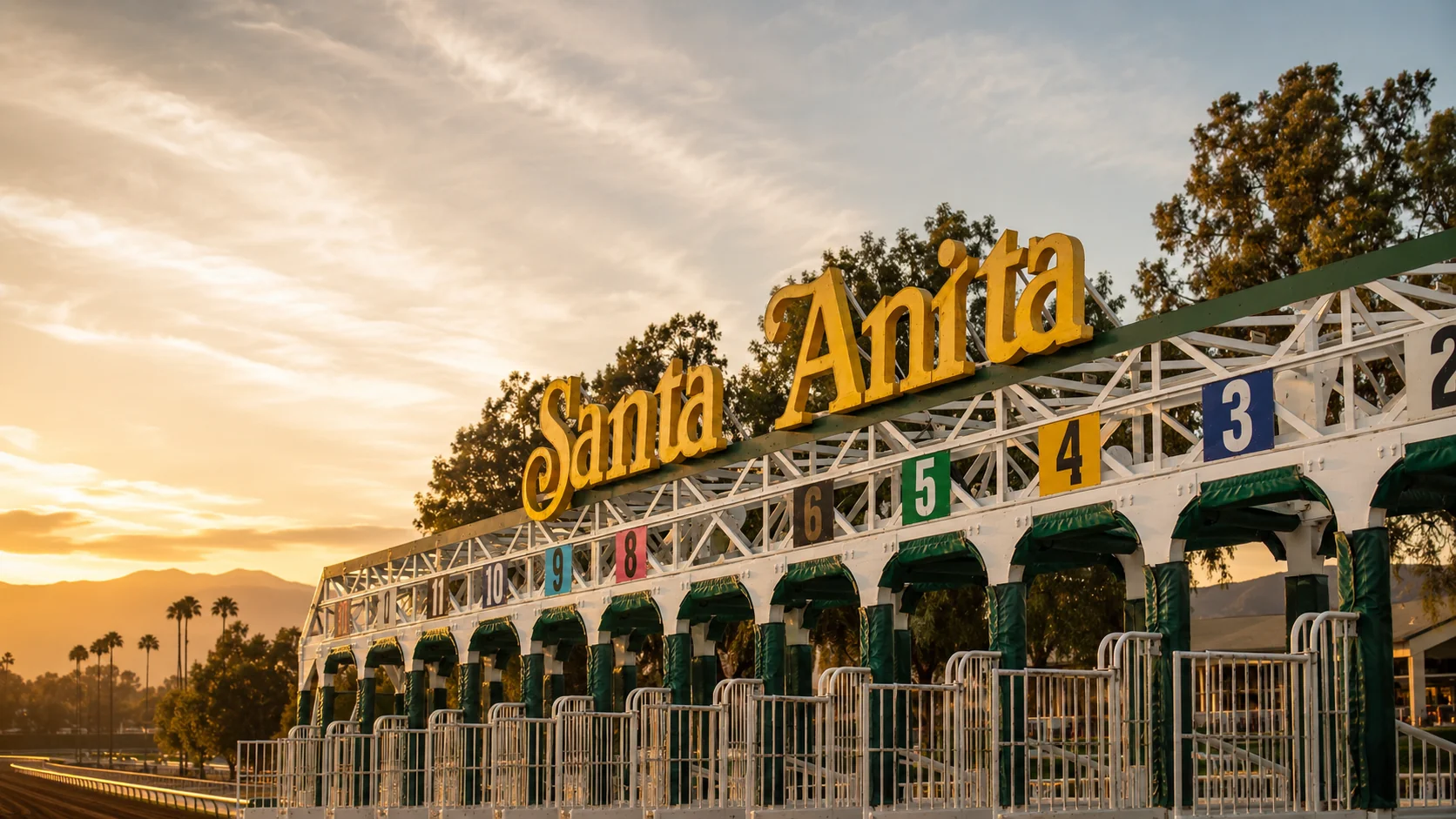
Building an ADU in Arcadia. Rules, costs, timeline.
What Arcadia Development Code § 9102.01.080 actually allows, the two permit tracks that decide which rules reach your project, and what an all-in build costs on an Arcadia lot in 2026.
What you can build — at a glance
Reviewed by CALI ADU’s ADU specialists · August 2026
- Max ADU size
- 850 sqft studio/1BR · 1,000 sqft 2BR+ On the ADU-permit track. An attached unit beside an existing house is also held to 50% of that house’s floor area. The by-right detached track caps at 800 sqft. JADU: 500 sqft. No FAR, front-setback, lot-coverage or open-space rule may push a unit below 800 sqft.
- Detached height
- 16 ft The state floor. Up to 18 ft within a half-mile walking distance of a major transit stop or high-quality transit corridor, plus 2 ft to match the roof pitch of the main house, capped at 20 ft. 18 ft on a lot with a multistory multifamily building.
- Attached height
- 25 ft · up to 2 stories Or the underlying zone’s height limit for the primary dwelling, whichever is lower. Height is measured from existing legal grade or the lowest floor, whichever is lower, to the peak.
- Side & rear setbacks
- 4 ft The most a city may require of a conforming ADU. No setback at all for a unit built in the same location and to the same dimensions as an existing structure. Front setbacks follow the zone, but may not be applied so as to preclude an 800-sqft ADU.
- Units per SFR lot
- Up to 2 ADUs + 1 JADU A conversion ADU plus a junior ADU, and separately one new detached ADU of up to 800 sqft “in addition to any JADU.” Both need only a building permit. Not “one ADU plus one JADU” — that is the pre-2020 reading.
- Parking required
- 1 space · often waived Setback and tandem parking count. Six exceptions zero it out, including any location within a half-mile walk of public transit and any property in a historic district. A demolished or converted garage never triggers replacement parking. A JADU never requires parking.
- Permit timeline
- 60 days Ministerial review — no hearing, no discretionary design review, no neighbor sign-off. Deemed approved if the City misses the clock. A written completeness determination is due in 15 business days.
- Design & historic siting
- Objective standards apply Down-lights only, frosted clerestory windows above 9 ft, an entry porch no larger than 60 sqft, no loft or mezzanine, a shared driveway. An ADU on a California Register property must be sited out of view from the public right-of-way. All measurable, so review stays ministerial.
- Detached Up to 1,000 sqft (2BR+) on the ADU-permit track, or 800 sqft by right · 16 ft
- Attached Up to 1,000 sqft and 50% of the existing house · up to 25 ft and 2 stories
- Garage conversion Existing footprint, +150 sqft for entry and exit · no replacement parking
- Interior conversion Carved out of existing home space · no square-foot cap
- Junior ADU Up to 500 sqft inside the single-family home, attached garage included
Per Arcadia Development Code § 9102.01.080 (Accessory Dwelling Units), section history through Ord. No. 2401, effective April 15, 2025, read from the City’s own published text, and Gov. Code §§ 66310–66342. Cross-checked against the HCD ADU Handbook (March 2026). Full citations in the sections below.
On this page
Can I build an ADU in Arcadia?
Five things to know before you start
If you read nothing else here, read these. They are the five points that change the most projects in this city.
| What to know | Why it matters for your project |
|---|---|
| 1. There are two permit tracks, and they carry different rules | Subsection (D)(1) lets four kinds of ADU through on a building permit only. Everything else needs an ADU permit under (D)(2). Subsection (F) — the size caps, the 45% FAR test, lot coverage, open space, the parking space, the design standards and the one-story rule — opens by saying it applies only to ADUs that need an ADU permit. Which track you are on decides which rulebook reaches you. |
| 2. Detached means single story in practice | A detached ADU is capped at 16 feet (§ (E)(2)(A)), rising to 18 — or 20 with a matching roof pitch — only within a half-mile walk of a major transit stop or high-quality transit corridor. The 25-foot, two-story allowance at (E)(2)(D) is for attached units. Design the detached product accordingly, and see the two-story routes below. |
| 3. The ordinance is current, and that is unusual | HCD wrote to Arcadia on November 15, 2024 identifying where the old ordinance fell short. The City rebuilt it with Ordinance No. 2401, effective April 15, 2025. The unit stack, the 850 and 1,000 sqft floors, the 800-sqft override, the no-replacement-parking rule and the no-owner-occupancy rule for ADUs are all written in. In most cities you argue preemption; here the rule on the books is usually the rule that governs. |
| 4. Arcadia writes its design standards down | Down-lights only. Frosted clerestory glass for any window nine feet or higher, and no dormers. An entry porch no larger than 60 square feet. No loft or mezzanine. A shared driveway. These are objective and measurable, so review stays ministerial — but they shape the drawing, and they are cheap to design around and expensive to retrofit. |
| 5. The rental floor is longer than the ordinance says | Subsection (E)(4) bars a term shorter than 28 days. State law is stricter on the units it reaches: Gov. Code § 66323(e) requires a term longer than 30 days, and § 66333(g) does the same for a junior ADU. Plan on 31 days or more. If nightly income is the plan, the numbers will not work here. |
How many units your lot can take
Everything in this section is grounded in Arcadia Development Code § 9102.01.080 and the Government Code it implements; we won’t re-cite the local section on every line. Assume it under each heading unless we say otherwise.
On a single-family lot the ordinance allows a conversion ADU plus a junior ADU under subsection (D)(1)(A), and separately one new detached ADU of up to 800 square feet — the ordinance’s own words are “in addition to any JADU” — under (D)(1)(B). Combined, that is up to two ADUs plus a junior unit, and both routes need only a building permit. It is the same stack Gov. Code § 66323(a)(1)–(2) requires of every city. If anyone tells you the ceiling here is “one ADU plus one JADU,” the worked example in the HCD ADU Handbook (March 2026), p. 17 is the reference point.
Apartment properties work differently. On a lot with an existing multifamily building you may convert space that is not livable — storage rooms, boiler rooms, passageways, attics, basements, garages — into at least one ADU and up to 25% of the existing unit count (Gov. Code § 66323(a)(3)(B)). Detached units are allowed up to eight, never exceeding the number of existing units (Gov. Code § 66323(a)(4)(A)(ii)). With a proposed multifamily building the detached limit is two. Junior ADUs are a single-family product only (Gov. Code § 66333(a)).
Owner-occupancy
You do not have to live on the property to build or rent an ADU in Arcadia. Subsection (E)(6)(A) states plainly that ADUs created on or after January 1, 2020 carry no owner-occupancy requirement, which is what Gov. Code § 66315 requires of every city. An investment build works here the same way a family-flex build does.
The junior ADU is where the local text sits behind the statute. Subsection (E)(6)(B) requires a natural person holding legal or equitable title to live in either the primary dwelling or the junior unit, with an exception where the property is owned entirely by a governmental agency, land trust or housing organization. That language predates AB 1154. Most cities are in the same position; almost none have amended their text yet.
What about an unpermitted unit already on the lot?
Arcadia may not deny an ADU or junior ADU application because of a nonconforming zoning condition, a building-code violation or an unpermitted structure elsewhere on the lot. The condition has to be one that does not threaten public health and safety, and that the new construction does not touch (subsection (H)(1)).
A unit built before January 1, 2020 gets more protection still. The City may not refuse a permit to legalize it on the ground that it violates building standards, or that it does not comply with ADU law. The narrow exception is a finding under Health and Safety Code § 17920.3 (subsection (H)(2); Gov. Code § 66311.7, added by AB 2533).
What can you build?
The numbers below come from Arcadia Development Code § 9102.01.080, subsections (D) through (G), with state-law citations called out where the statute sets the floor or overrides the local rule. Before the numbers, the structure — because in this ordinance the structure decides which numbers apply to you.
Two tracks, two rulebooks
Subsection (D)(1) lets four kinds of ADU through on a building permit only. A conversion inside an existing single-family home or accessory structure, paired with a junior ADU. A new detached unit of up to 800 square feet at four-foot side and rear setbacks. Conversions inside an existing multifamily building. And detached units on a multifamily lot. Everything else needs an ADU permit under (D)(2).
That distinction matters, because subsection (F) opens with a limit on its own reach. Its requirements “apply only to ADUs that require an ADU permit under subsection (d)(2).” Subsection (F) is where the 850 and 1,000 square-foot caps live. So do the 45% FAR test, the 45%/35% lot-coverage test, the 50% open-space test, the off-street parking space, the objective architectural standards, the historic-siting rule and the one-story restriction. The general requirements in subsection (E) apply to both tracks: height, fire sprinklers, the rental term, the bar on separate conveyance, owner-occupancy and the deed restriction.
Which ADU type fits your property?
Arcadia permits five types. On these lots the right one is usually decided by how much rear yard you are willing to give up and whether there is an existing garage worth keeping.
| If this sounds like you | Start with | What that means |
|---|---|---|
| You want the most space and the strongest rental value, and you have rear yard to spend | Detached ADU | Up to 1,000 sqft with two or more bedrooms on the ADU-permit track, where it is held to one story; or 800 sqft on a building permit alone. Either way, 16 ft and four-foot side and rear setbacks. |
| Your house is two stories and the yard has to stay open | Attached ADU | Up to 850 sqft (studio or 1BR) or 1,000 sqft (2BR+), and no more than half the existing house’s floor area. Up to 25 ft and two stories. The entrance may not be visible from the street. |
| You have a detached garage you rarely use | Garage conversion | Keep the existing footprint plus up to 150 sqft for entry and exit. Fire-safe side and rear setbacks only, and no replacement parking for the spaces you lose. |
| You want the unit under the existing roof | Interior conversion | Carve the ADU from existing space in the home. A conversion under Gov. Code § 66323(a)(1) has no square-foot cap at all, and needs independent exterior access. |
| You are housing a parent or an adult child and want the lowest-cost path | Junior ADU (JADU) | Up to 500 sqft inside the single-family home, attached garage included, with an efficiency kitchen and a recorded deed restriction. Parking may never be required. Owner-occupancy only if it shares a bathroom. |
Maximum size
| Standard | Limit |
|---|---|
| ADU-permit track, studio or 1 bedroom | 850 sqft (§ (F)(1)(A)) — the floor Gov. Code § 66321(b)(2) bars a city from cutting below |
| ADU-permit track, 2 or more bedrooms | 1,000 sqft (§ (F)(1)(A)) |
| Attached ADU beside an existing house | Also held to 50% of that house’s floor area (§ (F)(1)(B)) — but never below 800 sqft |
| By-right detached, building permit only | 800 sqft (§ (D)(1)(B)(2)) |
| Conversion of an existing accessory structure | The structure’s existing footprint, plus up to 150 sqft for ingress and egress |
| Conversion of existing space in the house | No square-foot cap at all (Gov. Code § 66323(a)(1)) |
| Junior ADU | 500 sqft, inside the single-family home (Gov. Code § 66313(d)) |
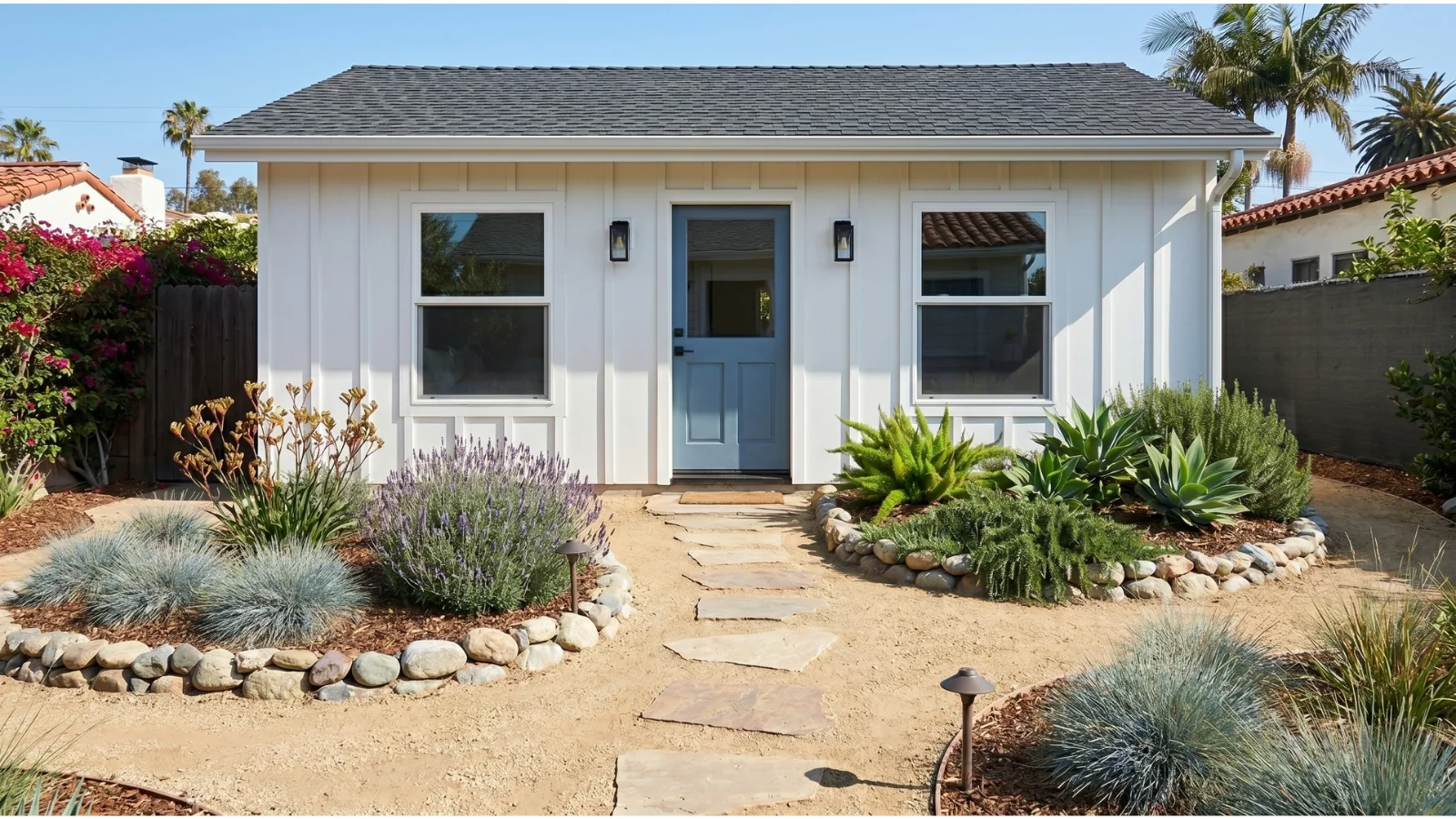
Maximum height
| ADU type | Height limit |
|---|---|
| Detached, single-family or multifamily lot | 16 ft — the state floor (§ (E)(2)(A); Gov. Code § 66321(b)(4)(A)) |
| Detached, within ½ mile walking distance of a major transit stop or high quality transit corridor | 18 ft, plus up to 2 ft to match the roof pitch of the main house, capped at 20 ft (§ (E)(2)(B); Gov. Code § 66321(b)(4)(B)) |
| Detached, on a lot with a multifamily dwelling more than one story above grade | 18 ft (§ (E)(2)(C); Gov. Code § 66321(b)(4)(C)) |
| Attached | 25 ft, or the underlying zone’s limit for the primary dwelling, whichever is lower. Up to two stories (§ (E)(2)(D); Gov. Code § 66321(b)(4)(D)) |
Height is measured from existing legal grade or the level of the lowest floor, whichever is lower, to the peak of the structure (§ (E)(2)(E)). That is a stricter measure than some cities use, and on a sloping foothill lot it can cost real headroom. Check it against your survey before the roof form is fixed.
Practically: design a detached ADU in Arcadia as a single-story building. And confirm the half-mile walking distance before you draw to the 18-foot tier. The height tier turns on a “major transit stop or high quality transit corridor” as those terms are defined in Public Resources Code § 21155 — a narrower test than the “public transit” definition the parking exemption uses. A stop you can see is not always a stop that counts.
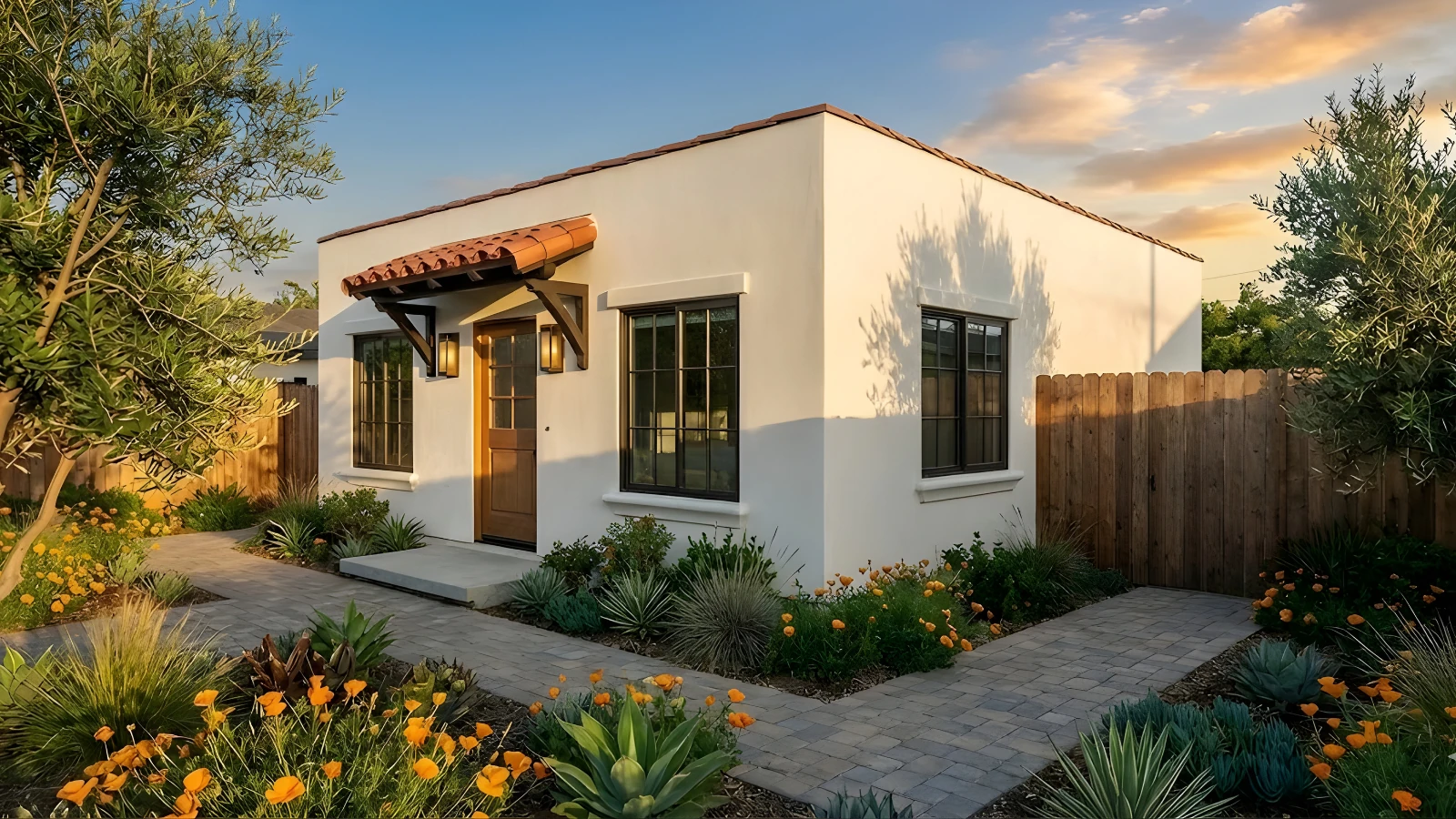
Setbacks, parking and sprinklers
| Requirement | Arcadia rule |
|---|---|
| Side and rear setbacks | 4 ft — the most a city may require of a conforming ADU (§ (F)(3)(A) and § (D)(1)(B)(1); Gov. Code § 66314(d)(7)) |
| Same-footprint construction | No setback required at all where the ADU is built in the same location and to the same dimensions as an existing structure (§ (F)(3)(B)) |
| Conversion of existing space | Side and rear setbacks sufficient for fire and safety under the building and fire codes — nothing more (§ (D)(1)(A)(3)) |
| Front setback | Per the underlying zone — but it may not be applied so as to require an ADU smaller than 800 sqft (§ (F)(1)(C); Gov. Code § 66321(b)(3)) |
| Parking | One space per ADU on the ADU-permit track; setback and tandem parking both count (§ (F)(7)(A)) |
| Exceptions that zero out the space | ½-mile walking distance of public transit · an architecturally and historically significant historic district · an ADU that is part of the primary residence or an accessory structure · an on-street permit area where the occupant is not offered a permit · a car-share stop within one block. A sixth listed exception — an ADU applied for with a new single-family or multifamily dwelling — applies only where one of the five above already does (§ (F)(7)(B); Gov. Code § 66322) |
| Garage demolished or converted for the ADU | No replacement parking may be required (§ (F)(7)(C); Gov. Code § 66314(d)(11)) |
| Junior ADU | None, ever — a city may not require parking for a JADU (Gov. Code § 66334(a)) |
| Fire sprinklers | Required in the ADU only if they are required in the primary residence, and building an ADU never triggers a sprinkler retrofit of the existing house (§ (E)(3)) |
| Passageway | None required (§ (F)(6)) |
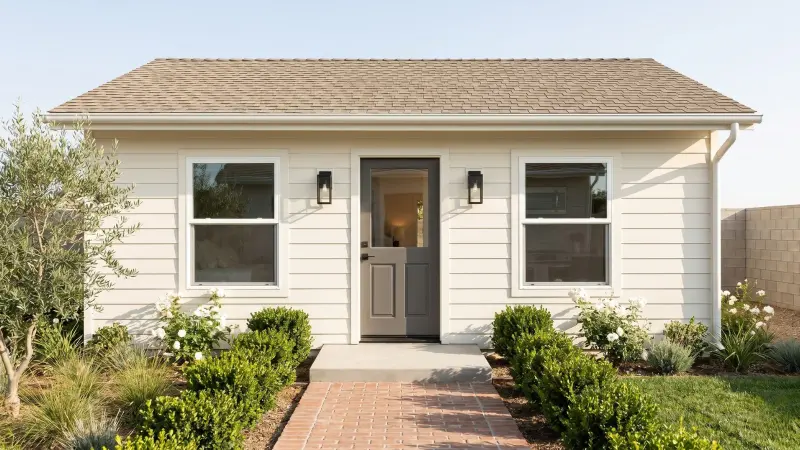
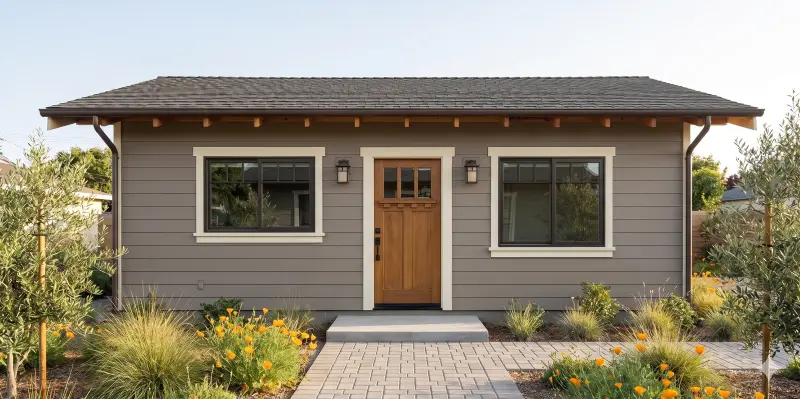
Signature Homes that fit the 16-foot envelope
Single-story plans engineered to sit under the detached height cap in Arcadia Development Code § 9102.01.080(E)(2) — from the compact one-bedroom to the three-bedroom sized exactly to the city’s 1,000 sqft ADU-permit cap. Fixed plan fees, transparent build estimates.
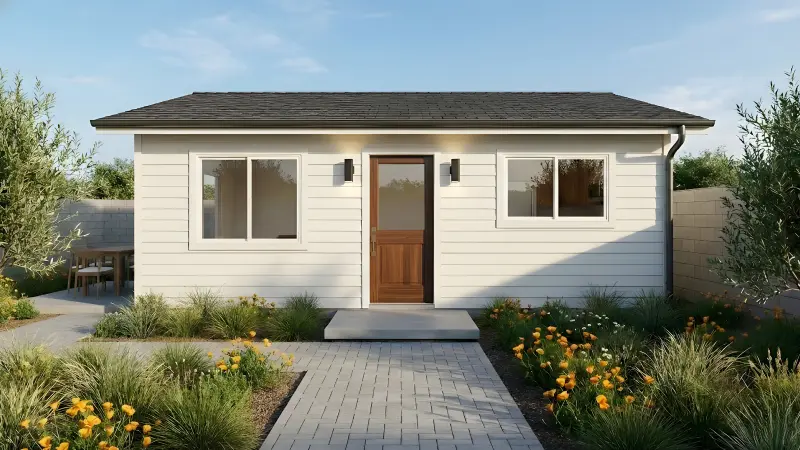
The Westwood
The Melrose
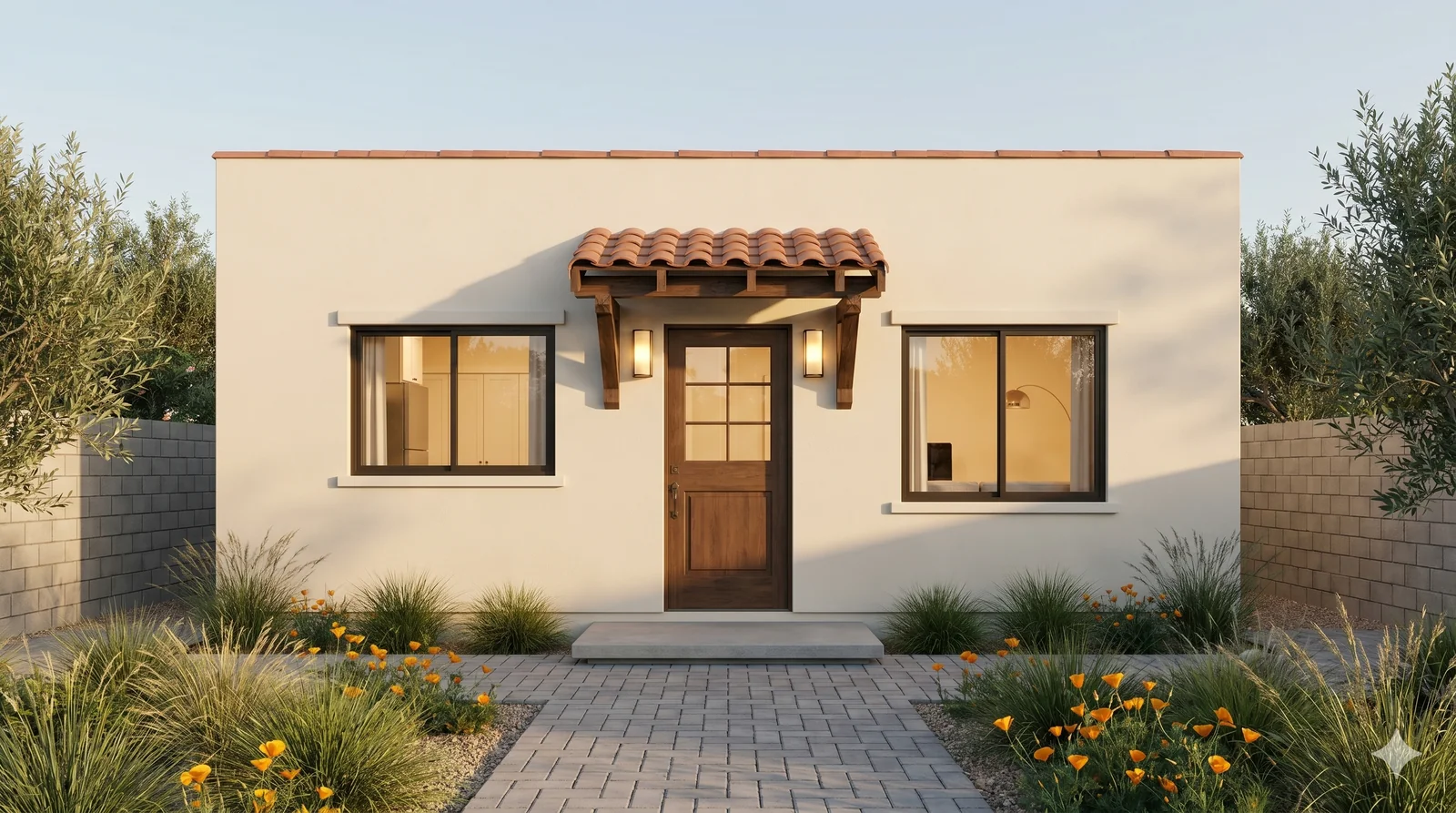
The Lincoln
Our two-story plans stand roughly 25 feet, so they cannot be permitted in Arcadia as drawn. A detached ADU here is capped at 16 feet, or 18 near qualifying transit, and the 25-foot allowance in the code is for units attached to the house — which is not how these plans are sold. That is a constraint on the stock plan, not on the project. A two-story plan can be modified to fit the lower envelope, or we design a custom ADU from scratch ($9,990–$19,990 for design and permit processing, bid per project). The single-story plans permit as drawn, which is why they lead. And Arcadia’s 1,000 square-foot ceiling gives the largest of them room to work.
What an ADU costs in Arcadia (2026)
Our Signature plans are fixed-price — architectural design and full permit processing included, the same number whether the lot is in Arcadia, Pasadena or the Westside. Construction is separate: once your plans are permitted, you build it yourself, bring your own licensed contractor, or build with one of our vetted construction partners. The figures below are the estimated cost to build each model with an independent licensed general contractor.
| Model | Configuration | Size | Collection | Est. cost to build |
|---|---|---|---|---|
| The Wilshire | Studio / 1BA | 400 sqft | Single-story | $180K–$200K |
| The Sunset | 1BR/1BA | 480 sqft | Single-story | $200K–$215K |
| The Westwood | 1BR/1BA | 550 sqft | Single-story | $215K–$235K |
| The Laurel Canyon | 2BR/1BA | 660 sqft | Single-story | $240K–$265K |
| The Melrose | 2BR/2BA | 800 sqft | Single-story | $275K–$295K |
| The Lincoln | 3BR/2BA | 1,000 sqft | Single-story | $325K–$350K |
| The Fairfax | 2BR/1.5BA | 840 sqft | Two-story | $280K–$310K |
| The Venice | 2BR/2.5BA | 1,080 sqft | Two-story | $335K–$365K |
| The Culver | 3BR/2.5BA | 1,200 sqft | Two-story | $385K–$420K |
The two-story models are shown for reference. On an Arcadia lot the detached envelope is single story, so the Lincoln at 1,000 sqft is the largest plan that permits as drawn — and it lands exactly on the city’s 1,000 square-foot ceiling for a two-bedroom-plus unit. Custom work is priced per project, $9,990–$19,990 for design and permit processing.
City fees and pass-throughs
| Charge | Amount |
|---|---|
| ADU permit (ADU-permit track only) | $775 |
| Covenant preparation (the junior-ADU deed restriction) | $420 |
| Building permit and plan check | Valuation-based — set by the Building Division, not by the ADU rules |
| Development impact fees, ADU of 750 sqft or less | None (Gov. Code § 66311.5(c)(1); § (G)(1)(A)) |
| Development impact fees, ADU larger than 750 sqft | Charged proportionally — the ADU’s floor area divided by the primary dwelling’s, times the usual fee (§ (G)(1)(B)) |
| Utility connection and capacity charge | Proportionate to the burden the unit adds, measured by floor area or drainage-fixture units (§ (G)(2)) |
The dollar figures come from the City’s Planning Fees schedule adopted by Resolution No. 7684, effective July 1, 2026, and both include a 5% General Plan update surcharge. Two things worth knowing. A unit on the by-right building-permit track under (D)(1) does not need an ADU permit at all, so the $775 does not apply to it. And a converted ADU on a single-family lot generally needs no new utility connection, connection fee or capacity charge (§ (G)(2)(B)).
What it returns: renting your ADU
Long-term rental only, at 31 days or more. For a rent benchmark, the government figure is HUD’s Fair Market Rent for the Los Angeles–Long Beach–Glendale HUD Metro FMR Area, which covers Arcadia. For FY 2026, as revised effective May 21, 2026: $2,079 for a studio, $2,328 for a one-bedroom, $2,903 for a two-bedroom, and $3,681 for a three-bedroom. Those are metro-wide figures spanning the full range of housing stock and unit ages, so treat them as a floor rather than a forecast — a newly built detached ADU generally rents above FMR. A local property manager can price your specific street.
A newly constructed ADU first occupied after February 1, 1995 is generally outside California’s local rent-ceiling controls under the Costa-Hawkins Rental Housing Act (Civ. Code § 1954.50 et seq.). The statewide rent-cap framework under AB 1482 (Civ. Code § 1947.12) may still apply depending on the ADU’s structure and ownership. Confirm both with a landlord-tenant attorney before you write the lease.
HUD FMR figures: FY 2026 Fair Market Rents, Los Angeles–Long Beach–Glendale HUD Metro FMR Area, as revised effective May 21, 2026 (91 FR 21301). Your ADU’s actual performance depends on finish level, lot, access, parking and the rental market at the time you lease it. For payback math keyed to your lot, use the ADU ROI calculator or the ADU calculator.
When an ADU isn’t the right move
Not every Arcadia property is a good ADU candidate, and it is cheaper to learn that now than after you have paid for plans. Four situations where we would tell you to wait, pick a different unit type, or not build:
- Your numbers depend on short-term rental income. They will not work. The ordinance sets a 28-day floor and state law requires a term longer than 30 days on the units it reaches. Run the math on a 31-day-plus tenancy or reconsider.
- You want a separate-sale exit. Arcadia has not opted into AB 1033, so the ADU cannot be sold apart from the house. If a condominium-style exit is the plan, this is the wrong jurisdiction for it.
- Your lot already carries two detached accessory structures. Section 9102.01.060(A)(2) reduces the two-structure maximum by the number of legal ADUs. Something has to come down, or the ADU has to go inside the existing house. Settle that before you commission a site plan.
- You need two stories of detached space exactly as our stock plans draw it. The detached envelope is 16 feet, or 18 near qualifying transit. The honest routes are a single-story plan, a modified two-story plan, or a custom design — not a variance, which takes the project out of ministerial review entirely.
How long an ADU takes
Here is what the schedule actually looks like on a Signature plan.
| Phase | Duration | Notes |
|---|---|---|
| Signature plan preparation | ~2 weeks | Pre-engineered plan customized to your lot — siting inside the four-foot envelope, the transit-distance check that decides both the height tier and the parking space, the accessory-structure count, and the objective design standards the City checks |
| City completeness check | 15 business days | The City determines completeness and notifies you in writing (Gov. Code § 66317(a)(2)(A), added by SB 543 effective January 1, 2026) |
| Ministerial approval cycle | 60 days to a decision | Arcadia Development Code § 9102.01.080(D)(3)(B) and Gov. Code § 66317(a) both require a decision on a complete application within 60 days, with no hearing and no discretionary review. Miss the 60 days and the application is deemed approved. Pre-engineered plans clear plan check in weeks, not months — it is a conformance review, not a from-scratch evaluation. |
| Demolition permit, where a garage comes down | No separate wait | A demolition permit for a detached garage that an ADU will replace is reviewed with the ADU application and issued at the same time (§ (D)(3)(D)) |
| Construction | 4–6 months | By model size — the schedule is guaranteed in writing, with a daily delay penalty if the contracted finish date is missed |
| Total, start to finish | ~6–9 months | Signature plans only. Custom designs add bespoke design time and a longer plan check, because the City is reviewing the drawings for the first time. |
Three timing notes. If you file the ADU alongside an application for a new primary dwelling, the City may hold the ADU decision until it acts on the house — the ADU is still reviewed ministerially, but the 60-day clock does not protect you from the house’s schedule (§ (D)(3)(B)(2)). If you ask for a delay yourself, the 60 days is tolled for exactly as long as you asked for. And if you build from one of the City’s pre-approved PAADU plans, the clock is 30 days rather than 60 under Gov. Code § 65852.27(b) — see the section below.
The rules that make Arcadia different
Objective design standards, written down
Most cities leave ADU appearance to a sentence or two. Arcadia lists it. Subsection (F)(8) sets out a full set of architectural requirements for any ADU on the ADU-permit track, and the word that matters is objective: these are measurable requirements a plan checker confirms, not a design board’s opinion. Review stays ministerial under Gov. Code § 66317. The standards shape the drawing; they do not open a discretionary hearing.
- Lighting. Exterior lighting is limited to down-lights, except where the building or fire code requires otherwise.
- Entrance and entry porch. The ADU needs its own exterior entrance, separate from the house’s. On an attached unit that entrance must not be visible from the public right-of-way. An attached porch or covered entry is allowed up to 60 square feet and no more than six feet deep.
- High windows. Any window nine feet or more above the finished floor must be a clerestory in frosted or obscure glass, with no dormers — a privacy rule aimed at the neighbors.
- Form and access. No mezzanine, loft or partial floor. The ADU shares the primary home’s driveway unless the Fire Department requires otherwise. Address numbers at least four inches high, visible from the street, shown on the curb next to the primary address.
The historic-siting rule
Subsection (F)(9) requires an ADU on a property listed in the California Register of Historic Resources to be located so that it is not visible from any public right-of-way. In practice that usually means tucking the unit behind the main house, which is where a backyard ADU naturally goes anyway. Arcadia has no city-wide historic ADU overlay beyond this; the rule reaches listed properties specifically. Like the design standards above it, (F)(9) sits inside subsection (F), which by its own preamble reaches only the ADU-permit track — but it is drafted in universal terms. If you are on the by-right track and your property is listed, ask Planning which reading they apply before you fix a location in the yard.
There is a second, more widely useful historic provision. A property inside an architecturally and historically significant historic district is exempt from the ADU parking requirement altogether (§ (F)(7)(B)(2); Gov. Code § 66322). Confirm your parcel’s status with the Planning Division before you assume either rule applies to you — listing and district membership are different questions with different answers.
The City’s pre-approved ADU plans
Under AB 1332 (Gov. Code § 65852.27) every California city was required to run a pre-approved ADU plan program by January 1, 2025. Arcadia actually runs one — the PAADU program — which is less common than it should be. It covers detached, new-construction ADUs only, and the eligible plans are ones the City itself already approved after January 1, 2023 under its current objective design standards. Designers submit their approved sets; the City lists the ones it accepts, with the designer’s contact details, and homeowners contract directly with that designer to use the plan.
For a homeowner the advantages are concrete. First, no Planning review. The City publishes that saving as $696; the fee schedule effective July 1, 2026 sets the ADU permit at $775, so read $696 as the City’s own figure rather than today’s arithmetic. Second, expedited plan check in the Building Division. Third, a shorter statutory clock: Gov. Code § 65852.27(b) requires a local agency to approve or deny a detached-ADU application within 30 days of a complete submittal where the application uses a plan the agency pre-approved within the current triennial California Building Standards Code rulemaking cycle, or a plan identical to one the agency already approved in that cycle. That is half the ordinary 60-day ADU clock, and it is a right most applicants never invoke. As of this review the City lists one pre-approved plan — PAADU 26-0178, a 1,000 square-foot two-bedroom, two-bathroom unit with central split air conditioning and a 50-gallon heat-pump water heater.
The 28-day rental floor, and why 31 is the real number
Subsection (E)(4) bars renting an ADU or junior ADU for a term shorter than 28 days, and says so regardless of when the unit was created. That rules out nightly and weekly stays. But 28 is not the operative floor on every unit, and this is the one place where Arcadia’s text is more permissive than the statute rather than less.
Separate sale: two statutes, and only one of them is open
Subsection (E)(5) permits an ADU or junior ADU to be rented, but bars selling or conveying it separately from the lot and the primary dwelling, except as Gov. Code § 66341 provides. That carve-out is worth reading carefully, because it is not the statute most people mean.
- Gov. Code § 66341 is a narrow statewide pathway, and it is mandatory — no local opt-in is needed, which is why Arcadia’s own text carves it out. It applies only where the ADU or the primary dwelling was built or developed by a qualified nonprofit corporation and is sold to a qualified low- or moderate-income buyer under a recorded tenancy-in-common agreement. It is a below-market-housing tool, not a route for an ordinary homeowner.
- Gov. Code § 66342 is the condominium route people usually mean by “AB 1033.” It says a city may adopt a local ordinance permitting the house and the ADU to be conveyed separately as condominiums. Arcadia has not adopted one, so that exit is closed here. Among LA-area cities only a handful have — Santa Monica (SMMC § 9.31.026) and Culver City (CCMC § 17.400.096) among them.
A junior ADU carries a recorded deed restriction saying the same thing, binding future owners (§ (E)(7)). For practical purposes: build here for rental income, family housing, or long-term value in the primary asset.
How the permit process works
Because a conforming ADU is ministerial, there is no entitlement to win first and no discretion for the City to exercise over a compliant project. Applications run through the Arcadia Development Services Department — the Planning Division for the zoning review, Building Services for plan check and inspections. Building permits are filed through the City’s online permit portal.
Which track your project files on
Start by establishing whether you need an ADU permit at all. Subsection (D)(1) lists four scenarios that go through on a building permit only: a conversion inside the existing house or an accessory structure paired with a junior ADU; a new detached unit of 800 square feet or less at four-foot setbacks and within the height cap; a conversion inside an existing apartment building; and a detached unit on a multifamily lot. Everything else takes an ADU permit under (D)(2). That is the $775 fee and the subsection (F) rulebook.
If the City denies you
You have an appeal right, and it does not come from the local text. Arcadia’s ADU section provides an appeal only from the Director’s determination on removing a junior-ADU deed restriction (§ (E)(7)(D)). State law is broader: Gov. Code § 66317(d)(1) requires the permitting agency to provide a process for an applicant to appeal a denial in writing to the governing body, with a final written determination inside 60 business days. If your application is denied, ask for that process by name.
What the 60 days actually means
The 60-day clock in Gov. Code § 66317(a) runs from a complete application, and it is a single period, not a rolling one. It does not restart with each correction cycle. If the City neither approves nor denies inside it, the application is deemed approved — subject to the two exceptions the ordinance names at (D)(3)(B): a delay you requested, and an ADU filed alongside an application for a new primary dwelling. That is why the 15-business-day completeness determination matters so much: it is the event that establishes when the 60 days started.
A denial has to arrive inside the window carrying, in the ordinance’s own words, a list of all the defective or deficient items and a description of how the application may be remedied (§ (D)(3)(C)). In practice, a denial with a short or vague comment set is itself something to push back on.
Where a pre-engineered plan changes the math
Plan check on a from-scratch custom design is an evaluation. Plan check on a pre-engineered Signature plan is a conformance review against a set the reviewer has seen the shape of before, which is why it resolves in weeks rather than months. We design and permit the Signature Homes as a design, permitting and construction-management package, engineered to clear Arcadia Development Code § 9102.01.080 and the Gov. Code §§ 66310–66342 floor. If an Arcadia pre-approved PAADU plan fits your lot and program exactly, that route is faster and cheaper still, and we will say so.
Arcadia ADU questions, answered
The questions homeowners here actually ask before they start — with citations to Arcadia Development Code § 9102.01.080 and Gov. Code §§ 66310–66342.
How many ADUs can I build on an Arcadia single-family lot?
Up to two ADUs plus a junior ADU. Arcadia Development Code § 9102.01.080(D)(1)(A) allows one ADU converted from existing space of the house or an accessory structure together with one junior ADU, and (D)(1)(B) separately allows one new detached ADU of up to 800 square feet "in addition to any JADU." Both of those need only a building permit. That is the same stack Gov. Code § 66323(a)(1)–(2) requires of every city, and the worked example in the HCD ADU Handbook (March 2026), p. 17 confirms the reading. If anyone tells you the ceiling in Arcadia is "one ADU plus one JADU," they are quoting an older, narrower version of the law.
How big can an ADU be in Arcadia?
It depends which permit track you are on. That is the single most useful thing to understand about this ordinance. On the ADU-permit track under § 9102.01.080(F)(1)(A), an ADU may be up to 850 square feet as a studio or one-bedroom, and up to 1,000 square feet with two or more bedrooms. An attached unit built beside an existing house is further held to 50 percent of that house’s floor area. On the by-right building-permit track under (D)(1)(B), a new detached ADU is capped at 800 square feet — but it skips subsection (F) entirely. A conversion of existing space has no square-foot cap at all (Gov. Code § 66323(a)(1)). A converted accessory structure may add up to 150 square feet for entry and exit. A junior ADU is capped at 500 square feet (Gov. Code § 66313(d)). On either track, no FAR, front-setback, lot-coverage or open-space rule may push the unit below 800 square feet. On the ADU-permit track Arcadia writes that protection into its own text at § 9102.01.080(F)(1)(C). On the by-right track it comes from state law: Gov. Code § 66321(b)(3), reinforced by § 66323(b), which bars a city from imposing any objective development or design standard on a § 66323 unit that the statute does not authorize.
How tall can an ADU be in Arcadia, and can it be two stories?
A detached ADU is capped at 16 feet under Arcadia Development Code § 9102.01.080(E)(2)(A). That is the state floor in Gov. Code § 66321(b)(4)(A). It rises to 18 feet within a half-mile walking distance of a major transit stop or high quality transit corridor, plus up to 2 more feet to match the roof pitch of the main house, for a 20-foot ceiling ((E)(2)(B); Gov. Code § 66321(b)(4)(B)). A detached unit on a lot with a multistory multifamily building gets a flat 18 feet ((E)(2)(C)). An ADU attached to the primary dwelling may reach 25 feet and two stories, or the underlying zone’s limit for the primary dwelling if that is lower ((E)(2)(D); Gov. Code § 66321(b)(4)(D)). So a standalone two-story backyard unit does not fit an ordinary Arcadia lot. The two-story allowance is for attached units. Separately, § 9102.01.080(F)(10) restricts ADU-permit-track units to one story. That rule does not reach the by-right detached unit of 800 square feet or less under (D)(1)(B), though the height cap still does.
Do I need parking for an ADU in Arcadia?
Often not. Arcadia Development Code § 9102.01.080(F)(7)(A) requires one off-street space per ADU, which may sit in a setback or be tandem. Six exceptions at (F)(7)(B) zero it out, matching Gov. Code § 66322: the ADU is within a half-mile walking distance of public transit, it is in an architecturally and historically significant historic district, it is part of the proposed or existing primary residence or an accessory structure, on-street parking permits are required but not offered to the occupant, an established car-share stop is within one block, or the ADU is applied for alongside a new single-family or multifamily dwelling. Read that last one carefully: (F)(7)(B)(6) only waives parking where the lot or the ADU already satisfies one of the five exceptions above it, and Gov. Code § 66322(a)(6) carries the same proviso. Pairing an ADU with a new house does not on its own remove the space. When a garage, carport or parking space is demolished or converted to build the ADU, none of those spaces has to be replaced ((F)(7)(C); Gov. Code § 66314(d)(11)), and a city may never require parking for a junior ADU at all (Gov. Code § 66334(a)). Note that subsection (F) by its own terms applies only to ADUs needing an ADU permit under (D)(2).
Does Arcadia require the owner to live on the property?
Not for an ADU. Arcadia Development Code § 9102.01.080(E)(6)(A) states that ADUs created on or after January 1, 2020 are not subject to an owner-occupancy requirement, which is what Gov. Code § 66315 requires of every city in California. Junior ADUs are where the local text is behind. Subsection (E)(6)(B) requires a natural person with legal or equitable title to live on the property, in either the primary dwelling or the junior unit, with an exception where the property is owned entirely by a governmental agency, land trust or housing organization. That language was written before AB 1154 amended Gov. Code § 66333(b), effective January 1, 2026, to attach owner-occupancy only where the junior ADU shares sanitation facilities with the primary dwelling. Arcadia last amended this section in April 2025, so state law controls: give the junior unit its own bathroom and the owner-occupancy requirement does not attach.
Can I rent an Arcadia ADU on Airbnb?
No, and the real floor is probably longer than the ordinance says. Arcadia Development Code § 9102.01.080(E)(4) bars renting an ADU or junior ADU for a term shorter than 28 days, which rules out nightly and weekly stays. State law sets a longer floor on the units it reaches: Gov. Code § 66323(e) requires a local agency to impose a rental term longer than 30 days on a § 66323 unit, and § 66333(g) does the same for a junior ADU. That is a mandate on the city, not an option it may soften. Where both apply, the longer term governs — so plan an Arcadia ADU around a 31-day-or-longer tenancy: a long-term lease, or a furnished mid-term rental for corporate, traveling-medical or academic tenants.
What does Arcadia charge to permit an ADU?
The ADU permit itself is $775, per the City’s Planning Fees schedule adopted by Resolution No. 7684 and effective July 1, 2026. That fee applies to the ADU-permit track under Arcadia Development Code § 9102.01.080(D)(2). A unit that qualifies for the by-right building-permit track under (D)(1) does not need an ADU permit at all. Covenant preparation, which the junior-ADU deed restriction under (E)(7) requires, is $420. Building-permit and plan-check fees are separate, and are set on project valuation rather than on the fact that the project is an ADU. Add any utility connection or capacity charge where a separate connection is required ((G)(2)). Development impact fees are the good news. None apply to an ADU of 750 square feet or less (Gov. Code § 66311.5(c)(1)). Above that, they must be charged in proportion to the primary dwelling’s square footage rather than flat per unit ((G)(1)(B)).
Can an Arcadia ADU be sold separately from the main house?
Almost certainly not, and the reason is worth getting right because two different statutes are involved. Arcadia Development Code § 9102.01.080(E)(5) permits separate conveyance only "as otherwise provided in Government Code Section 66341." Section 66341 is a narrow but mandatory statewide pathway that needs no local opt-in: it applies where the ADU or the primary dwelling was built by a qualified nonprofit corporation and is sold to a qualified low- or moderate-income buyer under a recorded tenancy-in-common agreement. It is not a route an ordinary homeowner can use. The condominium route people usually mean when they say "AB 1033" is a different section, Gov. Code § 66342, and that one does require the city to adopt a local ordinance. Arcadia has not adopted one, so the condominium exit is closed here. A junior ADU additionally carries a recorded deed restriction barring separate sale ((E)(7)). Among LA-area cities only a handful have adopted a § 66342 ordinance — Santa Monica (SMMC § 9.31.026) and Culver City (CCMC § 17.400.096) among them. Build in Arcadia for rental income, family housing or long-term value in the primary asset.
What design standards does Arcadia apply to an ADU?
More than most cities write down, and they are objective, which is what keeps review ministerial. Arcadia Development Code § 9102.01.080(F)(8) requires exterior lighting limited to down-lights unless the building or fire code demands otherwise; an independent exterior entrance, which on an attached unit must not be visible from the public right-of-way; an attached porch or covered entry of no more than 60 square feet and no more than six feet deep; frosted or obscure-glass clerestory windows, and no dormers, for any window set nine feet or more above the finished floor; a shared driveway with the primary dwelling unless the Fire Department requires otherwise; street-visible address numbers at least four inches high; and no mezzanine, loft or partial floor. These are measurable requirements a plan checker confirms, not a design board’s opinion — review stays ministerial under Gov. Code § 66317. They apply to ADUs on the ADU-permit track under (D)(2).
Can I build an ADU on an Arcadia historic property?
Yes, with one siting rule. Arcadia Development Code § 9102.01.080(F)(9) requires that an ADU on a property listed in the California Register of Historic Resources be located so that it is not visible from any public right-of-way. In practice that means tucking the unit behind the main house, which is where a backyard ADU naturally goes. Arcadia has no city-wide historic ADU overlay beyond this — the rule reaches listed properties specifically. There is a second, more common effect worth knowing: a property inside an architecturally and historically significant historic district is exempt from the ADU parking requirement altogether ((F)(7)(B)(2); Gov. Code § 66322). Confirm your parcel’s status with the Planning Division before you assume either rule applies.
Can I use one of Arcadia’s pre-approved ADU plans?
Yes, if one fits your lot. Under AB 1332 (Gov. Code § 65852.27) every California city was required to run a pre-approved ADU plan program by January 1, 2025, and Arcadia publishes one — the PAADU program. It covers detached, new-construction ADUs only, and eligible plans are ones the City already approved after January 1, 2023 under its current objective design standards. For a homeowner the advantages are concrete: no Planning review, which the City publishes as a $696 saving, expedited plan check in Building, and a shorter statutory clock — Gov. Code § 65852.27(b) gives a detached-ADU application built on a plan the City pre-approved within the current triennial Building Standards Code cycle a 30-day decision rather than 60. There are real limits. You must contract with the designer who owns the plan set, pre-approved plans cannot be modified — any change means a revised set and a new review — and they may not be used on a site in a Very High Fire Severity Zone unless the plan was drawn with alternative details for that zone. You still need a site plan. As of this review the City lists one pre-approved plan: PAADU 26-0178, a 1,000 square foot two-bedroom, two-bathroom unit.
How many ADUs can I build on an Arcadia apartment property?
Conversions plus up to eight detached units. Arcadia Development Code § 9102.01.080(D)(1)(C) allows conversion of portions of an existing multifamily building that are not livable space — storage rooms, boiler rooms, passageways, attics, basements, garages — into at least one ADU and up to 25 percent of the existing unit count, matching Gov. Code § 66323(a)(3)(B). Subsection (D)(1)(D) allows up to eight detached ADUs on a lot with an existing multifamily dwelling, never exceeding the number of existing units, matching Gov. Code § 66323(a)(4)(A)(ii); with a proposed multifamily dwelling the detached limit is two. Detached units on a multifamily lot need four-foot side and rear setbacks, and if the existing building already sits closer than four feet the City may not require it to be moved. Junior ADUs are a single-family product only (Gov. Code § 66333(a); § 9102.01.080(E)(1)(C)).
How long does an ADU permit take in Arcadia?
Sixty days to a decision on a complete application, and the review is ministerial — no hearing, no discretionary design review, no neighbor sign-off (Arcadia Development Code § 9102.01.080(D)(3)(A)–(B); Gov. Code § 66317(a)). Miss the 60 days and the application is deemed approved, unless you asked for the delay or the ADU was filed alongside a new primary dwelling. SB 543, effective January 1, 2026, requires the City to determine completeness and notify you in writing within 15 business days (Gov. Code § 66317(a)(2)(A)). A denial must arrive inside the window with a list of every defective or deficient item and a description of how to cure it ((D)(3)(C)). On a pre-engineered Signature plan, expect roughly two weeks of plan preparation, a permit cycle measured in weeks rather than months, then four to six months of construction — about six to nine months start to finish.
Does building an ADU use up my allowed accessory structures?
Yes, and this one catches people. Arcadia Development Code § 9102.01.060(A)(2) allows a maximum of two detached accessory structures on any one lot, and states that the maximum is reduced by the number of legal accessory dwelling units on the lot. So a detached ADU consumes one of the two slots. If you already have a detached garage and a pool house, or you are planning a workshop or a studio alongside the ADU, count the structures before you draw. The same section bars a kitchen in an ordinary accessory structure and requires a recorded covenant confirming it will not be used as a dwelling — which is exactly the distinction between an accessory structure and an ADU.
Official sources
Where the local section and state law differ, state law sets a floor the city cannot drop below (Gov. Code § 66316). The April 2025 rewrite closed most of those gaps, but four are still worth knowing, and all four are covered above: junior-ADU owner-occupancy under AB 1154; the 28-day rental term against the statute’s longer-than-30-day mandate; the impact-fee wording at exactly 750 square feet; and the appeal process, which the ordinance does not set out for a denied ADU permit but Gov. Code § 66317(d)(1) requires.
| Source | What it governs |
|---|---|
| Arcadia Development Code § 9102.01.080 — Accessory Dwelling Units (opens in a new tab) Municode · Article IX, Ch. 1, Division 2 · section history through Ord. No. 2401, effective April 15, 2025 | The binding local ordinance: the two permit tracks, unit counts, size and height caps, setbacks, parking, rental term, owner-occupancy, the deed restriction, the objective design standards, historic siting, fees and the 60-day clock. Every ADC citation on this page traces here. |
| City of Arcadia — Accessory Dwelling Unit regulations (PDF) (opens in a new tab) arcadiaca.gov · the City’s own published text of §§ 9102.01.060 and 9102.01.080 | The version we re-read in full on August 24, 2026. It carries the accessory-structure rules at § 9102.01.060 alongside the ADU section, which is where the two-detached-structure maximum lives. Its amendment history is what confirms Ord. No. 2401 is still the operative amendment. |
| City of Arcadia — Pre-Approved ADU (PAADU) Program (opens in a new tab) arcadiaca.gov · the City’s AB 1332 plan catalog, eligibility rules and current plan list | Source for every pre-approved-plan statement on this page: detached new construction only, plans approved after January 1, 2023, no Planning review, the $696 published saving, the no-modification rule, the Very High Fire Severity Zone limit, and the currently listed plan. |
| City of Arcadia — Planning Fees, Resolution No. 7684 (PDF) (opens in a new tab) arcadiaca.gov · effective July 1, 2026 | The ADU permit fee of $775, covenant preparation at $420 and administrative design review at $118, each including the 5% General Plan update surcharge. Building-permit and plan-check fees are set separately by the Building Division on project valuation. |
| HCD — ADU Ordinance Review Letter to Arcadia (PDF) (opens in a new tab) California Department of Housing and Community Development · November 15, 2024 | The findings letter that prompted the April 2025 rewrite. It is why this ordinance reads as current: the City answered it with Ord. No. 2401 rather than leaving the old text on the books. |
| California Government Code §§ 66310–66342 (opens in a new tab) California Legislative Information · renumbered from former § 65852.2 et seq. by SB 477, effective March 25, 2024 | State ADU law — the floor every city must meet. Source for the 60-day ministerial clock, the 15-business-day completeness rule, the owner-occupancy and parking preemptions, the 800 sqft entitlement, the impact-fee exemption at § 66311.5(c)(1), the § 66323 unit stack and the rental-term mandate at § 66323(e). |
| HCD ADU Handbook (opens in a new tab) California Department of Housing and Community Development · updated March 2026 | The state’s official interpretation of ADU law, and the position that controls when a local rule reads more narrowly. The units-per-lot answer on this page comes from its worked example at p. 17. |
Last verified against primary sources on August 24, 2026, by re-reading the City of Arcadia’s own published ordinance text in full. The section history still ends at Ordinance No. 2401, effective April 15, 2025 — no change since our previous review. California amends ADU law every January 1, and Arcadia amends its Development Code periodically. If you are reading this six months from now, confirm the current version before you commit to a design — or call us and we will confirm it for you.
Not sure what your lot
can actually support?
Get clarity before you spend anything on plans. In 15 minutes we will pull up your property, work out which permit track it belongs on, and run the § 9102.01.080 numbers against your lot. You get an honest read on your options and a realistic budget — including whether an ADU is the right move at all.
15 minutes · No obligation